14 Oct 2025 - {{hitsCtrl.values.hits}}
By Ganiesha Jayamini De Silva
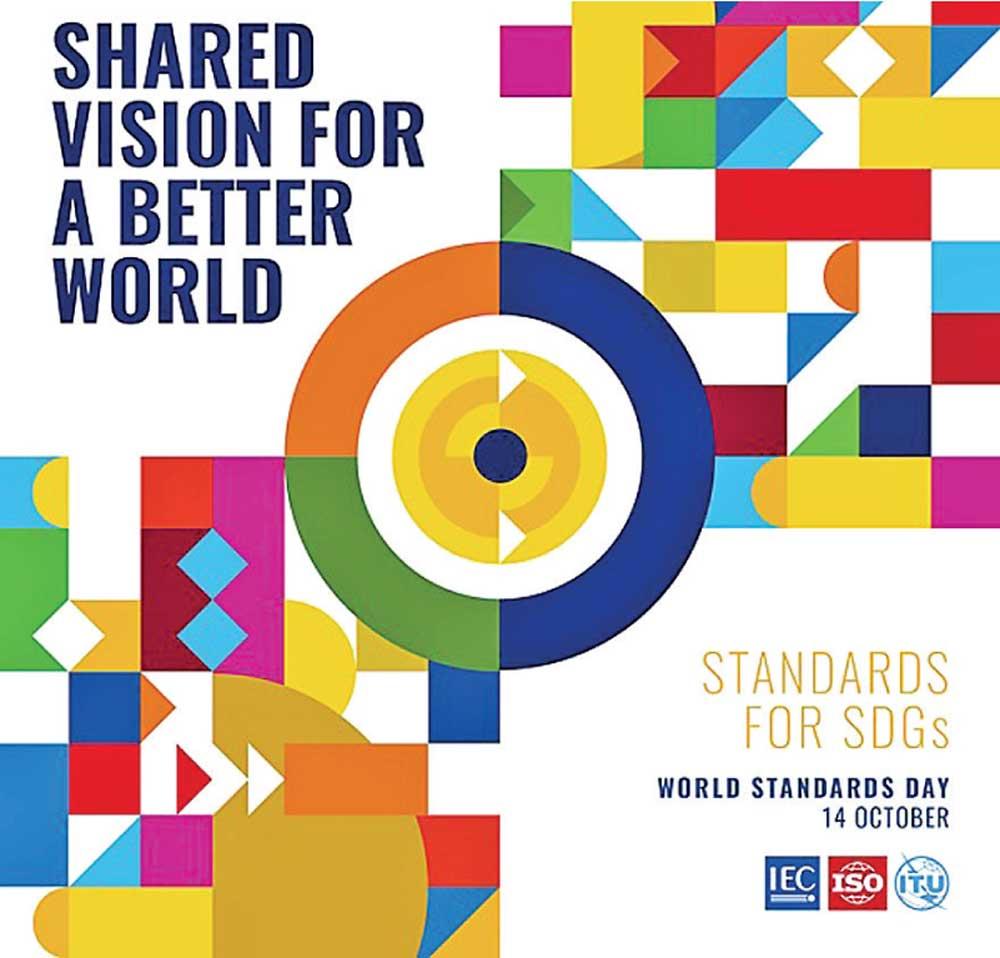
World Standards Day 2025 highlights how shared principles shape progress, connecting safety, sustainability, and innovation worldwide. As Sri Lanka marks the occasion, the focus turns to how standards unite nations, industries, and communities under a common goal: building a safer, more resilient, and sustainable future for all.
Every year on 14th October, people around the world celebrate World Standards Day, paying tribute to the experts, professionals, and institutions who dedicate their time and knowledge to developing standards that make life safer, simpler, and more connected.
This global event is jointly celebrated by members of the International Organization for Standardization (ISO), the International Electrotechnical Commission (IEC), the International Telecommunication Union (ITU), and other international and national standards bodies. The aim of World Standards Day is to raise awareness about the importance of standardization to the global economy and to highlight its role in meeting the needs of businesses, industries, governments, regulators, and consumers.
History
The date 14 October was chosen to commemorate a meeting held in London in 1946, where 65 delegates from 25 countries gathered to discuss the future of international standardization. That historic event led to the creation of ISO, which officially came into existence in 1947 with 67 technical committees. By 1949, ISO had established its headquarters in Geneva, Switzerland -where it continues to operate today, shaping the global standards landscape.
Across the world, national standards bodies mark World Standards Day with awareness campaigns and events. In Sri Lanka, the Sri Lanka Standards Institution (SLSI) is the national standards body and ISO member since 1969 - joins the international community in celebrating this day on 14 October 2025.
To mark the occasion, SLSI has declared National Quality Week from 13 to 19 October 2025, promoting the importance of quality, safety, and standardization across industries and communities. Over the past six decades, SLSI has published more than 4,500 Sri Lankan Standards, covering nearly every area of technology, manufacturing, and services. These standards help ensure that Sri Lankan products meet global quality benchmarks while enhancing consumer protection, trade competitiveness, and sustainable development.
World Standards Day is more than just a date on the calendar - it is a reminder of how deeply standards shape our daily lives. Our lives are touched by standards in many unseen ways.
From the moment we wake up until the time we go to bed, standards quietly shape every part of our daily lives, making them safer, more comfortable, efficient, and connected. Whether it’s the alarm clock that wakes us up, the appliances we use, or the food we eat, standards ensure that the products we rely on are safe, reliable, and compatible - standards are everywhere! Have you ever wondered how your computer sends your documents to a printer from a different manufacturer or how your credit card works in an ATM anywhere in the world? That’s the power of standardization. Standards establish agreements on how products are made, how they perform, or how they are marketed. They provide common rules and frameworks so that products and systems can work seamlessly together, regardless of where they are made.
Standards may be voluntary, but they often form the foundation for national regulations, ensuring consistency, fairness, and safety across industries and borders.
Our Shared Vision for a Better World
For the past few years, World Standards Day has been dedicated to raising awareness of how standards support the Sustainable Development Goals (SDGs), which were set in 2015 under the 2030 Agenda for Sustainable Development. These goals aim to address social inequalities, foster a sustainable economy, and slow climate change. Achieving them requires collaboration between the public and private sectors and the effective use of all available tools.
In this context, standards and standardization play a vital role. Voluntary, consensus-based standards offer practical solutions to complex global challenges, promoting responsible production, clean technologies, workplace safety, and international cooperation. In emerging areas such as artificial intelligence, standards also help ensure that innovation remains ethical, secure, and sustainable, supporting a greener and more equitable future for all.
The theme for this year, “Our Shared Vision for a Better World” highlights how standards contribute to achieving the SDGs, with special focus on SDG 17 – Partnerships for the Goals. This theme emphasizes the power of standards to bring people and organizations together. By offering a shared framework, standards enable industries, governments, academia, and communities to collaborate effectively toward common objectives.
Standards play a vital role in shaping a sustainable future by:
Enabling Collaboration: Creating a common language that helps diverse stakeholders work together on global challenges.
Fostering Trust: Ensuring consistent quality, safety, and performance to build confidence across borders.
Accelerating Progress: Embedding best practices and innovative solutions that help fast-track progress toward all 17 SDGs.
This year’s campaign invites everyone to reflect on how standards are essential in building a sustainable, resilient, and inclusive world - where shared goals and partnerships pave the way for a better future for all.
The Foundation in Everyday Life
Standards form the backbone of modern society. They ensure interoperability, safety, and quality across industries, helping systems and technologies work together seamlessly. They support global trade, protect consumers, and drive innovation.
Standards are everywhere - even if we rarely notice them. They make it possible to use mobile phones, connect to Wi-Fi, or safely board an airplane. Common graphic symbols for recycling, emergency exits, or electrical warnings transcend language barriers and keep us safe. Digital standards make the Internet, e-commerce, and satellite navigation possible, supporting essential services like healthcare, education, and disaster management.
Building a Roadmap
As Sri Lanka joins the global celebration of World Standards Day 2025, it is a timely reminder that standards are more than technical documents - they are tools for progress. Standards unite people, protect the planet, and ensure that innovation and growth are both sustainable and inclusive.
By embracing standardization, countries collectively advance “Our Shared Vision for a Better World,” strengthening SDG 17 on partnerships for the goals. International standards foster cooperation, harmonize trade and regulations, and support capacity building, particularly in developing nations. In emerging fields such as artificial intelligence, they ensure technologies are ethical, secure, and sustainable, building trust and enabling inclusive participation in the digital economy.
Beyond convenience, standards drive sustainability by promoting energy efficiency, responsible resource use, and waste reduction, while enhancing quality of life through product safety, accessibility, and fair trade. They empower businesses to innovate responsibly and help governments implement effective policies. Ultimately, compliance with standards benefits everyone manufacturers, consumers, businesses, and governments and create confidence, trust, and a shared path toward a sustainable future.
The author, Mrs Ganiesha Jayamini De Silva serves as Deputy Director of the Standardization Division at the Sri Lanka Standards Institution.
12 Jun 2026 10 minute ago
12 Jun 2026 17 minute ago
12 Jun 2026 21 minute ago
12 Jun 2026 24 minute ago
12 Jun 2026 32 minute ago