19 Dec 2025 - {{hitsCtrl.values.hits}}
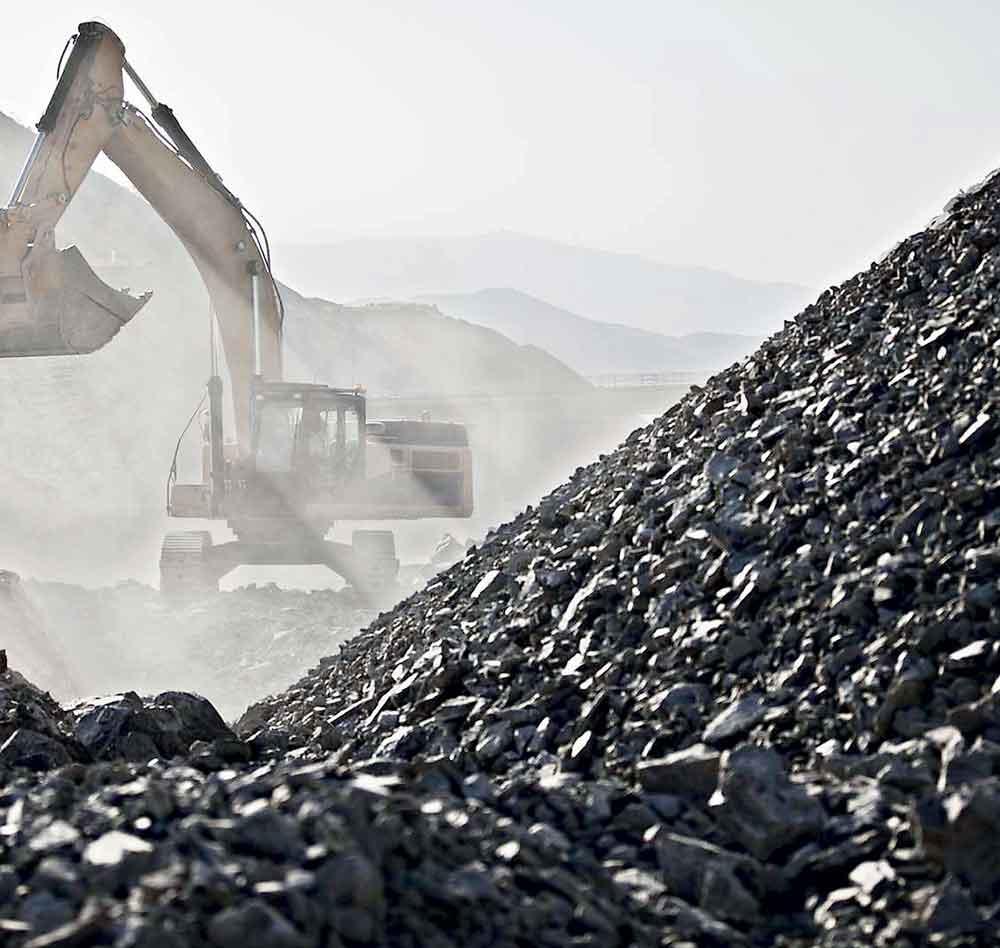
- The future global economy will be heavily dependent on critical minerals and rare earths
- Sri Lanka, as a country, sits on another unexplored treasure. The country has yet another billion-dollar industry hidden beneath its rich soil
If the 20th century ran on oil and steel, the 21st century is going to run on compute and minerals, and so we’re aligning our supply chains accordingly, Jacob Helberg, Under Secretary of State for Economic Affairs on AI Supply Chain Security, declared while delivering opening remarks during the Pax Silica Summit.
Pax Silica, launched at a summit in Washington on December 12, is a US-led strategic initiative aimed at building a secure, prosperous and innovation-driven silicon supply chain across trusted partners. It comes in the context of China dominating early two–thirds of the world’s rare earths industry, and 90 per cent of refining.
We recognise that the technological revolution in AI is accelerating, increasingly reorganising the world economy, and reshaping global supply chains. We believe that economic value and growth will flow through and across all levels of the global AI supply chain, driving historic opportunity and demand for energy, critical minerals, manufacturing, technological hardware, infrastructure, and new markets not yet invented. Pax Silica is the Department of State’s flagship effort on AI and supply chain security, advancing a new economic security consensus among allies and trusted partners, Mr Helberg said at a virtual press conference recently.
“I’m excited to share a little bit more about Pax Silica, which is the first time that countries are organising around compute, silica, minerals and energy as a shared strategic asset. It was very exciting for me to sign the joint declaration with my colleagues from six other countries. We really see this as a watershed moment when allies got together in the midst of a global economy that is quickly reorganising and undergoing the greatest reorganisation since probably the invention of electricity. And ultimately, Pax Silica is about making sure that America and its partners build the rails of the 21st century.
The emphasis here is on minerals. The future global economy will be heavily dependent on critical minerals and rare earths. Countries with abundant reserves of these resources can leverage them for influence in the global economic sphere, much like oil-rich nations do today.
The new grouping is a testament to the growing strategic importance of mineral-rich countries in a world increasingly shaped by AI. Will these mineral-rich nations seize influence from the traditional petro-states? It is too early to see the answer, though.
“Our critical mineral bilateral agreement opens the door to a lot of bilateral investments, which ultimately, through Pax Silica, will help secure a broader ecosystem of aligned economies,” Mr Helberg said.
Importance for Sri Lanka
The latest global development offers insights for Sri Lanka, a country with a lot of untapped potential in the mineral sector. Its strategic location in the Indian Ocean, along vital sea lanes and near major markets, will now enhance its global significance further.
In a timely development, just a day after a related press briefing, the Pathfinder Foundation, a leading think tank, released two reports: “Mining Potential: A Global Opportunity” and “Sri Lanka’s Transformation to Clean Energy and Net Zero Targets by 2050.”
The event, which was also attended by Australian High Commissioner Matthew Duckworth, highlighted Sri Lanka’s mineral sector and its significant potential.
Australia is a mineral superpower, and its interest in close collaboration with Sri Lanka in the development of this sector envisages what Sri Lanka can become in the future if its potential is harnessed.
For Australia, as the High Commissioner outlined, mining makes a massive contribution to Australia’s economy.
“It’s roughly 10 per cent of our GDP, more than 60% of our export revenue,” he said.
“Now investing in minerals and renewable energy has made a lot of sense for Australia. We think it makes a lot of sense for Sri Lanka as well. In Australia, we know the potential of the minerals and the renewable energy sectors (2:29) because much of it has already been realised,” he said.
Sri Lanka underperforms compared to its potential, as most resources are exported in raw or semi-processed form, limiting value capture, according to the Pathfinder report.
The report says that the export potential is as high as US $ 778 million, whereas the amount which is realised annually is only US $ 389 million. If resources are further explored, primary data suggest that the potential may even increase to US$2 billion. Sri Lanka, as a country, sits on another unexplored treasure, it seems. The country has yet another billion-dollar industry hidden beneath its rich soil.
The report says Sri Lanka is endowed with high-purity mineral resources that are increasingly vital to global supply chains, particularly clean energy, high-tech manufacturing, and defence industries. Key resources include graphite, rare earth elements (REEs), mineral sands, vein quartz, and apatite.
According to BOI (2023) and NASTEC (2023), reserves comprise about 5 million tonnes of graphite, 604 million tonnes of mineral sands, 2.7 million tonnes of vein quartz, 60 million tonnes of phosphate (apatite), 100 million tonnes of limestone, 6 million tonnes of silica sand, and 0.5 million tonnes of kaolin and ball clay, the report says.
Experts, including the Geological Survey and Mines Bureau (GSMB), stress that these estimates likely understate true reserves, as no comprehensive island-wide geophysical survey has been conducted. This creates significant exploration opportunities for project developers and METS providers. Graphite, already renowned for its vein quality with 97–99.9% carbon purity, is considered more abundant than reported. A full quantification of reserves could enhance Sri Lanka’s competitiveness and attract downstream industries, including battery-grade graphite, graphene, and clean energy technologies. Graphite: With its unique vein deposits and high purity, Sri Lanka is well-positioned to support advanced applications such as batteries and graphene. Opportunities exist to adopt HF-free purification technologies, offering sustainable and ESG-compliant processing.
REEs and Mineral Sands: Monazite-rich sands contain REEs such as neodymium and praseodymium, critical for EV motors, wind turbines, and electronics. These sands also provide ilmenite, rutile, and zircon for products such as titanium dioxide pigments, ceramics, and welding fluxes. International METS firms like Mineral Technologies (Australia) and IHC Mining (Netherlands) are already active, signalling strong commercial potential, the report says.
Despite geological potential, systemic barriers hinder growth in the sector. The report says that the regulatory framework is fragmented, with over 18 agencies causing licensing delays, policy uncertainty, and investor burdens.
Slow, non-transparent environmental assessments and inconsistent land-use policies further discourage investment, while the absence of a national critical mineral strategy weakens global positioning. Infrastructure gaps—poor transport and unreliable energy—raise costs, and the lack of modern beneficiation plants for graphite, REEs, and quartz prevents value capture. Outdated mining methods reduce productivity and safety, while weak safeguards fuel unauthorised operations and community opposition. Modern technology, transparent governance, and inclusive benefit-sharing are essential for sustainable growth, the report says.
In the wake of the latest global trend, Sri Lanka has to modernise its legal framework that ensures transparency, efficiency and fair play for investments in the sector. These are strategic assets important for manufacturing smartphones, laptop batteries, electric cars, wind turbines and so on.
China produces nearly two-thirds of the world’s rare earths and controls almost 90 per cent of refining. Hence, it is understandable how China wields its strategic power. Global power politics play out in the region. The Western powers and India always seek to elbow out China from its influence in the region. Sri Lanka should tap its potential for sure, but not in a manner that it gets caught in the intricacies of global power politics. The government has pledged to harness the potential. It is an approach to be done for sure, but with a prudent approach, as otherwise it can be a resource curse, rather than a resource blessing. Investments should be sought without further delay in the sector as the country seeks to get out of its economic crisis.
06 Jun 2026 8 hours ago
06 Jun 2026 8 hours ago
06 Jun 2026 8 hours ago
06 Jun 2026 06 Jun 2026
06 Jun 2026 06 Jun 2026