27 Oct 2025 - {{hitsCtrl.values.hits}}
 Beach cleanups are a diagnostic tool that reveals the anatomy of Sri Lanka’s waste crisis- By viewing litter not as trash but as a resource stream, forward-thinking entrepreneurs can build businesses that clean coastlines
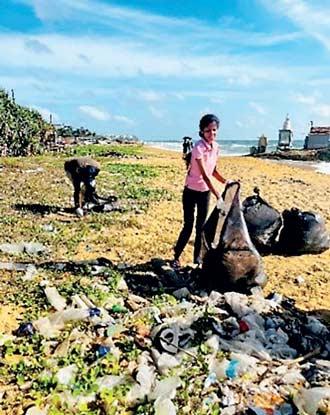
 The volunteers collected a significant volume of marine litter
By E.S. Wickramasekara, S.V. Sashini Sangeetha, G.A. J. Silva, C. Perera
|
Sri Lanka can transform its waste challenge into a green economic renaissance; one recycled bottle, one compost bin, and one empowered citizen at a time |
Recently, August 24, 2025 to be specific, a team of authors and volunteers conducted a beech cleaning session, which received the blessings of the Ministry of Environment and Protected Areas (MEPA). The event was coordinated by the Dehiwala Municipal Council, and was supervised by the Coast Conservation & Coastal Resource Management Department. The event took the form of a manual cleanup of the beach with volunteers working along a 2km coastal line from Dehiwala to Mount Lavina. The event was held from 2:00 PM to 5:00 PM.
The volunteers collected a significant volume of marine litter. Post-cleanup analysis revealed that the majority of branded waste originated from major local and multinational corporations. Packaging materials such as plastic bottles, biscuit wrappers, snack packets, disposable containers, glass bottles, and aluminum cans dominated the waste stream. While this data underscores the urgent need for corporate accountability and Extended Producer Responsibility (EPR), it also presents a unique window of opportunity: the transformation of waste into wealth through entrepreneurial innovation.
The waste analysis was enriched further by the discussions the researchers had with the directors of both MEPA, Coast Conservation and Coastal Resource Management Department and several other NGOs primarily focused on conducting beach cleanups. Founding on the findings we intend to share viable, scalable, and socially impactful business ideas rooted in the circular economy, targeting four key waste streams identified paper, plastic, metal, and glass as well as broader consumer and organic waste. These opportunities not only address environmental degradation, but also foster community empowerment, job creation, and sustainable urban development in Sri Lanka. The researchers also had interviews with experts of plastic and entrepreneurs, who were already into using plastic waste towards the production of new products. The implications for entrepreneurs are thus shared below with:
The implications for entrepreneurs by Waste Stream
Paper-Based Waste: From Discarded Pages to Premium Products
The cleanup revealed significant paper waste, including newspaper pages, notebook scraps, branded paper bags, and tissue packets. While often overlooked, paper waste is highly recyclable and can be up cycled into value-added goods.
The implications for entrepreneurs: Establishing micro-enterprises that collect used paper from schools, universities, and offices to produce handmade notebooks, greeting cards, and art supplies. Partnering up with existing paper recycling firms to open satellite collection centers near educational institutions (Schools and Universities).
Collaborating with supermarkets to promote paperless billing via mobile apps. There are some corporates who currently offer e-bills to the mobile phones of the customers upon their consent.
Plastic Waste: Repurposing Single-Use into Sustainable Solutions
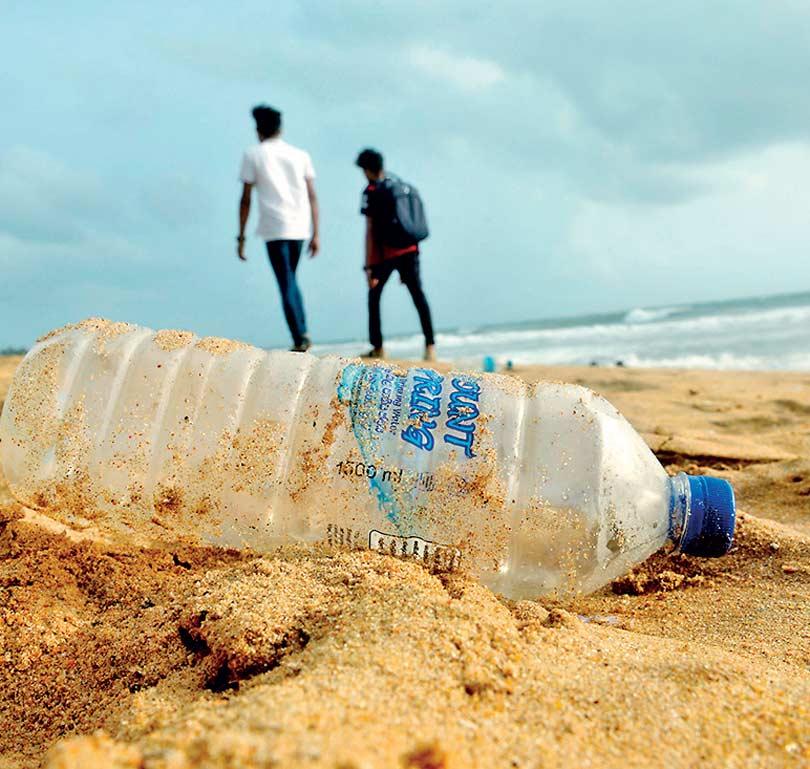
Plastic constituted the largest share of branded waste beverage bottles, snack wrappers, yogurt containers, and unbranded shopping bags. Given Sri Lanka’s ban on single-use plastics, entrepreneurs can lead the shift toward reuse and recycling.
The implications for entrepreneurs: Launching small-scale facilities that shred and compress plastic waste. Creating a franchise model where consumers return clean plastic containers to local kiosks in exchange for discounts. Training women’s cooperatives to transform plastic bags and wrappers into durable items marketed as “Ocean-Safe Fashion” with QR codes tracing the item’s origin to Beach cleanup. The implications for entrepreneurs: Establishing neighborhood “Metal Points”. Collaborating with local artisans to melt and mold aluminum into decorative items.
Organizing inter-school competitions to collect metal waste. Use glass waste: Example bottles as building blocks
Glass bottles from arrack, beer, and soft drinks were prevalent. Glass is 100% recyclable but often underutilized in Sri Lanka.
The implications for entrepreneurs: Crushing glass into “cullet” for use in road base materials, decorative tiles, or terrazzo countertops ideal for sustainable construction projects. Training youth groups to transform bottles into sellable items. Working with beverage companies to implement deposit-refund systems
Conclusion
Beach cleanups are more than just an environmental intervention, it is also a diagnostic tool that reveals the anatomy of Sri Lanka’s waste crisis and, simultaneously, a blueprint for entrepreneurial innovation. By viewing litter not as trash but as a resource stream, forward-thinking entrepreneurs can build businesses that clean coastlines, empower communities, and hold corporations accountable. With supportive policies, public-private partnerships, and a shift toward circular thinking, Sri Lanka can transform its waste challenge into a green economic renaissance one recycled bottle, one compost bin, and one empowered citizen at a time. The ocean’s future lies not just in cleanups, but in the startups that rise from them.
(The writers are from The Open University of Sri Lanka and can be reached at [email protected], [email protected], [email protected])
08 Jun 2026 27 minute ago
08 Jun 2026 46 minute ago
08 Jun 2026 1 hours ago
08 Jun 2026 1 hours ago
08 Jun 2026 2 hours ago