19 Apr 2025 - {{hitsCtrl.values.hits}}
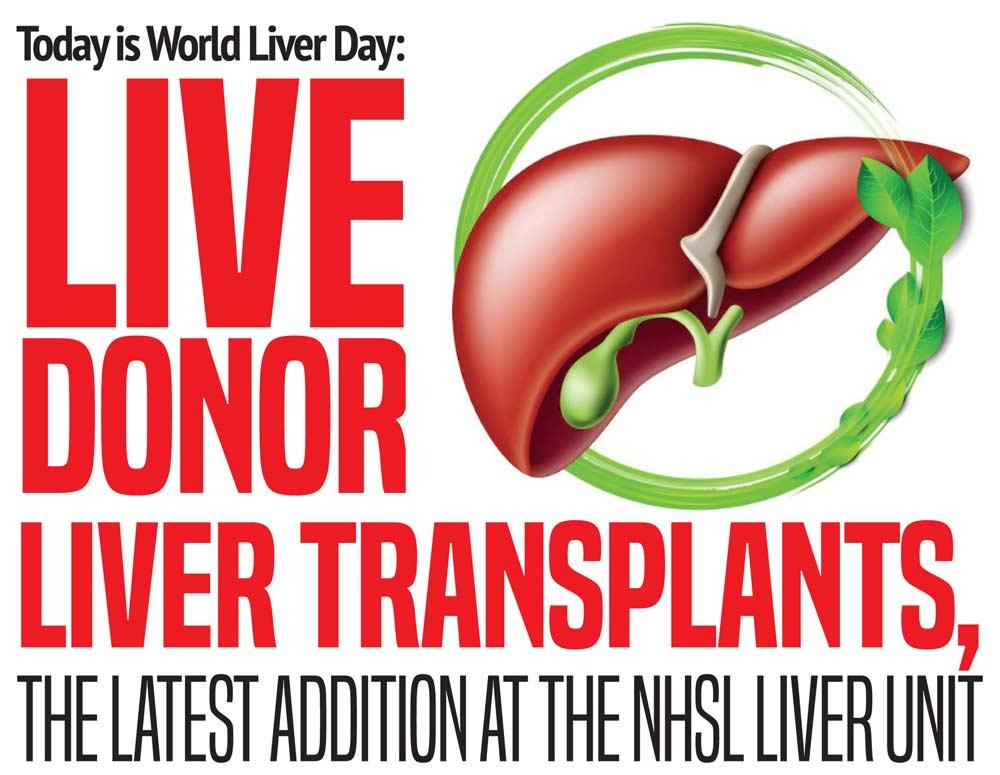
Non-alcoholic fatty liver disease and cirrhosis are said to be the main causes of liver disease in Sri Lanka. While there are close to 2000 liver-related diseases in Sri Lanka, according to medical experts, at least 300-350 liver transplants need to be done per year. This includes both adults as well as children. Despite having a requirement of performing at least 100 liver transplants per year, the facilities in the state health sector are still being upgraded and expanded to fulfil this requirement. However, the National Hospital of Sri Lanka’s (NHSL) Liver Unit has successfully performed cadaveric liver transplants and is now expanding its services to perform live donor liver transplants, promising a better life expectancy for patients than before.
Causes and symptoms
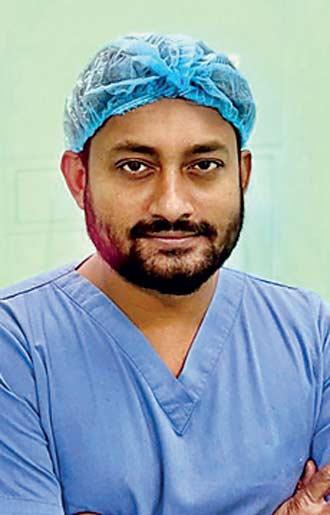
In adults, liver disease occurs in patients with cirrhosis due to various etiologies such as alcohol abuse, liver cancer or viral hepatitis B and C, which is less common in Sri Lanka, said Dr. Prabath Kumarasinghe, Consultant, General Hepatopancreatobiliary and Liver Transplant Surgeon at the Colombo National Hospital Liver Unit. He reiterated that the emerging liver disease is non-alcoholic fatty liver disease, which progresses into cirrhosis. “Around 40% of the population now has the fatty liver condition. So, in time, it would progress into liver disease, which would require a transplant. In children, aetiology is different, maybe due to Biliary Atresia, where bile ducts are being developed at birth or due to different metabolic disorders. Children may also develop cancers such as hepatoblastoma, which require liver transplants,” he added.
Further explaining about non-alcoholic fatty liver disease, Dr. Kumarasinghe said that it could either be a genetic condition or one that develops due to poor eating habits, excessive alcohol intake or lack of diabetes control. “Sometimes non-alcoholic fatty liver can be a primary cause of liver cancer and therefore proper health education is required,” he explained.
When asked about symptoms, Dr. Kumarasinghe said that sometimes around 70% of the liver can be damaged without the knowledge of the individual. “The liver has a lot of reserves, and you won’t notice until a significant portion of the liver is damaged. This is why it would present in the form of a leg swelling, or water collecting in the tummy, recurrent infections, vomiting of blood, passage of tar-colored stool or yellowish discolouration of eyes. Sometimes liver disease presents itself a liver cancer. In fact, there are various ways of presenting. It’s difficult to observe these symptoms, and you won’t notice until a major part of the liver is damaged,” Dr. Kumarasinghe cautioned.
|
“Around 40% of the population now has the fatty liver condition. So in time it would progress into liver disease, which would require a transplant,”
|
NHSL Liver transplant programme
The National Hospital’s liver transplant programme has conducted over 50 liver transplants since 2020. Dr. Kumarasinghe said that prior to 2023, the survival rate was around 70%, but that during the past couple of years, it has improved to 90%. “Last year all transplanted patients survived and there’ no other transplant programme with a similar outcome,” he said.
Speaking about the procedure for organ procurement, Dr. Kumarasinghe said livers are obtained from brain-dead patients who are being supported by ventilators. “Two consultant anaesthetists would first confirm whether the patient is brain dead. After obtaining consent from the next of kin, the Judicial Medical Officer and the Director of the Hospital, the organ will be ready for donation. There is a national organ coordinator at the Ministry of Health. So he informs the relevant surgeons at different liver units according to the rotation. Currently, there are three liver units, one at NHSL and another at Ragama Teaching Hospital and Peradeniya Hospital. But NHSL is the only liver transplant Centre under the Ministry of Health. Ragama and Peradeniya are professorial units coming under the purview of the Education Ministry. NHSL is the only Centre that performs full-time liver and kidney transplants while conducting surgical procedures on complex liver and pancreatic cancers,” he explained.
In the case of recipients, the medical experts once again conduct a thorough investigation of the patient prior to the liver transplant. “We have a list of recipients, but we investigate them extensively because these patients are very sick. We investigate their heart, lungs, liver and abdomen while also evaluating their general status, psychological status and nutritional level. Once the organ is available, we prioritise them depending on the severity of the disease. The most severe patient gets the transplant first. If the available organ is not tallying with the patient—due to a change in size, shape or quality of the organ, we might have to deviate from the procedure. The important factor is that cadaveric liver and kidney transplants are not available in the private sector. They are only done in the government sector,” he added.
Practical challenges
When informed about the availability of an organ once the donor or next of kin had consented, the team of medical experts would travel to the destination with all the equipment. There is a specified transport service available at NHSL, dedicated to organ transplant procurement. Once they reach the destination, they would perform the surgery on the donor, carefully retrieve the organ, place it in ice and other fluids to preserve its quality and travel back to perform the transplant. “We need around two anaesthetists and minimally we need 3 surgeons to perform this procedure, but we only have two surgeons. This process takes around 8-10 hours. With travelling and other activities altogether, the procedure would take around 12-15 hours. A lot of high-end investigations, antibiotics and drugs are required. If they are not available, we have to ask the patient to bring it from outside. Usually, per year we do about 12-15 transplants, but if we have more staff, we can improve it to 50 per year,” he added.
Dr. Kumarasinghe said that in most donors, the liver may not be suitable for a transplant. Therefore, sometimes they would only obtain the kidneys. One reason is that most donors are from rural areas, and it is usually recommended to transplant a liver within 6-8 hours. Since the facility to airlift organs is too costly, the only option is to travel by road. But this option is time-consuming and is not suitable in the case of liver transplants.
The need for many donors
He further said that although there are enough donors, the problem is that there aren’t enough donors available through the system. “Some patients are awaiting ICU beds, but this doesn’t happen unless an organ has been retrieved. Usually, that process would take up to 24 hours, which means that an ICU bed has to be blocked for this time period. But if there’s a young patient, then it’s more likely that this bed would be taken to assist another critically ill patient. So we need many donors. Since these are cadaveric donors, it would be a waste if we don’t use them. If this programme is continued efficiently, we can cut down on the number of live donor kidney and liver transplants. This is what is happening in the UK. They do about 800 transplants per year, and all of them are mainly cadaveric, and they are successful. So we have to work towards achieving this goal,” Dr. Kumarasinghe further said.
Live donor liver transplants
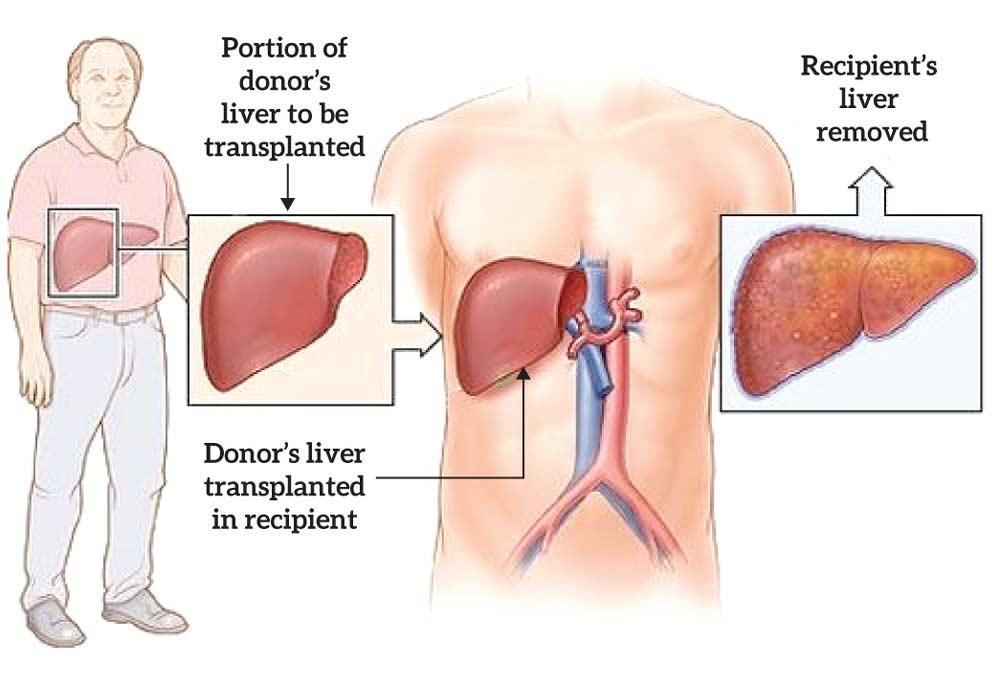
The Daily Mirror learns that every year, around 50-100 patients travel to India to receive live donor liver transplants, spending whopping amounts of money. But Dr. Kumarasinghe affirms that at NHSL, there are two theatres with enough facilities to perform live donor liver transplants. “Some patients spend close to Rs. 20 million to get live donor liver transplants done from India. Some of them collect money, and some sell properties. Our plan is to start live donor liver transplants within this year. In the case of live donors, we screen them for other diseases and check if they are healthy and fit. Usually, we can take up to 60% of a healthy liver safely. This is a commonly done procedure in East Asia, the USA and some European countries. The good thing about the liver is that after you take part of the liver in six weeks’ time, it grows back to normal. This is the same for the donor and the recipient. Even for children, we transplant about 30% of the liver, and it grows with time. It’s a safe and common procedure, and it can be done in Sri Lanka,” he added.
Do’s and don’ts for patients
Following a liver transplant procedure, patients are being kept under medical supervision up to about three weeks prior to being discharged. “They have to strictly adhere to taking immunosuppressants,” said Dr. Kumarasinghe. “Initially, we follow them up every week or bi-weekly, check their drug levels and tune them according to the blood level. After about three months, we check them monthly and after a year, we see them every three months or six months, depending on the patients. These patients are very sick, usually bed-bound with water inside the tummy, but once the transplant is done, they can go back to work. They can have a normal life expectancy after the transplant,” he affirmed.
In conclusion, Dr. Kumarasinghe said that by obtaining a blood report or ultrasound scan, one could check the status of their liver, while recommending early diagnosis and early referrals as the only way to save patients from end-stage liver disease.
11 Jun 2026 18 minute ago
11 Jun 2026 1 hours ago
11 Jun 2026 1 hours ago
11 Jun 2026 2 hours ago
11 Jun 2026 2 hours ago