26 Aug 2025 - {{hitsCtrl.values.hits}}
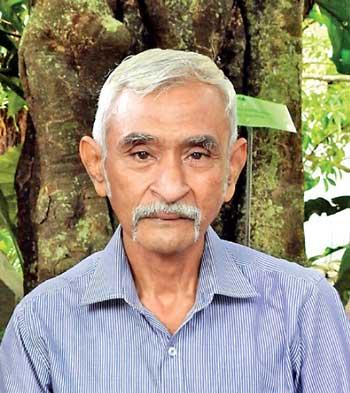 |
| Jagath Gunawardana |
By Tahaan Jayewardene
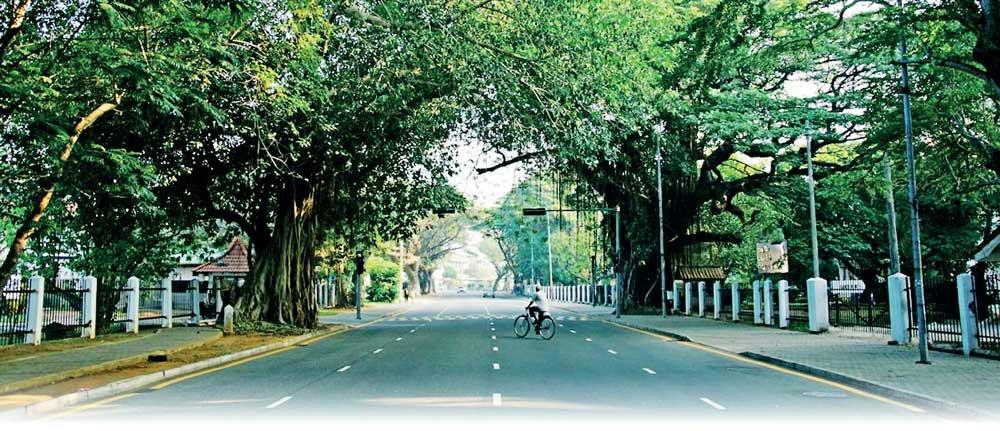
The experience of living in Colombo and walking down a street shaded by trees during the afternoon heat, is a blessing that many of us take for granted.The value of trees, and the miraculous ways they boost our quality of life in the city is something that both the CMC and environmentalists, not only acknowledge but actively work to protect.
The risks of trees, the ensuing problems related to city conditions, and the inherent unpredictability is not something that can be fully eliminated.
However, the management and mitigation of the risks, are evidently considered in Colombo city. The public’s concern regarding risky trees, holds great weight for the fate of trees in Colombo.
Therefore, there is a level of social responsibility that should be shouldered and shared amongst all people in the city.
Complaints by community members in Colombo about trees have risen from around 300 a month in 2020-2022, to around 500 a month now, according to Mr Indika Pathirana, an environmental engineer in the CMC Land management and environmental division.
People would often complain to the CMC when a tree near their premises is disturbing or bothering them. Complains about trees would come from the community including, Colombo city residents, corporations, and CMC members or labourers (People working in related fields like drainage and solid waste).
As part of their tree management, the environmental division receives around 500 complaints a month. Mr. Pathirana notes the numbers increased drastically after the event on October 6, 2023, when five people were tragically killed, and at least 17 injured after the incident when a pavement tree fell on a bus on Duplication Road in Kollupitiya.
“There is a big pressure on us now,” remarks Mr. Pathirana, due to the increase in complaints and concern of the public. He does mention however, that having this pressure does act as a motivating and driving force for accomplishing their work in the environmental division.
Dr. Jagath Gunawardana, Attorney at Law, and environmental activist, offers some perspective about the resulting concern by the public.
“People tend to panic, especially city dwellers who don’t know much about these things, tend to panic. When they see a tall tree growing near their house, they always think that it will fall into their house. Which may or may not be, because every tall tree is not a potential hazard.”
Dr. Gunawardana does share some risks, that should be considered.
He mentions, that if a tree is leaning to a particular side, “then there is a very serious possibility of it falling down on a building, but if the tree is standing tall and without any brittle timber, which can be seen then there is little problem.”
He adds that Colombo does not have many trees which are brittle in nature like the eucalyptus tree.
“But there is always a possibility of a rotten branch or a branch with a hollow getting broken down by a strong gush of wind,” he mentions.
“But the thing is, people tend to panic without any reason. That’s a sad trait in society. And when one person creates a panic, it becomes a panic wave,” he said.
Mr. Pathirana of the CMC mentions that after the incident of the bus falling on the tree on October 2023, they began a project to identify the risky trees in Colombo.
They identified around 248 risky trees which needed to be removed and about 748 trees that needed to be balanced (trees that needed to be reduced and branches cut).
These decisions were made by doing a visual inspection of the trees by a Peradeniya Botanical Garden arborist (who was requested for this project, and is now working at the CMC), CMC engineers and technical officers.
The visual inspection included looking at the age and height of the tree, the perimeter to get an idea about the lifespan of the tree (meaning how long it will survive without any issues).
They would also check the health of the tree by checking to see if there are any holes in the trees, or any mushrooms around the tree (which would be indicative of the tree not being in a good state), and whether there are dead branches at the top of the tree. After the inspection, they would decide whether the tree needs to be completely removed or if only the branches need to be cut. In addition, they also planted more than 300 new trees in Colombo city.
Mr. Pathirana commenting about the unpredictable nature of trees, said they cannot exactly identify whether certain trees are more at risk of collapsing, and often conduct inspections.
They treat a tree like a human. For example, a human can have a ‘medical checkup’ and be considered healthy, but still might fall sick tomorrow.
Similarly, there is an unpredictable element when it comes to trees, as even healthy trees can fall when the external parameters change.
Such as unpredictable wind flows, the amount of rainfall, and the resulting soil condition. Then he mentions when the trees bindings get loose because of rain, a strong wind can topple the tree.
Dr. Gunawardana, when considering the risks of trees falling in Colombo mentions, “It’s not the environmental condition, it’s the lack of maintenance and proper care.
“Most of the trees that fell during the recent past had been strangled by the banyan trees.”
He adds that his “first suggestion is to remove all the banyan trees that can be removed from the trees within Colombo.”
To explain this, he mentions that “banyan trees are trees that can be easily propagated by birds, and when the birds defecate upon a tree, the seed can get germinated in a very small area of organic matter.” He adds, “and then it takes root. And slowly it grows, strangulating the mother tree.”
“Then what happens is that the mother tree, the first tree, slowly starts rotting away. And then the banyan tree puts out what we call roots from the branches to stabilize itself.
“And the people who are in the CMC who want to maintain the pavements, cut these roots. So that the banyan tree is unstable. So that’s what led to this falling of the trees,” said Dr. Gunawardana.
He adds: “I have seen so many trees strangulated and killed by banyan trees in the city of Colombo and the suburbs.” He also states, “and second, if the tree has died or is on the verge of getting killed, better cut it down and plant another tree.
Because the banyan tree itself serves no purpose. And because they cut all the roots that stem from the branches of the banyan tree, they become unstable in a short while. And added to it, the weight of the banyan tree is another factor that contributes to it falling down. It grows rather fast.”
Regarding the Incident of the tree falling on the bus on October 2023, he said he didn’t know much about the incident and that he saw it on the media.
He said: “But that was one tree that was very unstable for a long time. I knew it because I was going that way sometimes. And it was again strangled by a banyan tree.”
Third, he mentions that trees can develop hollows, and “unless they are filled up, they also tend to accumulate water and organic matter and tend to rot away.”
“There are ways of maintaining trees. Sometimes the hollows can be filled up, sometimes the branch can be lopped off. Or sometimes if there is no other way, the tree has to be cut down. But there should be a maintenance of the trees to keep their quality.”
He adds, “so there is very little maintenance unless the CMC decides to cut the trees.”
Regarding soil conditions, he says, “there are some instances where the pavement has been taken up to the trunk. So there is very little room for absorption of water. That leads to the dying of the roots. And that also is one reason why some of these trees fall down. So there should be some area of soil remaining under the tree so that the rainfall can be absorbed by the soil. If you deny that access, then the tree slowly dies down. And before the tree, the roots rot, and then the tree falls.”
Mr Pathirana of the CMC, explains some of the city conditions that contribute to the risk of trees falling. People build large buildings, cutting through the root systems.
Then they request electricity, and the CEB digs again to provide power. Next, they ask for communication lines (internet), and SLT or Dialog dig again. When they request water, the Water Board also accesses underground pipelines. Since all these utilities are supplied underground, they don’t know how many roots were damaged during construction over time.
He mentions that there is a communication error, and that while constructions are happening, it’s difficult to ascertain whether roots have been cut and what is happening, due to them not being informed about the construction or what services are needed.
Additionally, he mentions due to the amount of construction in the city it’s very difficult to find out what is happening individually or per construction site.
He mentioned, for this reason, that regular inspections are very important, and how their team goes out and inspects the relevant occurrences in the city.
They become aware of the constructions that are happening, and intervene when a drainage line is being dug up and then take action if a tree is being impacted. When a trench is being built near a tree, they quickly intervene to reduce the tree; otherwise, it might fall. He mentions that the workers don’t consider this—they just dig the trench and cover it.
If it rains that day, the tree can fall. All these problems are connected, he informs.
When considering what people don’t understand about the value of trees, Dr. Gunawardene says, “Many people think that trees only provide shade, and some people in the cities think that trees are an obstruction and a nuisance to them. So, there is a lot of misunderstanding, misconception. And more than that, they don’t care about the trees. This non-caring attitude is the most disturbing.”
He explains that it is because people don’t know why we should have trees in the city. He adds, “Some people prefer all the trees being cut down without knowing the role that they play.”
When considering the role trees play, he says, in the city, “they provide cover, and they absorb much of the exhaust gases and other impurities. And they also trap a lot of dust,” and he talks about how so many trees in Colombo add colour and lustre to the city.
He adds, “then there are some trees whose leaves turn into bright colours before they are shed,” and mentions the flowering seasons in Colombo.
He adds, “So most of the trees are now removed or died and may not be replaced, unfortunately. So, there was a purpose in having these trees because it added to the aesthetic value of the city.”
Dr. Gunawardana also says, “my personal view is that Colombo should remain as a garden city. It can be a tourist attraction. It would be an attraction for artists and photographers as well. So we have to maintain that quality.”
He also considers the diversity of trees in Colombo city saying, “I studied the Colombo trees some time ago and there was much bigger diversity at that time.
Unfortunately, when trees died, some people replaced them with very common species.” He adds that the diversity has reduced over the years.
“Now people have not realised it, but so many researchers have shown that a green space in the city is pleasing to the eye, and it has a positive effect on the nervous system as well. To reduce the stress and to reduce eye strain and everything,” Dr. Gunawardana said.
Mr. Pathirana says they have increased the green space in Colombo city in 2012 (22.36%) which increased to 26.17 in 2022. He elaborates that this increase of green space includes, not just trees, but the planting of grass in the centre islands of the road.
He mentions, formerly in Colombo city they had interlock or pavement stones which they realised increase the temperature of the city. Therefore, they changed this to reduce the temperature in the city and planted grass and flowers in the centre islands instead.
He also mentions that the Colombo city area covers 37 square kilometres. He says that his village in Gampaha, has no shortage of land, so there is no need to grow trees along the roads, and how there are many different kinds of trees.
In Colombo, he mentions however, space is limited, so people cannot grow trees, therefore the CMC plants trees and flowers along the roads.
He mentions that we need to educate people about the importance of trees in Colombo and the reasons they are important for the city. Areas like Colombo 4, 7, 8, 9, Wellawatta, Bambalapitiya, Colpetty, Cinnamon Gardens, Narahenpita and Borella have good tree coverage, while Modara, Mattakkuliya, Hettiyawatta, and Kotahena have less tree coverage. The residents in the areas with better tree coverage experience differences in air quality compared to those in less green areas. Even within the same city, these differences are noticeable.
He adds, when the air is cool, the rush in the city feels less stressful. People tend to horn and (behave impatiently) due to factors like heat and sweat. We also rely on fans and air conditioning to stay cool. Trees help by absorbing dust and providing fresh air, and through transpiration, they naturally cool the environment, he explains.
The benefits of trees in Colombo city, and the privileges afforded to us by their presence, should not be taken for granted.
From cooler temperature to cleaner air, from better mental to physical health outcomes, the better quality of life for people living in the presence of trees and green spaces, is indeed a privilege. Especially when considering the state of other overpopulated cities around the world.
If it were a choice between a concrete jungle or a garden city, which would you chose? Perhaps the better question is, has the choice already been made for us?
04 Jun 2026 2 hours ago
04 Jun 2026 3 hours ago
04 Jun 2026 4 hours ago
04 Jun 2026 4 hours ago
04 Jun 2026 4 hours ago