04 Feb 2026 - {{hitsCtrl.values.hits}}
 Amidst all adversity he remained true to his art, his life values and his principles. This unbending characteristic is not viable in current society, so no artist has dared to adhere to such rigid self-imposed restrictions. That degree of dedication and integrity is rare even in modern religious orders where worldly gain should take minimal priority. Sunil Santha’s character no doubt had a strong epigenetic component

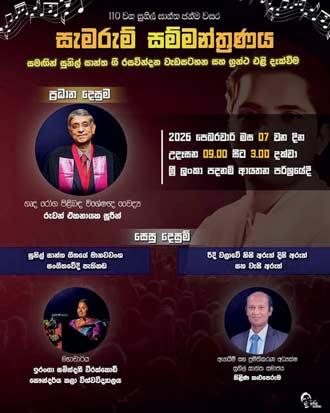
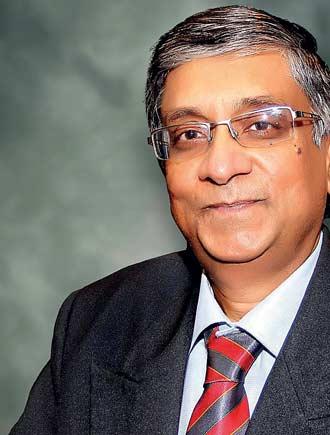
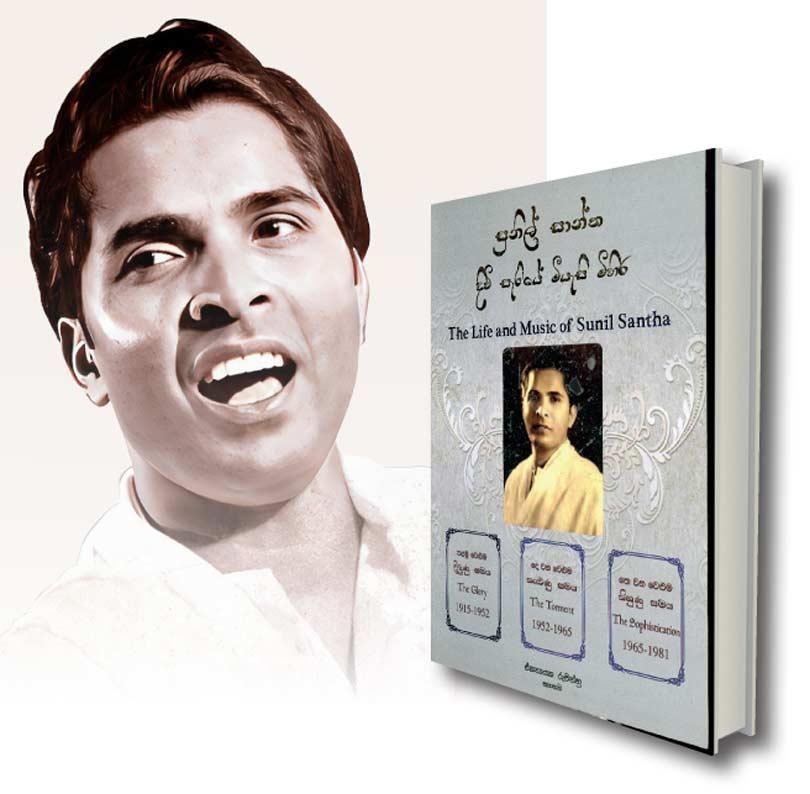
As Sri Lanka celebrates its 78th Independence Day today, a number of patriotic songs like “Lanka Lanka Pembara Lanka”, “Dakuna Negenahira”, “Walakulin Besa”, “Upan Bima Ape”, “Lanka Ma Bimai Ape”, “Asiriwe Lanka” and “Idiriyatama Yawu Helayani” would be played on radio, and one or two would be played by the bands parading at the Independence Square. The man behind those soul stirring songs with inspiring lyrics is none other than the legendary musician Sunil Santha. At a time when Sri Lankan music and even cinema used carbon copies of Indian melodies and songs, it was Sunil Santha who took the initiative to create “our own” music for Sri Lanka. On a nationally important day as the nation looks for our own identity, the Daily Mirror interviewed renowned cardiologist Dr. Ruvan Ekanayaka who has done a profound study of the late musician and his journey. Dr. Ekanayaka recently released a three-volume book titled “Sunil Santha Dhivi Sariye Miyasi Mihira” or ‘The Life and Music of Sunil Santha’, covering the hard life that the musician went through, and the music of genius he created. The years of study covering almost the entire life and work of Sunil Santha was not done for profit; rather, it is an extensive study of the great musician. Dr. Ruwan Ekanayake has also been selected to deliver the keynote address at the Memorial Conference marking the 110th Birth Anniversary of Sunil Santha, scheduled to be held on February 7 from 9 am at the Sri Lanka Foundation Institute. Excerpts of the interview:
|
|
|
Dr. Ruvan Ekanayaka |
Q The world knows you as one of the leading cardiologists. But what motivated you to sacrifice so much time studying Sunil Santha?
It was a labour of love. I have a vague memory of my mother saying අන්න හඳපානේ සින්දුව (handa pane) as the strains of the song came over Radio Ceylon. This was as a child of about 5 years of age. Since then, I have been enthralled, I should say, with some of Sunil Santha’s songs. Collecting the material was a slow and relaxed process over so many years. Only my free time from a very busy professional life could be spent on the project. You realise that in Sri Lanka we work with no secretarial support.
QCan you please explain what fascinated you about Sunil Santha, as a person and as a musical genius?
The melodies of Sunil Santha struck a chord in me. In my childhood, I did not understand or pay any attention to understanding the lyrics of Sunil’s songs. It was pure melody for me. The beauty of the tunes induced a sort of thrill in my young mind. So I became fascinated by the ‘phenomenon’ of Sunil Santha and his music. My father, who was a very accomplished pianist, would frequently play Sunil Santha songs on our home piano. I think he may have gone to concerts given by Sunil Santha as one song he used to play කව්ද අනෙ (kawda aney) does not seem to have been recorded, though the oriental notation is given in SS’s song books. This must have surely reinforced my enjoyment of Sunil’s music.
Even today I rarely hear even an English or Spanish song with a tuneful melody which can surpass a Sunil Santha melody.
Sunil Santha’s melodies are very simple, devoid of artificial ornamentation. In this context I recall Leonardo da Vinci’s saying:“Simplicity is the ultimate sophistication”.
Many a time I have pondered on this statement, and have been struck by its relevance in judging SS’s musical corpus.
Q What was your personal encounter with him?
I have never met SS personally. I waited to complete my studies and then to meet up with him to discuss his philosophy. When I was working at the Peradeniya teaching hospital as a young post intern, the radio statement came over that Sunil Santha was no more. The regrets were legion, but we fans had a few songs of his for comfort.
This brought home to me that the inevitable will not wait to fit our plans. I knew that most of his recordings were lost or hidden in private tapes or archives. On every occasion possible, I actively sought out SS recordings and I have retrieved almost 70 authentic recordings which I have handed over to his son Lanka Santha. Most of these are on You Tube for free access for all to enjoy.
 QHow would you place Sunil Santha in the historical context?
Sunil Santha was born on April 14, 1915, and passed away from this life on April 11, 1981. You will appreciate that these dates are in close proximity to the Sinhala-Tamil New Year which is the time when the cuckoo comes out into the villages. So it is said that Sunil Santha was born and died to the musical calls of the cuckoo (Kokilaya-කෝකිලයා), considered in local lore as the bird with the sweetest song!
This was the time when national feelings were on the boil and pro Sinhala ideology was taking hold of the minds of young Sri Lankans. It was in this background of intense nationalism that Sunil Santha entered the Sri Lankan musical arena in 1946.
Sunil Santha had been a brilliant student at the university of Lucknow and gained a degree “Sangeetha Vishaarada” with a first-class pass (Bachelor of Music) coming first in the first division beating even the Indians, and was the first non-Indian Asian to do so. In addition, he gained a first class pass in the diploma on classical raga vocals.
He came back with high accolades from his teachers in India. During his student days, he had become fully ‘’Hindustanised’’ imitating the accent and dress code of his රාගධාරි Ragadhari tutors.
However, he came under the influence of the colossus of Sinhala studies, Kumaratunga Munidasa, and took a firm resolve that he would no longer mimic or venerate Hindustani music, but would endeavour to create a truly national Sinhala music.
A few years earlier, Ananda Samarakoon had initiated such a programme, but Sunil Santha decided it was time to move forward and improve the quality of Sinhala music to a higher level.
Q What was Sunil Santha’s special contribution to Sinhala music?
a). He based his melodies on the folk tunes of Sri Lanka.
b). The lyrics he chose were written in the classical idiom, most of the time following
the poetic meters given in ancient prosody.
c). Orchestration of his songs utilised instruments which he considered gave a sound
with a native flavour, hence rejecting the sitar and brass instruments to a great extent.
d). The themes of his songs were lofty, and he refrained from frivolous love songs.
Hence, he brought into existence a corpus of Sinhala songs which were works of ART with lasting value having a trans-generational appeal.
Out of the 198 songs of which we have either vocal recordings or notations, the following have to be specially mentioned.
ලංකා ලංකා පෙම්බර ලංකා - දකුණ නැගෙනහිර
බටහිර උතුරද එක කොඩියේ සෙවනේ - කෝකිලයන්ගෙ
කෝකිල නාදෙ - හඳපානේ හඳපානේ - සුවඳ රෝසමල්
නෙලා- නැලවී සැනසෙන්නේ - ඕලූපිපිලා වෙල ලෙල දෙනවා
- මිහිකතනලවාලා
Many will recall that whenever one goes on a trip or attends a singing session/party, almost invariably the first song is olu pipila. These songs have become so much part of Sri Lankan musical culture that I have used the term “Urban folk songs” to accurately describe their place in the local music scene.
e). Sunil Santha was the first artist to compose original music for the Sinhala cinema. In 1956, Lester James Peiris was directing the film Rekhawa රේඛාව and invited Sunil Santha to compose the music, which he refused at first, on the grounds that cheap music of the Sinhala films were all copies of Indian songs, corrupting the musical tastes of the people. However, Father Marcelline Jayakody intervened, and on the promise that the good father would write the lyrics, Sunil Santha agreed to compose the melodies. The result was a number of phenomenally successful songs, which contributed hugely to the film’s success(සුදු සඳඑලියේ වෙසක් කැකුලූ ඕලූනෙලූම් නෙරිය රංගාලා).
In 1960, Lester James made his second film Sandeshaya. Again Sunil Santha agreed to compose the music if the lyrics were written by Arisen Ahubudu. All songs in this film too, were instant hits ( රෑනගිරා රෑනරෑන අඹේමීබිබී” පෘතුගීසිකාරයා’ කෝහතුරෝ” රැජිණමමයිණි ” සුදටසුදෙ).Thus all critics agree on the yeoman service rendered by Sunil Santha to the Sinhala Silver screen.
Q what do you think were the sources that inspired his music?
An important point that many, even experts, are not aware of is that Sunil Santha was deeply into folk tunes when he composed his fabulous melodies. Though based on folk songs, he developed the melody in such a way that it sounded completely contemporary.
For example the songs “Sigiri landaka ge”-සීගිරි ලන්දකගෙ (which is the lullaby in the film Rekhawa-is based on the tune used for the “kavi”-in the classical poem “Lo Weda Sangarawa”-of the Ven. Veedagama Maithreeya. So is also the song “Kethaki patali”.
The verse melody of “mevan pitisare’’ is based on a “siv pada kavi’’ tune. When that melody, which is made to fit with three lette rcomposite words, is contracted to fit into two letter composite words. It converts to the “handa pane” tune.
The songs “tikiri liya” , “thel gala hisa peeran neinoo’’- , “ambalame pina”- are directly based on the folk songs where the melodies are variations of the traditional tunes. The identical commencing words are used but new text is added for the verses.
A lesser known song “hitha atha pa”- is composed in the Vannam- style, and has more features and texture of the Kandyan vannams when compared with other new vannam songs such as W. D. Amaradeva’s “Maha bo vannama”.
For the “Rekhawa”- film, he composed a viridu- tune which is novel.
All this goes to show the great folk melody content in the music of Sunil Santha.
Q Any comments on his vision?
I would like to make three observations.
Sunil Santha had his feet firmly on the ground. He realised that modern man needed modern music. If we base our music on the “pirith” strains or dull folk tunes, he said, such music cannot take hold of/captivate the current society. We must realise that our music will have to compete with all other musical genres in the world, to gain the adulation of the masses.
He said that a nation’s music is not an object to keep in a museum, ready to be taken out for exposition only when needed. A nation’s music must be in use by the people in their daily lives.
B). Because he wanted to create a music which could resonate with the people, Sunil Santha adopted a form of ‘fusion’’ with almost all musical traditions found in Sri Lanka in his time.
The song “Rama velapilla”-රාමවැලපිල්ල, which he composed for Chitrasena’s ballet “Ravana’’රාවනා is heavily infused with the Bhairavi. “Me hopalu vanaye’’ -which is Prince Saliya’s love song for the low caste rodii -රොඞී lass, carries many instances of the rag “pahadi”-පහාඩි. The song “Jungle moon”පිරුනු ඒ සොමි සඳෙ is a slow waltz. The “Sandeshaya”-සන්දේශය film song “Pruthugeesi karaya”-පෘතුගීසිකාරයා. is clearly influenced by baila rhythms. “Varen heen sere’’ -වරෙන් හීන්සැරෙ and “Ambare”-අම්බරේ are songs in the style of Rabindranath Tagore’s Ravindra sangeeth-රවින්ද්ර සන්ගීත් .
So, we see the quantum of extraneous influence which Sunil Santha forged into his Sinhala songs while fully preserving the “Sinhalaness’’ of his creations.
C).Very few of his fans realise that Sunil Santha was an experimenter.
He experimented with a single note melody. He tried out the techniques of polyphony and polyrhythm in two of his songs. His final experiment was to create music for the graffiti found on the Sigiri mirror wall.
Q Is it fair to comment that his music is westernised?
We see so much of the folk idiom in Sunil Santha that this criticism is invalid. No one denies extraneous influences on his music, but that does not diminish the strong Sinhala core.
It is quite true that his music struck a chord with the anglophiles, but even more so, his music was embraced by the purists of the Hela school of Sinhala scholars who would never have done so if the music was a mere copycat version of western songs (as the film songs of yesteryear which were only replicas of Bollywood musical hits).
QWhy did you write this massive book with three heavy volumes?
I have been entranced by Sunil Santha songs since childhood. He was an artist who never received his due recognition/accolades from the state or authorities. His musical activity was restricted to about twelve years.
When he was expelled from Radio Ceylon in 1952 (SeeSupplementary 1) he had to repair shoes, electrical items, sell cloth on the pavement, try his hand at amateur photography etc. to get an income to make a living and provide for his four young children.
The data regarding this great musician/ artist is fast disappearing, and so I decided to collect and collate all the information I could gather into a single source book. I hope it will be preserved for future generations to read.
However, I tried to make this book speak on other aspects as well. You will note the extensive notes on the following.
i). Opinions of world-renowned musicologists on the subject of “national” music.
ii).Ideas expressed by Ceylonese musical giants as to their perception of a Sinhala music.
iii). Theories of western scholars on culture and music in general and to integrate these thought streams with Sunil Santha’ s vision.
This book is not for sale, but most libraries will receive a copy as the library services board (Contact: +94112685198) has taken over the task of distributing the book to institutions under their purview. So, we have made it accessible to the interested public.
Q Having studied so much about the great legend Sunil Santha, why couldn’t this country produce another musician at least who had the personality, integrity and genuineness that the great musician had?
What was it that was really the hallmark of SS? I think it was his full commitment to the purity of his art. For him music was not a commercial commodity. So, he lived and died poor, almost destitute. Amidst all adversity he remained true to his art, his life values and his principles. This unbending characteristic is not viable in current society, so no artist has dared to adhere to such rigid self-imposed restrictions. That degree of dedication and integrity is rare even in modern religious orders where worldly gain should take minimal priority. Sunil Santha’s character no doubt had a strong epigenetic component. That’ s all I can say.
7. A final word on Sunil Santha’slegacy?
As for any creative artist, his legacy is his art itself. However, in the case of Sunil Santha, I think his futuristic vision for a national idiom must also be an integral part of his legacy. I say this because intellectual public discussion on musicological topics is almost non existent in this country. Even at university level, I fail to see Sunil Santha’s work displayed in depth in any of the published works.
My book is not designed as an academic treatise.
Its aim is different. i.e. To be a resource for future research.
Supplementary -1:
QDespite the service he rendered to Sri Lankan culture, music and cinema, he was made to suffer heavily for his ethics and principles and he even lost his job at Radio Ceylon?
An Important event in Sunil Santha’s life was when he refused to present himself for an audition before Prof. S. N. Ratnajankar who had been his teacher in Lucknow, on the grounds that the learned Professor was only interested in promoting classical Hindustani music and would have placed obstacles to stifle the fledgling Sinhala music. For this independent stand, he was penalised by being expelled from Radio Ceylon.
Those were the days when there were no other broadcasting channels or private broadcasting channels available, and musicians could only get to fans/audience by airing their songs over Radio Ceylon.
This shows the unbending strength of character of Sunil Santha and his commitment to his life’s ambition of creating and expanding “හෙළසන්ගීතය” !
07 Jun 2026 15 minute ago
07 Jun 2026 2 hours ago
07 Jun 2026 4 hours ago
07 Jun 2026 4 hours ago
07 Jun 2026 5 hours ago