07 Apr 2026 - {{hitsCtrl.values.hits}}
 |
| Fuel-Efficient Cookstoves |
By Seggy and Jane Segaran
Sri Lanka was once again reminded of the devastating power of extreme climate events. Torrential rains and floods last year disrupted lives, destroyed livelihoods, and tested the limits of emergency response systems. These shocks are not anomalies; they are part of a global pattern of intensifying climate disruption. For a nation already grappling with economic challenges, the question is not whether we will face such crises again, but how we will prepare ourselves to withstand them.
And now, the country has been hit by global events well beyond its control. The attack on Iran, and the subsequent closing of the Straits of Hormuz, have brought home the stark consequences of over-reliance on imported fossil fuels.
Self-reliance and resilience
The answer lies in building self-reliance. The country must cultivate the capacity to endure and recover by harnessing the resources we already have in abundance. Rather than waiting for costly imports or high-tech interventions, Sri Lanka can build resilience through low-technology, locally adaptable projects that empower communities, reduce dependence on fragile supply chains, and strengthen our collective ability to cope.
Resilience is not simply about bouncing back after disaster. It is about creating systems that absorb shocks without collapsing. In Sri Lanka, resilience means ensuring households can cook, heat, and generate energy even when infrastructure fails. Self-reliance complements this: by relying on our own ingenuity, natural resources, and traditional knowledge, we reduce vulnerability to external disruptions.
Sri Lanka has a long history of resourceful adaptation, from ancient irrigation tanks to cooperative farming practices. Today, we must revive that spirit of innovation in the face of climate change and global instability.
Four practical solutions
The beauty of low-technology solutions is that they are simple, affordable, and scalable. They can be built, maintained, and improved by local communities using materials readily available in Sri Lanka.
Four projects stand out:
1. Solar cooking
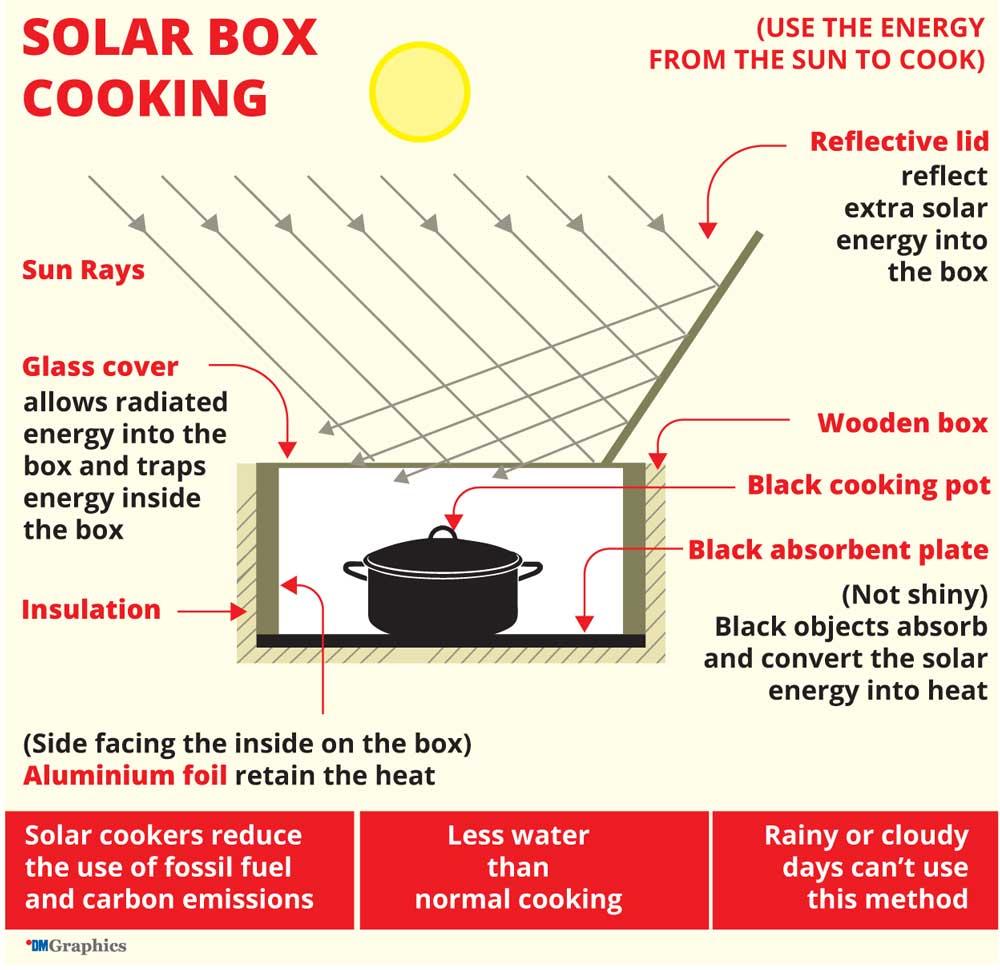
With abundant sunshine, solar cookers are a natural fit. Constructed from reflective panels, glass, and insulated boxes, they eliminate the need for firewood or gas, reducing deforestation and cutting household expenses. In times of crisis, when fuel supplies are disrupted, solar cooking ensures families can still prepare meals safely. It also reduces indoor air pollution and frees women from the burden of fuel collection.
2. Haybox thermal cooking
Haybox cooking, or retained-heat cooking, is ingenious in its simplicity. Food is brought to a boil and then placed in an insulated container (traditionally filled with hay or cloth), where it continues to cook slowly without additional fuel. This drastically reduces energy consumption, stretches limited resources, and enhances food security. In rural Sri Lanka, where hay and other insulating materials are plentiful, haybox cooking could be promoted as a community resilience project.
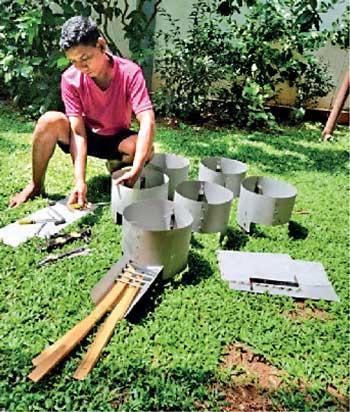
3. Fuel-efficient cook stoves
Traditional open fires waste energy and produce harmful smoke. Fuel-efficient cook stoves, designed to maximise heat transfer and minimise fuel use, can cut firewood consumption by up to half. They are inexpensive to build, often using clay or bricks, and can be tailored to local cooking practices. By reducing firewood demand, these stoves help preserve forests, mitigate carbon emissions, and ease the burden on families who spend hours collecting wood.
4. Biogas generation
Organic waste is abundant in Sri Lanka, from agricultural residues to livestock manure. Biogas systems convert this waste into clean cooking fuel and fertilizer. Small-scale digesters can be built at household or community level, providing a reliable source of energy independent of external supply chains. Biogas not only reduces reliance on imported gas but also addresses waste management challenges, creating a circular economy where waste becomes a resource.
Building a culture of self-reliance
These projects are not merely technical fixes; they represent a philosophy.
They encourage communities to take ownership of their resilience, to innovate with what they have, and to share knowledge across generations.
Government agencies, NGOs, and universities can promote these solutions through training, demonstration projects, and micro-finance schemes. Schools could incorporate practical lessons on solar cooking or biogas generation into curricula, instilling resilience thinking in the next generation.
Media outlets, including this newspaper, can amplify success stories, showing how ordinary Sri Lankans are building extraordinary resilience with simple tools.
The economic and environmental case
Low-technology resilience projects are not only climate strategies; they are economic lifelines. By reducing dependence on imported fuels, they save foreign exchange and strengthen national energy security. By cutting firewood demand, they preserve forests and biodiversity. By reducing indoor air pollution, they improve public health and reduce healthcare costs.
In a time when Sri Lanka is striving to recover economically, these projects offer a pathway to sustainable development that is both affordable and empowering. They align with our cultural values of resourcefulness and community solidarity, while addressing the urgent realities of climate change.
A call to action
The climate crisis is accelerating, and Sri Lanka cannot afford to remain reactive. We must act now to embed resilience and self-reliance into our national strategy. This means investing in low-technology solutions that harness our abundant resources, sunlight, hay, clay, organic waste, and transform them into tools of survival and sustainability.
I urge policymakers, community leaders, and citizens alike to champion these initiatives. Let us not wait for the next flood or drought to remind us of our vulnerability. Let us build resilience today, so that when the storms come tomorrow, we stand strong, self-reliant, and prepared.
Sri Lanka has always been a nation of ingenuity. From ancient irrigation tanks to modern cooperative movements, we have thrived by working with nature and with each other. In the face of climate change, we must revive that spirit once more. Resilience and self-reliance are not luxuries; they are necessities. And they are within our reach.
(The authors of this article Thilaganathan (Seggy) Segaran and Jane Segaran are engineers, authors, and community advocates who have spent over a decade promoting practical, low-cost technologies to build resilience and self-reliance in Sri Lanka. Their work combines hands-on innovation with deep local partnerships.
Seggy and Jane Segaran are the founders of SF Innovations, a UK-based nonprofit focused on sustainable cooking and lighting solutions. Drawing on their engineering backgrounds and passion for community empowerment, they have collaborated with Sri Lankan organisations including EMACE, KKM, Vanni Hope, and the TEA Project to deliver practical tools that reduce reliance on fossil fuels and improve daily life.
Their initiatives include: Solar cooking workshops and cooker distribution, Haybox thermal cooking for fuel-saving meal preparation, Rocket stoves that use minimal wood and produce less smoke, Solar-powered lighting kits for families without grid access. These technologies have been shared through village-based training, school outreach, and hands-on demonstrations. In the Vanni region, they worked closely with local teams to manufacture and distribute cookers and lights, supporting both environmental goals and local livelihoods.
Seggy and Jane also document their journey in the book ‘Adventures with Solar, Haybox and Rocket Stove Cooking’, which blends personal stories with practical designs and recipes. Their approach is rooted in simplicity, accessibility, and respect for local knowledge. Whether teaching at festivals or working in post-conflict communities, their goal remains the same: to help people cook, light, and live more sustainably, using what’s available, affordable, and effective. For more, visit www.sf-innovations.co.uk)
04 Jun 2026 21 minute ago
04 Jun 2026 24 minute ago
04 Jun 2026 29 minute ago
04 Jun 2026 39 minute ago
04 Jun 2026 2 hours ago