20 Mar 2025 - {{hitsCtrl.values.hits}}
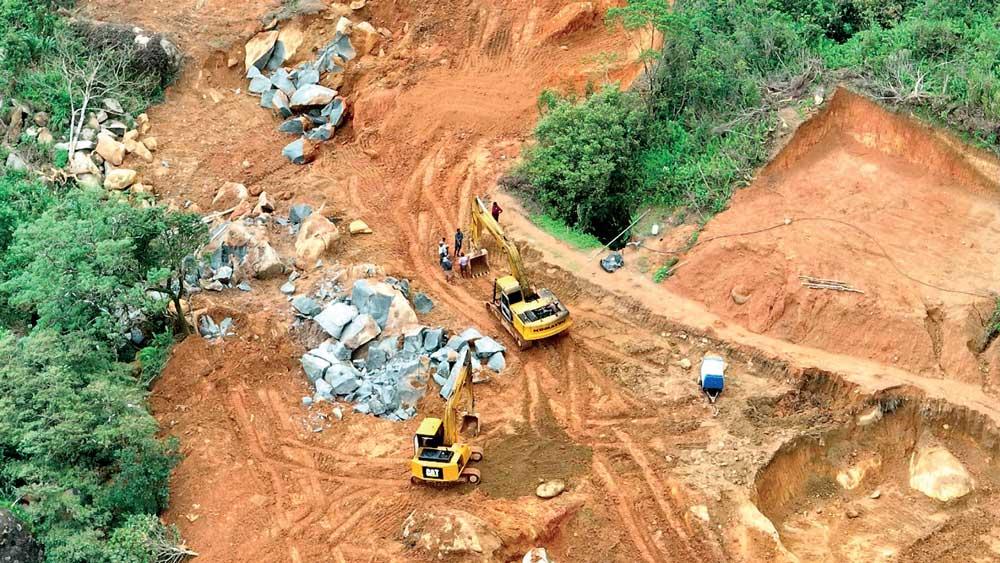
An analysis of the special audit report on the functioning of the National Gem and Jewellery Authority, conducted by the Auditor General’s Department on January 14, 2020, reveals that the authority has failed to effectively enforce specific laws against illegal gem mining
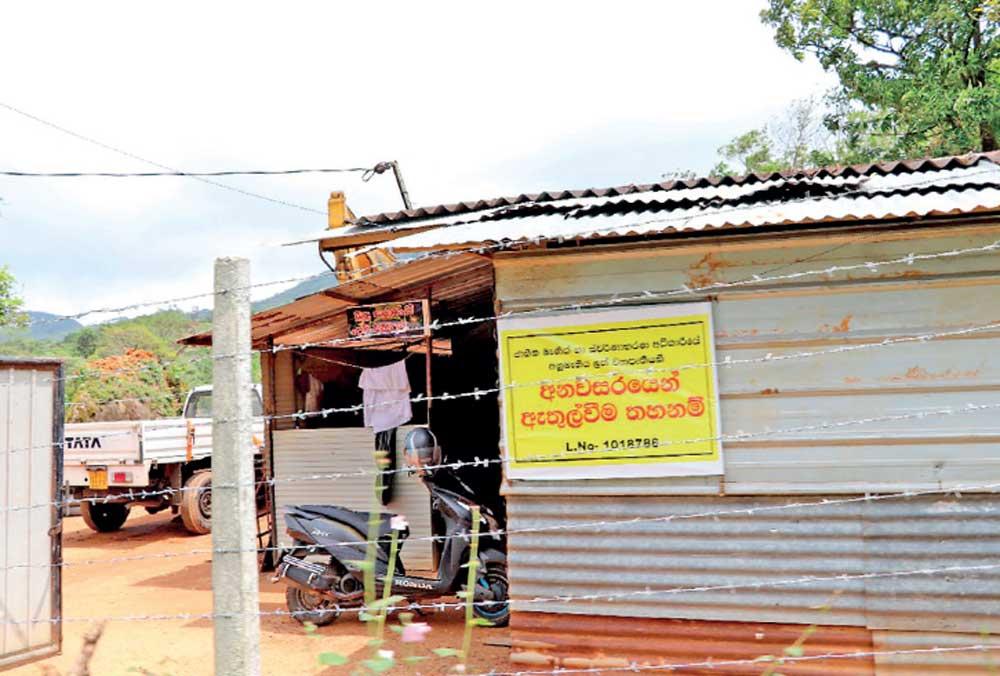
Police officers are not granted the authority to inspect sites where licences have been issued or to verify the legality of a licence
 The key figure behind this questionable operation is a businessman from Rakwana, who is coordinating the mining activities
Leveraging his political connections and financial cloud, this person influences the National Gem and Jewellery Authority
Officials of the National Gem and Jewellery Authority constantly obstruct other government authorities from inspecting these sites

By Sajeewa Chamikara
An illegal mechanised gem mining operation is taking place on a private land, located on the border of Sannan Dola, near the entrance to the main forest and the elephant corridor in Botiyathenna area of Sinharaja in Dolekanda Grama Niladhari Division. This area comes under the control of the Kalawana Divisional Secretariat in Ratnapura District.
The key figure behind this questionable operation is a businessman from Rakwana, who is coordinating the mining activities. He played a significant role in the rise of the National People’s Power and in the election of an individual to a prominent state institute. Leveraging his political connections and financial cloud, this person influences the National Gem and Jewellery Authority and manipulates multiple government institutions to facilitate illegal mining operations. Officials of the National Gem and Jewellery Authority constantly obstruct other government authorities from inspecting these sites. They also provide support for the illegal use of backhoes in gem mining, allegedly in exchange for substantial bribes.
The illegal gem mining operation is being conducted using four backhoes, causing severe destruction to the initial underground streams of Sannan Dola and its border, which is considered the source of Rambuka Ganga. The Rambuka Ganga, a major tributary of Kukule Ganga, ultimately feeds Kalu Ganga. This mechanised mining process is releasing vast amounts of silt into the waterway system, endangering numerous endemic and rare aquatic species found in Sri Lanka.
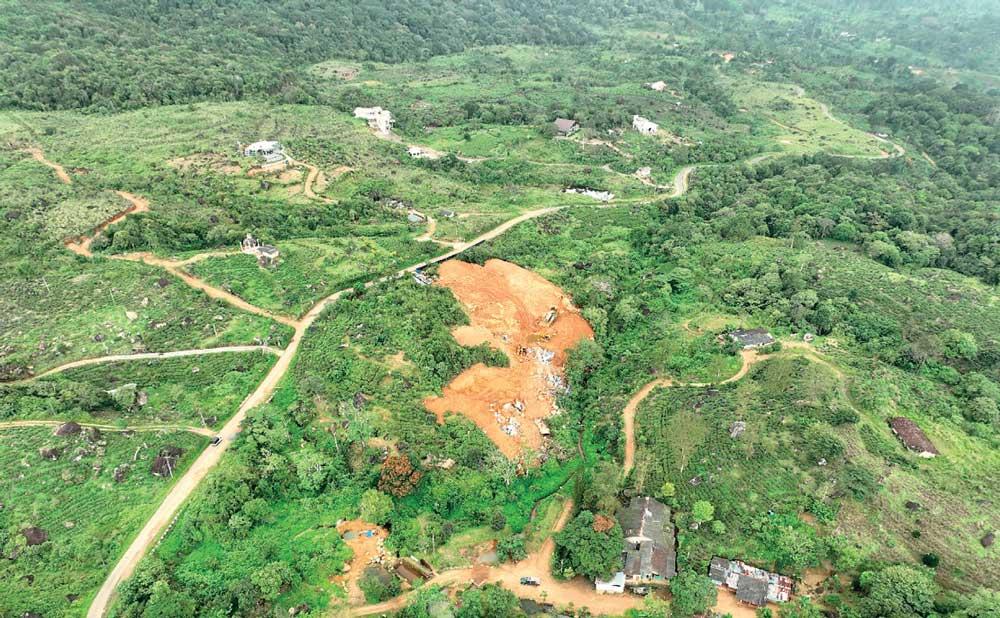
Currently, a large portion of the forest system in Sinharaja has been fragmented due to hotel construction activities and mechanised mining, posing significant threats to the endemic species inhabiting the sub-montane forests in the area
The mining site, located in Manikkawatta, Botiyathenna, is a crucial elephant corridor connecting the Sinharaja elephants from the Morning Side area, through Handapan Ella, to Dellawa-Walankanda forest area. Furthermore, Botiyathenna area serves as a forest entrance linking Handapanella and Panilkanda within the entire Sinharaja Forest Reserve. If this passage is blocked, it will lead to the complete fragmentation of the forest. Already, an extensive section of the forest has been divided due to hotel construction and mechanised mining, posing significant threats to the endemic species of these sub-montane forests.
The obstruction of the main elephant corridor between these two forest systems has forced the two elephants residing in Sinharaja area to enter nearby villages, including Rambuka, Thanawela, Ellagama, Handiyakede, Kajugaswatta, Pothupitiya, Kopikella and Cypraswatta. This has led to threats to villagers’ lives and significant damage to crops and property.
Issuance of licences
Without considering the severe ecological impact and the illegality of granting such licences, the National Gem and Jewellery Authority has authorised mechanised gem mining in this environmentally sensitive area. According to guidelines of the National Environmental (Prohibition of the use of equipment for exploration, mining and extraction of sand and gem) Regulations, No. 01 of 2006, issued under Extraordinary Gazette No. 1454/4 dated July 17, 2006 published in line with the Section 32(2) of the National Environmental Act No. 47 of 1980, as amended by Act No. 53 of 2000, the use of prohibited equipment such as backhoes, bulldozers, and extraction machines for gemstone mining in rivers, on riverbanks, or within river reserves is strictly prohibited. A river reserve refers to the area extending 30 metres from the riverbanks for streams less than 25 metres wide and up to 60 metres for those wider than 25 metres. Consequently, the National Gem and Jewellery Authority is not permitted to issue licences for mechanised mining along the Sannan Dola border.
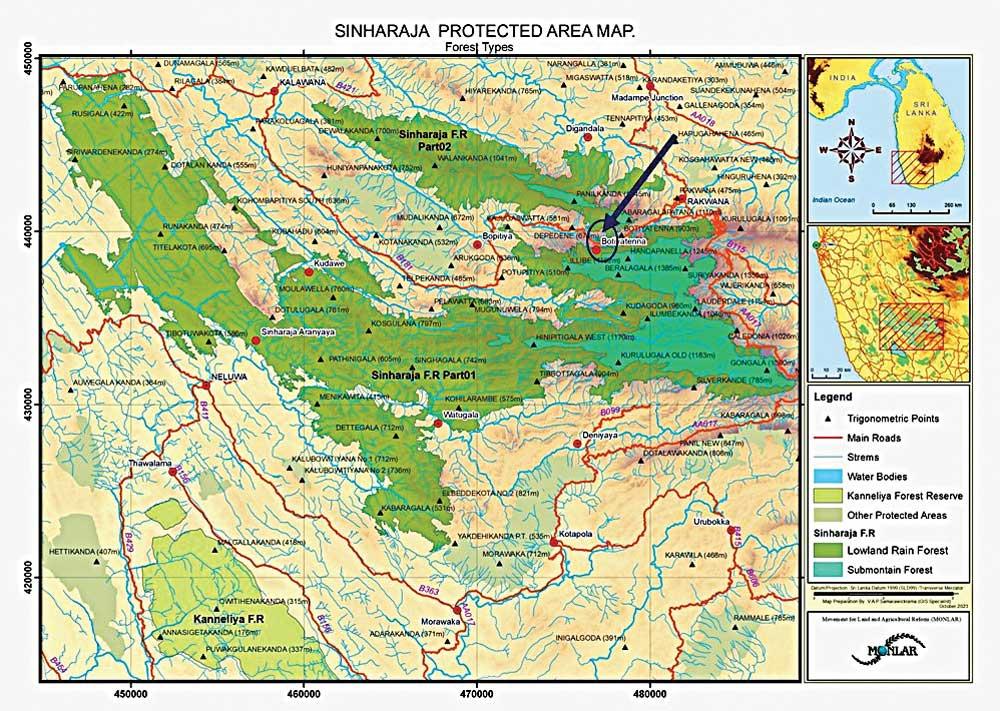
The Central Environmental Authority has the power to arrest individuals engaged in illegal mechanised gem mining in rivers or their reserve areas. Under Section 31 of the National Environmental Act, those found guilty in a Magistrate’s Court can face a fine of up to Rs. 15,000, imprisonment for up to two years, or both. Despite these legal provisions, the National Gem and Jewellery Authority has issued mining licence number 1018786 for mechanised mining in Botiyathenna , violating the National Environmental Act.
Illegal actions
The primary interpretation of the National Gem and Jewellery Authority Act No. 50 of 1993 states that its purpose is to regulate the gem industry. However, instead of regulating the gem industry, the National Gem and Jewellery Authority, established under Section 2(1) of the Act, has facilitated destructive business practices that threaten both natural ecosystems and human livelihoods. An analysis of the special audit report on the National Gem and Jewellery Authority, conducted by the Auditor General’s Department on January 14, 2020, revealed its failure to effectively enforce laws against illegal gem mining. Furthermore, statements from industry businessmen suggest that state officials are accepting bribes on a large scale.
Non-enforcement of laws on bribery
Under Section 15 (1) of the National Gem and Jewellery Authority Act, the Authority is the sole entity authorised to issue gem mining licences for both government and private lands. Furthermore, Section 15 (2) stipulates that no person may engage in the gem industry without a valid licence. Sections 15(4)(b)(ii) and (iii) state that each licence is subject to terms and conditions and remains valid for twelve months. Under Sections 15(6) and (7), the Authority has the power to revoke a licence if the licensee fails to comply with its terms and conditions. Additionally, Section 48(1) empowers the Authority and its authorised personnel to enter and inspect any gem mining site, whether licensed or not. Section 48(2) states that any person who obstructs or resists such an inspection may, upon conviction by a Magistrate, face a fine of no less than ten thousand rupees, imprisonment for at least six months, or both.
Section 49(1) grants the Authority the power to seize and detain any equipment used in illegal gem mining, while Section 50 stipulates that such seized items are forfeited to the State. Under Section 51(2), any person found guilty of an offence under this Act may, upon conviction before a Magistrate, be fined up to one million rupees, sentenced to imprisonment for up to five years, or both.
Despite the extensive powers granted to the National Gem and Jewellery Authority under the Act, instead of regulating legal gem mining, the Authority is complicit in smuggling operations by collaborating with influential politicians and wealthy businessmen. This corruption has led to the protection of illegal miners in exchange for bribes, placing both local communities and ecosystems under immense strain.
Obstructing the Police
Section 47 of the National Gem and Jewellery Authority Act authorises the Authority to delegate its powers to other public officers for the enforcement of the Act. Accordingly, by letter No. IGP/Fax/IN/1634/2014 dated 16.10.2013, these powers were assigned to police officers and officers in charge of Police Special Task Force camps. Additionally, Police Circular No. 2542/2015, dated 11.05.2015, informed all police officers of their authority to conduct raids on locations where illegal gem mining occurs without a licence and to arrest those engaged in such activities.
Critics opine that to help police officers identify illegal gem mining sites, the Regional Manager of the Gem and Jewellery Authority must provide a monthly list of valid licences to the relevant police station. However, police officers are not authorised to inspect sites where licences have been issued or verify their legitimacy. Using this, the Authority issues licences in exchange for bribes, while not granting any government institution the power to inspect them, instead maintaining them under the monopoly of the Gem and Jewellery Authority. As a result, gem traders, in collaboration with officials from the National Gem and Jewellery Authority, engage in this racket by merely displaying the licence number.
The Clean Sri Lanka programme is being implemented nationwide, yet the continued prevalence of gem smuggling exposes it as little more than a propaganda effort. The current government, like its predecessors, appears to turn a blind eye to these activities, allowing officials and businessmen to exploit and destroy the nation’s natural resources, violate the rights of all living beings, and undermine the rule of law. This highlights that promises of a “Prosperous Nation and a Better Quality of Life” remain confined to election campaign policy documents, lacking genuine commitment to the people. To safeguard the entire Sinharaja forest system and ensure the well-being of present and future generations, it is imperative to put an end to illegal mechanised mining and unregulated hotel construction while designating the entire Botiyathenna area as a protected forest entrance.
(The writer represents the Movement for Land and Agricultural Reform)
03 Jun 2026 9 hours ago
03 Jun 2026 9 hours ago
03 Jun 2026 9 hours ago
03 Jun 2026 9 hours ago
03 Jun 2026 03 Jun 2026