18 Dec 2025 - {{hitsCtrl.values.hits}}
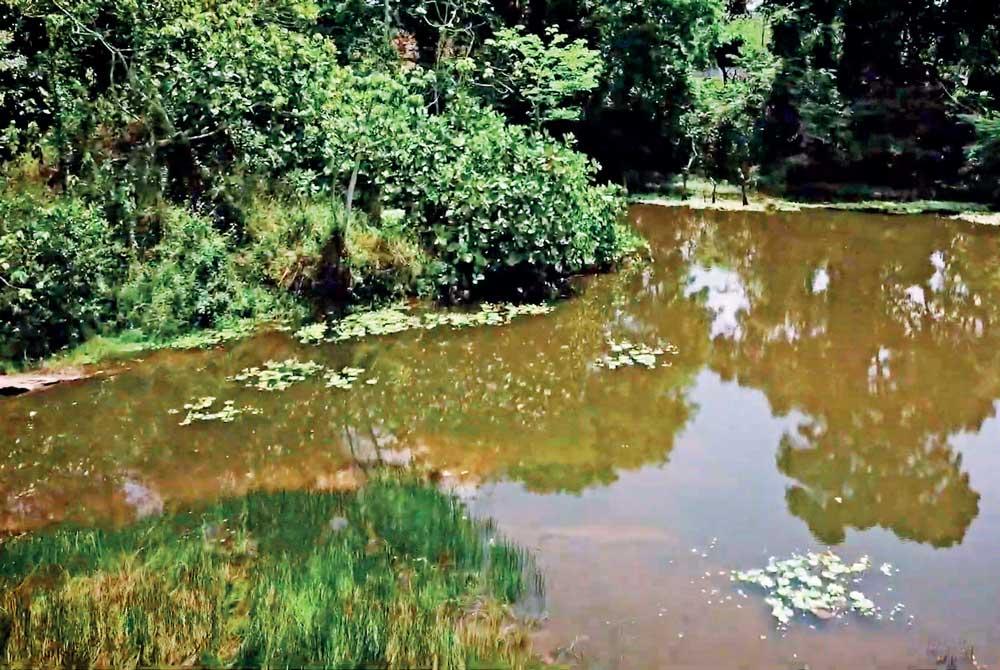
The Diyagama Forest is said to have features of a lowland rainforest and is an invaluable habitat for many flora and fauna (Image courtesy – Diyagama Forest research team)
|
|
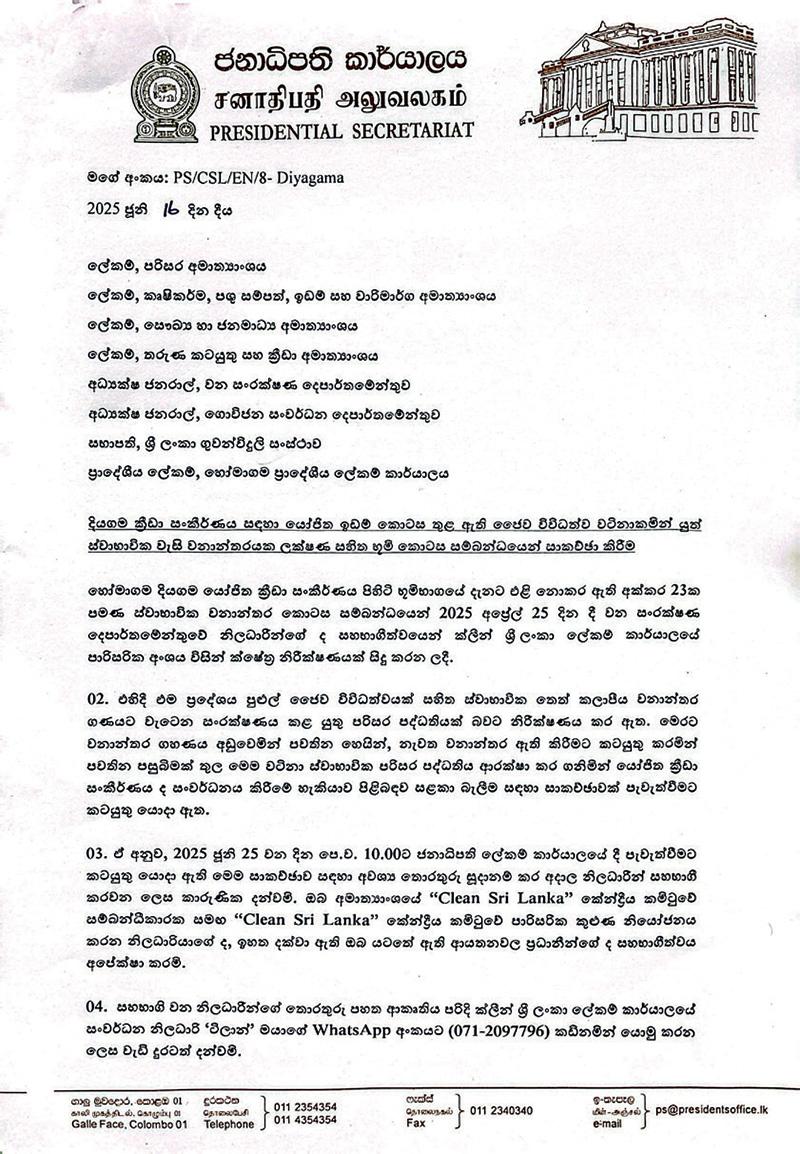
| Response letter from Presidential Secretariat |
A 50-acre forest patch located in Diyagama, a suburb coming under the Homagama Divisional Secretariat has become home to over 220 species of flora and fauna, including several endangered and vulnerable species. The Diyagama Forest is the only Forest patch in Homagama and its suburbs and is under threat following recent development projects. Apart from becoming a refuge for many species, this forest patch is also carrying out vital ecosystem services which would be disrupted if it isn’t protected. Initial studies suggest that conservation efforts should focus on controlling the spread of invasive species, reducing road kills of various fauna, protecting large trees from illegal exploitation and promoting natural regeneration with least disturbance to maximize its ecosystem services. While research studies continue to determine subspecies of certain flora and fauna recorded in this invaluable habitat, conservationists are urgently requesting authorities to gazette this forest patch as an Environmental Protection Area.
Home to many species
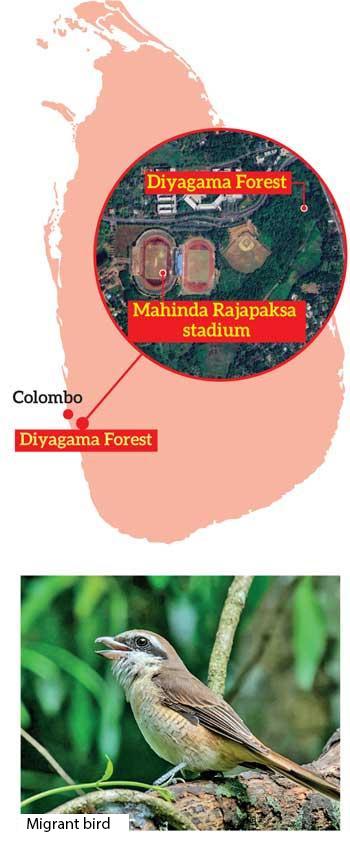
A complete biodiversity survey conducted by plant science students at the Colombo University recorded around 100 plant species including Badulla, Rathkela and several species of Korakaha. Many species of plants found in rainforests were recorded here. Around 90 species of birds were recorded including forest birds and wetland birds because this forest patch includes two lakes as well. One could find Dwarf Kingfisher, Stork Billed Kingfisher and Common Kingfisher in this area. At night, one section serves as a roosting area for around 1000 birds, mainly Egrets, pelicans and so on. Forest birds such as Hanging Parrots, Dark-fronted Babbler, Barbets, Woodpeckers ranging from the smallest species such as Lesser Yellow Nape to Common Flameback and Green pigeon could be spotted here. Rare and vulnerable species such as the Cotton Pygmy-goose can also be seen here. The Woolly Necked Stork also visits this location sometimes.
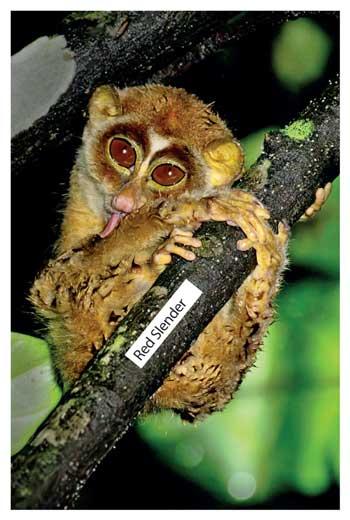
 According to Shamil Rasanga, member of the Diyagama Forest research team and final year student at Colombo University studying plant science said that in terms of animals they once recorded lorises in this area, but didn’t see them in big numbers. “But one could spot the Red Slender Loris, Fishing Cat, Otter and endangered purple faced langur. There are also around 10 species of endemic and endangered amphibians, around 29 reptiles including vulnerable species such as Ceylon Krait. We also recorded around 60 endangered and vulnerable butterflies as well. There are around 18 endangered freshwater fish species including Uda Handaya and Kolakanaya,” he added.
Rasanga said that the 50-acre expanse of land has already been fragmented into two 25 acre sections. “We then received information about the Loris population from people in the area. One of them was found dead and it was afterwards that we conducted a survey for three weeks. We saw Lorises carrying babies and we estimated around 50 of them. However we still haven’t identified their subspecies as well. We also spotted several species of owls such as the Brown Fish Owl,” he said.
An urgent call for legal protection
What is alarming at this point is that the land isn’t under the purview of the Forest Department of Sri Lanka. The Daily Mirror learned that plans are underway to clear this forest patch to put up a hostel as part of the sports complex. Currently the land is under the purview of the Homagama Divisional Secretariat and hasn’t been given yet to any party.
Rasanga further said that all forest areas have been cleared for development purposes and all animals have been limited to this forest patch. “This is now a biodiversity hotspot. It is in close proximity to Piliyandala, Jayawardenepura and serves as an observatory for students. It also acts as a floodwater control, absorbing water in the area. There are two streams which are tributaries to Bolgoda River and it acts as a micro-catchment area as well. So it is important that this forest patch is protected,” he underscored.
A Call to Protect Diyagama Forest for a Greener and Healthier City
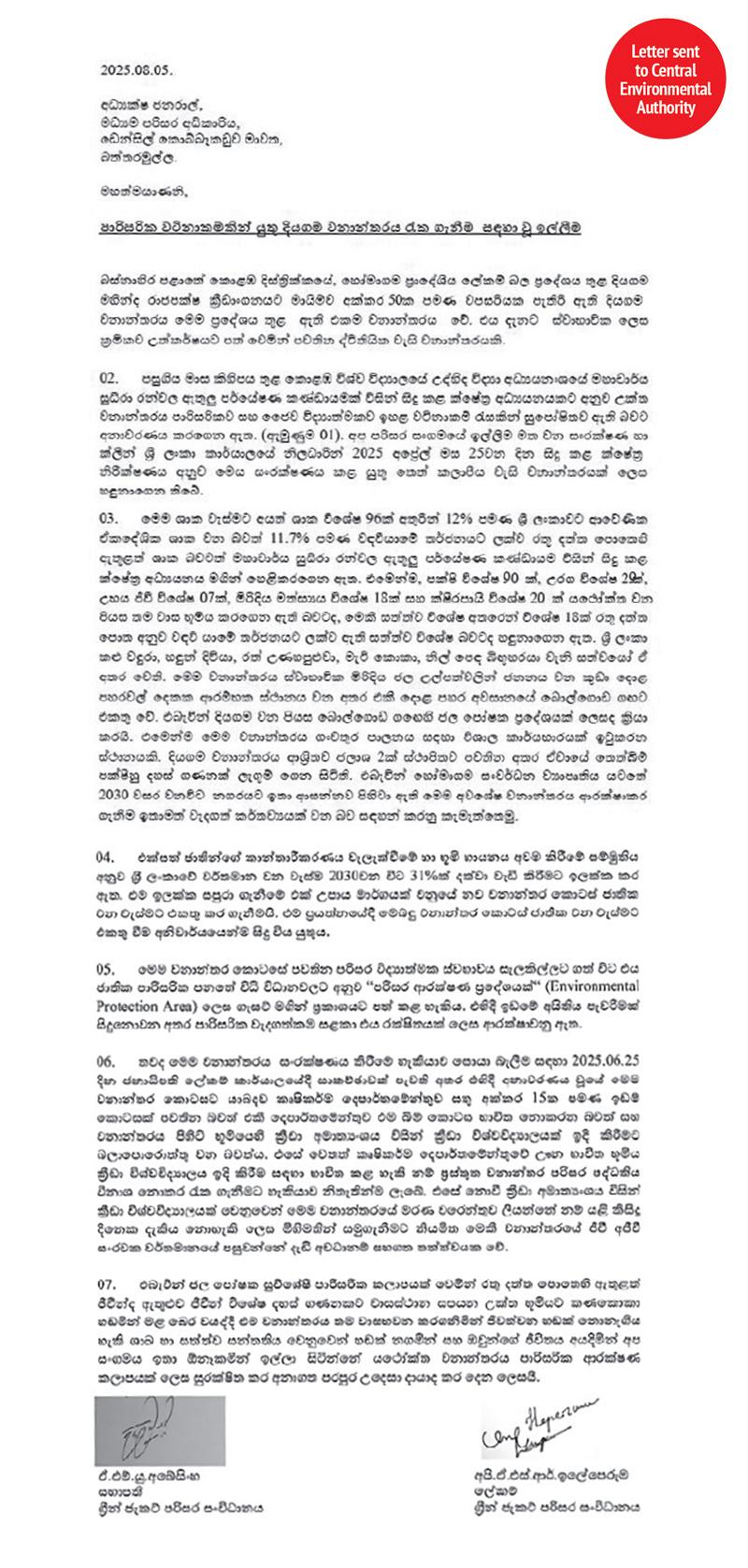
The Wildlife and Nature Protection Society of Sri Lanka (WNPS) expresses its deep concern regarding the proposed clearance of the Diyagama Forest in Homagama, an urban forest of exceptional ecological value that is now under imminent threat from large-scale infrastructure development.
In a statement issued, the WNPS stated that recent scientific surveys conducted by researchers from the University of Colombo have confirmed that Diyagama Forest supports remarkably high biodiversity for its size. The forest contains 103 plant species across 51 families and 87 genera, including 12% endemic flora. Notably, several species such as Doona congestiflora, Litsea ligustrina, Petchia ceylanica, and Memecylon angustifolium are classified as threatened under Sri Lanka’s National Red List.
 Call to protect Diyagama Forest
The WNPS notes with concern that Diyagama Forest has already suffered degradation due to past instances of poorly planned urban development. The proposed complete clearance of the remaining forest for a Sports University complex would result in the total loss of this ecosystem.
Such action would not only eliminate critical wildlife habitat, but also disrupt natural water retention systems. The forest’s springs, wetlands, and central lake currently function as a natural flood buffer during periods of heavy rainfall, an ecosystem service of increasing importance in the face of climate change and extreme weather events.
Diyagama Forest is far more than an isolated patch of greenery. It is a living laboratory, a repository of natural heritage, and a vital climate and health safeguard for the people of Homagama and the greater Colombo region.
The esteemed wildlife group urges policymakers, planners, and relevant authorities to halt further destruction of Diyagama Forest and to explore alternatives that harmonise development with conservation. They propose that the forest be formally protected and integrated into future planning as a Living Green Research and Education Zone, demonstrating how universities and cities can coexist with nature rather than replace it.
Preserving Diyagama Forest would set a powerful national precedent, one that reflects Sri Lanka’s commitment to sustainable development, biodiversity conservation, and a healthier urban future.
Let Diyagama Forest stand as a living symbol of coexistence between nature, education, and society.
According to Isuru Alawatte, Deputy Conservator of Forests at the Forest Department, Colombo is a wet zone and this forest patch could be identified as a lowland rainforest. “It has many species of flora and fauna. But in terms of land acquisition, this forest area is under the purview of the Homagama Divisional Secretariat and the Divisional Secretary should decide to which party the land should be allocated to,” he added.
“This land was initially owned by Sri Lanka Broadcasting Corporation and it was subsequently acquired by the Ministry of Sports to build a National Sports Complex somewhere around 2005,” said an official at the Homagama Divisional Secretariat who spoke on conditions of anonymity. He maintained that he isn’t authorised to speak to media. “As part of this sports complex project the stadium was built. But this forest patch is not a crown land. The acquisition process is currently underway following a cabinet decision made to transfer this land to the Sports Ministry to build a baseball ground and a National Sports academy. As far as the acquisition process is concerned the Homagama Divisional Secretariat will transfer the land to the Sports Ministry once the land ministry issues its clearance,” the official said.
He said that the cabinet decision doesn’t indicate any reference to the Forest Department of Sri Lanka even though this forest patch includes an abundance of flora and fauna. However, research studies have proved the type of species present here including the Loris. It is ideal for educational and research activities, but there hasn’t been any official communication regarding its biodiversity aspect. There were certain discussions, one at the Presidential Secretariat under the Clean Sri Lanka unit to discuss the biodiversity aspect of this forest patch but nothing positive came out of that discussion. So now it’s up to the cabinet to change the decision if at all. Otherwise, once the land ministry issues its clearance, the land on which the forest patch has grown would be given to the sports ministry,” the official further said.
Several attempts to contact Deputy Environment Minister Anton Jayakody to inquire about a potential to review the cabinet decision made, taking the biodiversity of this forest patch into consideration, proved futile.
06 Jun 2026 9 hours ago
06 Jun 2026 9 hours ago
06 Jun 2026 06 Jun 2026
06 Jun 2026 06 Jun 2026
06 Jun 2026 06 Jun 2026