25 Mar 2026 - {{hitsCtrl.values.hits}}
 “It is not about when the war will end, but how long stability takes to return. We must avoid hasty decision-making and implement resilience amid systemic uncertainty.”
“Losing one’s employment in a company swallowed by competitors cannot be compared to losing a supreme religious leader, emasculated sovereignty, and economic losses that impact entire populations.”
“A U.S. torpedo costs $5 million, while the Iranian drones wreaking havoc in the Gulf cost $20,000. This is asymmetric attrition designed to bleed the West’s sophisticated military economy.”
“AI-generated images and gaming footage are being used to exaggerate casualties, causing localized panic and fanning the flames of global insecurity far beyond the actual battlefield.”
“The sectarian conflict that birthed the Islamic State should haunt any plans for regime change. Those who bear the brunt of the resulting violence are always the forgotten civilians.”

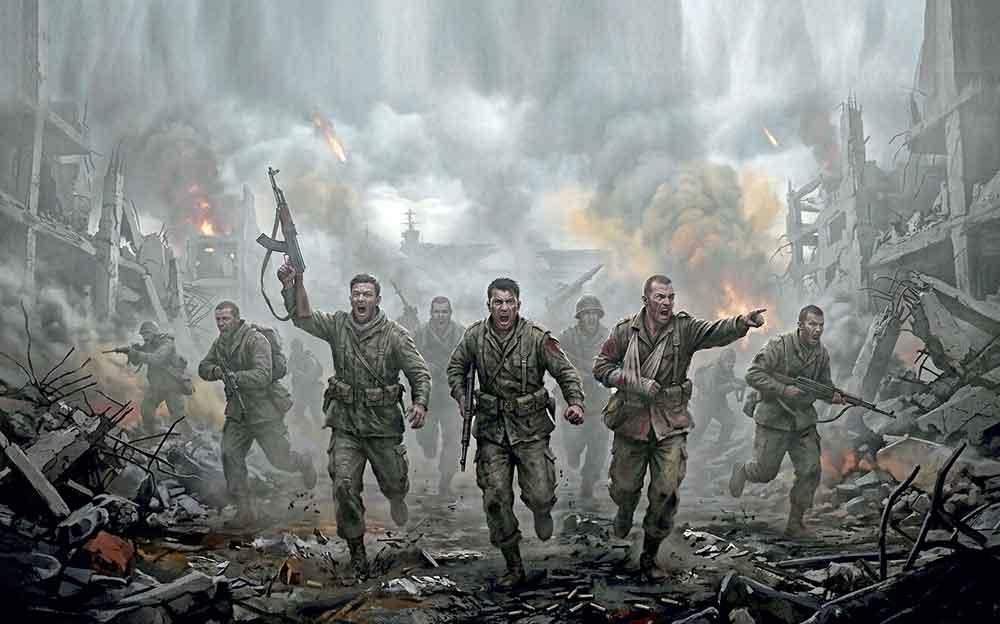
The sleek missile strikes dominating our news feeds tell only half the story. Behind the high-definition “smoke screens” of the U.S. war machine, a far more complex and dangerous asymmetric conflict is unfolding. Professor Praveen Abhayaratne argues that while the West pursues conventional dominance and regime change, Iran is deploying 4th generation warfare to convolute the global theatre. From drone strikes in the Gulf to cyber-attacks and disinformation “memes,” the cost of this conflict is being offloaded onto the global economy, threatening supply chains and national sovereignty alike.
Here we go again: another global crisis that cripples the average person’s life, regardless of which remote corner of the world they live in, if they depend on fossil fuels in daily life.
So despite it being the agenda of the United States, the war is now on everyone’s agenda. What we all want to know is, “When will it end”? From all accounts that seem to flood our news feeds, the end seems near as promised by Donald Trump.
As soon as the mighty American war machine has devastated Iran adequately to sit at the negotiating table set by the United States, or a regime that is acceptable to the United States is installed?. The President of the United States seems to be applying his successful business strategy of ruthless coercion and might beats right, to changing the world order.
Seemingly ignoring the theatre of international relations has complex dynamics that run deep in embedded roots of civilizational relationships and identity.
Losing one’s employment in a company or a business that is swallowed up by competitors cannot be compared to losing a supreme religious leader, emasculated sovereignty, national insecurity, and economic losses that impact entire regions and populations. Barely three weeks in, behind the smoke screens of mainstream news streams, we see a different story evolving.
While the news reels keep showing us gripping images of missile strikes (some 2000 missiles have been used by the United States, 500 by Iran, and an unknown number in over 7500 attacks by Israel), and inferring that there have been minimum to no civilian casualties in strikes that target security infrastructure, there is a different strategy and consequences evolving throughout the middle east region and beyond.
The Islamic Republic of Iran has been preparing for this confrontation with the United States for decades. The two nations have been sworn enemies since the Iranian Revolution in 1979 overthrew the Western allied Sha of Iran. We knew this war would come. Iran would never have planned to engage the United States military on equal terms. Instead, they have been preparing for asymmetric engagement, on what military experts might identify as 4th generation warfare (which also includes elements of 5th generation warfare).
What we are seeing behind the smoke screens of missile attacks, is Iran exploiting the complex regional dynamics of the Middle East, Caucasus, and the Mediterranean to convolute and expand the theatre of conflict.
Starting with the suspected second Iranian missile strike in Turkiye, for which Iran denied responsibility and alleged was an Israeli false flag operation to fissure the Iranian-Turkiye relationship. President Erdogan warned Iran that “No one should enter into a calculation that would cast a shadow over our thousand-year-old law of neighborliness and brotherhood, one that would leave deep wounds in the hearts and minds of our nation”.
Turkiye also took the opportunity to increase its air assets in Northern Cyprus where its forces are arguably poised to defend against the Israeli presence in the South. The British air base in Southern Cyprus was attacked by an Iranian-made drone on the February 28.
The assumed target that was barely damaged was the hangar housing American U-2 surveillance planes. A little further east, where US presence and Israel’s close ties to Azerbaijan is uncomfortably situated for Iran, Islamic Revolutionary Guard Corp (IRGC) operatives were suspected of launching drone attacks and attempting to sabotage major oil pipelines running through to Turkiye.
In the Gulf, Iranian missiles and drones struck US bases and critical infrastructure throughout the region in Kuwait, UAE, Saudi Arabia, Qatar, Bahrain, and Oman. While on the surface the attacks appear to be unprovoked aggression by Iran, it retards the ability of US forces to operate freely across the waters of the Persian Gulf.
Regardless of how they decide to support the US against Iran, what has been an oasis of stability in terms of investment and commerce in general is caught in the Middle and now positioned as a conflict-affected region.
Gulf states will undoubtedly prioritize the safety of their populations and economic interests over the military urgency of the US.
While the expensive US attack on Iran continues, it is also being forced to expand defence of its military and non-military assets throughout the Persian Gulf and surrounding regions. Iran appears to be expanding the theatre of conflict in a form of asymmetric attrition against the United States. Iran’s low-cost retaliation stands in contrast to the value and sophistication of US attacks.
The US torpedo (MK-48) that sunk the Iranian frigate Iris Dena off the coast of Sri Lanka costs between $4-$5 million, while the Iranian Shahed-136 drones wreaking havoc in the Gulf cost between $20,000-$50,000 each.
Iran’s targeting of energy, economic, and supply chain assets in the heart of global trade networks increase the cost of war for neighbouring states and reverberates in global markets. In a show of asymmetric strength, the Iranian Revolutionary Guard released apparent footage of its naval assets buried deep underground to defend the Strait of Hormuz.
Small boats, mines, and missiles ready to deploy through a network of tunnels demonstrated that it has indeed been preparing for this conflict for a long time. The Trump administration has so far failed to secure support for protecting shipping through the Strait of Hormuz. US NATO allies, Japan, South Korea, and China have not responded positively to Trumps demand.
Adding to the insecurity frenzy from major news outlets, is all the ‘action’ in the virtual space. AI-generated images and videos allow for spreading fake news that exaggerates casualties and damage on both sides. Led by the White House use of Department of Defence footage with gaming videos, parties on both sides are employing inflammatory messaging tactics that widen divisions between communities and countries.
Misinformation and fake news are causing localized panic and fanning flames of global insecurity on the impact and escalation of the war. Iranian cyber assets have also been deployed, targeting entities and infrastructure in the United States, Israel, and NATO allies over the last two weeks.
At a time when the US and Israel have managed to inflict heavy casualties on the Iranian leadership, and Iran may seem to be on the brink of collapse, managing only to fight back only with low intensity attacks, let us consider what the full picture tells us in context of history.
A key objective of US and Israeli aggression appear to be regime change. The lessons from Afghanistan, Iraq, Libya, and Syria demonstrate what a messy and bloody road this is. Internal instability and insecurity resulting in multiple factions vying for power would result poorly for the complex regional relationships Iran maintains.
The Gulf States, Turkey, many European nations, Russia, and China would all prefer a stable Iran.
Instability and insecurity in Iran would bring uncertainty to all their economic, security, and political interests. New regimes installed in those countries were almost impossible to work with (for the US), even if they are on the surface friendly to the US.
Scenes of the Taliban taking over US military assets in Afghanistan before the last American boots had left the country come to mind. The sectarian conflict that devastated Iraq and birthed the Islamic State should still haunt any plans of regime change. Bearing the brunt of violence from the resulting conflict will be civilians and minority groups, who fade into memories of ‘collateral damage’.
If the Regime holds and survives the US-Israeli onslaught, the asymmetric response that will run in parallel will bleed the region and the global economy.
The Iranian armed forces are designed to operate both in response to a hierarchical structure and engage in a decentralized manner.
Their hybrid structure would allow for continuity amidst decapitation strikes to their leadership. All offensive and defensive nodes of the security apparatus would have received their orders by now.
They have been preparing for this level of operational effectiveness and continuity since Israel and the US began assassinating their scientists and key military commanders.
Qasem Soleimani, Commander of the IRGC Quds force, an elite branch of the IRGC that specializes in extraterritorial unconventional warfare, was assassinated in January 2020, in Baghdad, Iraq.
Globally, diplomatic relations will be tested and the security infrastructure of the wider region will be strained. The all-important Strait of Hormuz would continue to be a flashpoint for conflict.
The chaos will expose vulnerabilities and weaknesses to be exploited as the new world order starts to set up. It is not so much about when will the war end but how long will it take for stability to return. It will take a while. The period of insecurity will ebb and flow, providing massive growth opportunities for the defence industry, and economic sectors that usually benefit in conflict situations such as insurance, finance, technology, oil and gas, and some manufacturing sectors.
Ukrainian specialist (some 200) in counter drone warfare have already been deployed to Middle Eastern countries. Gas prices worldwide tell their own story.
What we know now is enough to plan amidst a global crisis. We have been here before, albeit in a different crisis, a pandemic, not a conflict.
We know to expect shortages in all elements of the economy as supply chains get backed up. The response should be same, avoid hasty decision-making and plan resilience. Implement resilience amid uncertainty. We each know what we would have done better. One would want to be a firm footing of internal stability driven by lessons learned when the smoke screens and fake memes fade into the next news reel.
Praveen Abhayaratne, VP at Trident Futures Group, is a Professor of Strategic Security at the Henley-Putnam School of Strategic Security, National American University (USA), and the Co-Editor in Chief of the National Defence College Journal (Sri Lanka).
08 Jun 2026 2 minute ago
08 Jun 2026 10 minute ago
08 Jun 2026 33 minute ago
08 Jun 2026 36 minute ago
08 Jun 2026 59 minute ago