24 Oct 2025 - {{hitsCtrl.values.hits}}
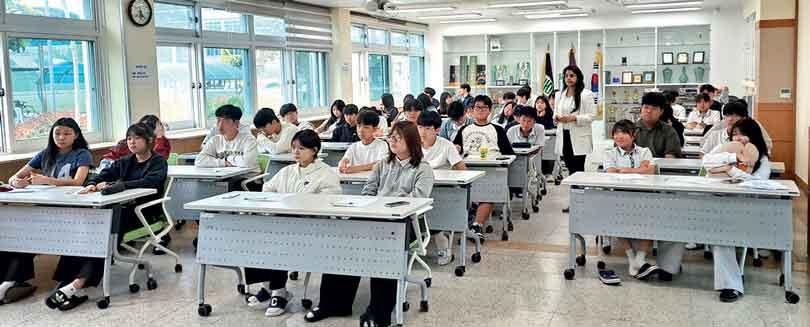
Pushpi conducting a workshop on Peacebuilding at the Yang Yang High School Sokcho South Korea where all corporal punishment of children was abolished in January 2021
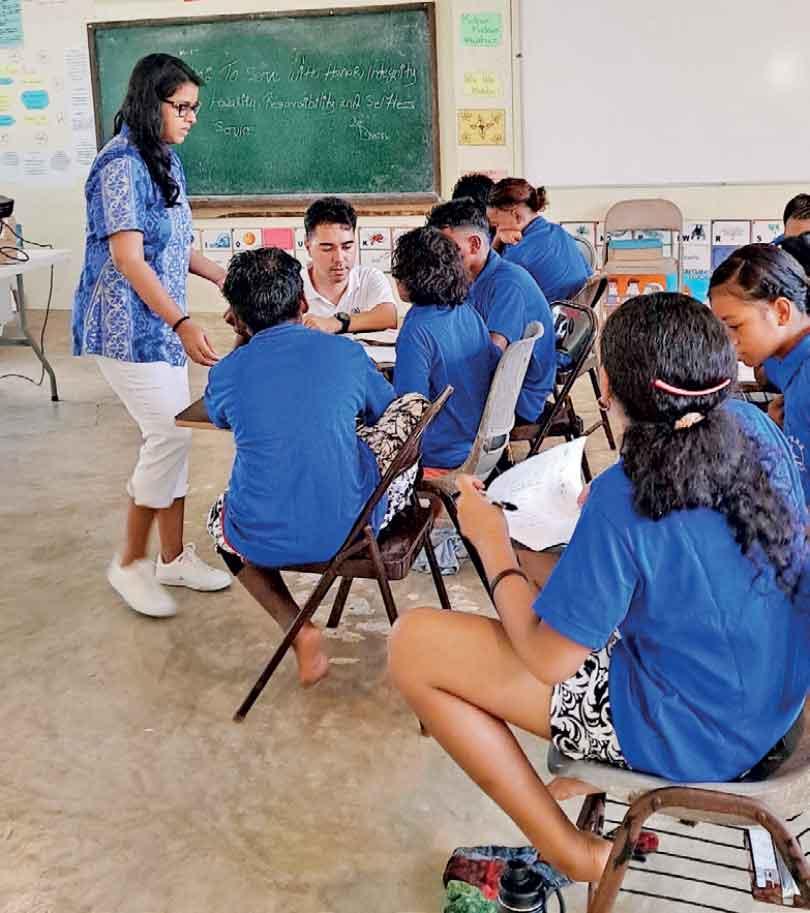
Pushpi with Primary school children in Micronesia, where corporal punishment of children is still lawful despite recommendations to prohibit it
By Pushpi Weerakoon
For decades, the use of corporal punishment in schools has been justified as a means of enforcing discipline. Yet mounting evidence from psychological, neuroscientific, and sociological research reveals a stark reality: the practice does not instil lasting compliance and carries profound, often irreversible consequences for children.
Research shows that physical punishment is largely ineffective in producing long-term behavioural change. While it may generate short-term compliance, evidence consistently demonstrates it does not support a student’s growth, understanding, or moral development over time. Physical punishment fails to teach students the consequences of their actions, leaving them ill-equipped to manage conflicts, build relationships, or develop emotional intelligence.
Studies suggest that restorative discipline techniques—allowing students to reflect on their actions, understand the harm caused, correct mistakes, and rewarding positive behaviour—are more effective in fostering sustainable growth. These approaches set clear expectations and encourage accountability without instilling fear, creating an environment conducive to healthy development.
The restorative method emphasises understanding the harm caused by a student and its impact on themselves or the wider community. For instance, a student who makes excessive noise may disrupt an entire classroom.
This method encourages students to take responsibility and repair the harm through activities such as self-reflection, community service, apologies, or restitution. Accountability centres on the student’s obligation to those affected, including themselves. Victims are central to the process, participating actively in discussions through circles or safe spaces to share experiences, express emotions, and suggest reparative actions. Restorative practices fundamentally oppose physical punishment, focusing instead on communication, understanding, and learning.
In contrast, the retributive method emphasises punishment, often delivered physically, to deter future misbehaviour. This approach assumes that causing pain will prevent repetition of the behaviour. Corporal punishment, historically approved by community traditions, relies on authorities or teachers to administer discipline.
Victims play a limited role, typically testifying. Historical practices included flogging, branding, or other forms of suffering intended to enforce compliance. While retributive methods may produce immediate obedience, they fail to foster self-awareness, empathy, or problem-solving skills.
Negative implications
Physical punishment carries multiple, often lasting, negative effects on children’s behaviour, cognitive capacities, brain development, psychological health, and social interactions. Beyond the immediate physical pain, it inflicts emotional and mental trauma that can persist into adulthood.
Mental health issues: Children exposed to physical punishment are at higher risk of anxiety, depression, low self-esteem, and feelings of hopelessness. These issues frequently persist over the long term, impacting personal and professional relationships, academic performance, and general well-being.
Internalised aggression: When a trusted caregiver inflicts harm, children often internalise feelings of anger, anxiety, and sadness. This repressed emotional response can lead to chronic stress and difficulties in emotional regulation, shaping interactions with peers and authority figures.
Chronic stress: Physical punishment can trigger persistent stress in children, potentially resulting in a state known as “toxic stress.” This condition may disrupt brain development, increase susceptibility to substance misuse, and heighten risks of cardiovascular disease and mental health disorders later in life.
Brain development: Neuroscientific research indicates that corporal punishment can alter the structure and function of the brain. Spanked children show stronger neural reactions to threatening stimuli in the prefrontal cortex, a region associated with emotional regulation and threat perception. Severe punishment is linked to reduced grey matter in this area, which is critical for cognitive functions such as decision-making, problem-solving, and impulse control. Impaired cognitive development can manifest as lower IQ scores and reduced academic achievement.
Rather than teaching discipline, corporal punishment models violence as a legitimate solution, often leading to increased aggression. Children may imitate violent behaviour toward siblings, peers, and eventually, in adult relationships. Research links physical punishment to higher rates of criminal activity, delinquency, and antisocial behaviour.
Parent-child relationships are particularly affected. Fear replaces security, leading to emotional disengagement, mistrust, and anxiety. Social relationships are also impacted, as children who experience corporal punishment may normalise violence, struggle with empathy, and repeat aggressive behaviour in their adult lives.
Why survivors support corporal punishment
Despite evidence of harm, many who experienced physical punishment later justify it. This is often due to trauma responses, cultural norms, societal pressures, and learned behaviours rather than genuine belief in its effectiveness.
Traumatic bonding: Children rely heavily on caregivers for safety. When the caregiver inflicts harm, it creates a paradoxical bond where children rationalise the punishment to cope with fear. This rationalisation can persist into adulthood.
Cognitive dissonance: Admitting that punishment was harmful would require acknowledgement that parents caused unnecessary suffering. Many adults resolve this discomfort by justifying the behaviour and viewing it as beneficial.
Self-blame: Victims may internalise responsibility for the abuse, believing their actions provoked punishment. This coping mechanism fosters a distorted perception of control and can lead to acceptance of corporal punishment as justified.
Repetition compulsion: Individuals may unconsciously replicate past traumatic situations to regain a sense of control. This can manifest as defending or repeating physical punishment in their own relationships or parenting.
Intergenerational transmission of violence: Children exposed to corporal punishment are more likely to physically discipline their own children, perpetuating cycles of violence. Cultural norms, lack of alternative discipline models, and emotional reactions to stress further reinforce this behaviour.
Understanding these factors is crucial for breaking cycles of corporal punishment without blaming the victims.
Restorative tools in schools
Restorative practices replace physical punishment by focusing on relationships, accountability, and repairing harm. Proactive tools prevent conflicts:
Restorative Circles: Students and staff sit in circles to discuss issues, express feelings, and celebrate achievements. Passing a talking piece ensures everyone is heard, fostering equality and empathy.
Positive Behaviour Interventions and Support (PBIS): Clear rules and consistent reinforcement promote positive behaviour in schools and the wider community.
Classroom routines: Students co-create rules and consequences, increasing investment in maintaining order.
Relationship-building activities: Joint projects, daily check-ins, and shared interests strengthen bonds between teachers and students, enhancing trust and safety.
Responsive tools address harm when it occurs:
Restorative conversations: Informal discussions help students understand the impact of their actions and decide how to repair harm.
Restorative conferences: Structured meetings bring together all parties to address serious conflicts.
Peer mediation: Students develop conflict resolution skills and empathy, fostering peaceful environments.
Logical consequences: Focus on repairing harm rather than punishment, such as cleaning a polluted area after a school event.
Re-entry circles: Help returning students transition smoothly after extended absences.
Community service: Students engage in projects that repair damage and understand the consequences of their actions.
Government support
UN Sustainable Development Goals #16 and #4 commit to ending abuse and promoting quality education, emphasising the universal prohibition of corporal punishment. Sri Lanka ratified the Convention on the Rights of the Child in 1991, banning corporal punishment. Globally, over 135 nations have outlawed it in schools, with Thailand achieving full prohibition in March 2025.
Writer Pushpi Weerakoon is a UN frontline peacebuilder with 14 years of experience across four continents. She is a PhD candidate in Restorative Justice and holds master’s degrees in Public Administration, Conflict Transformation, Business Administration, Law, and Psychology.
07 Jun 2026 14 minute ago
07 Jun 2026 2 hours ago
07 Jun 2026 4 hours ago
07 Jun 2026 4 hours ago
07 Jun 2026 5 hours ago