13 Oct 2025 - {{hitsCtrl.values.hits}}
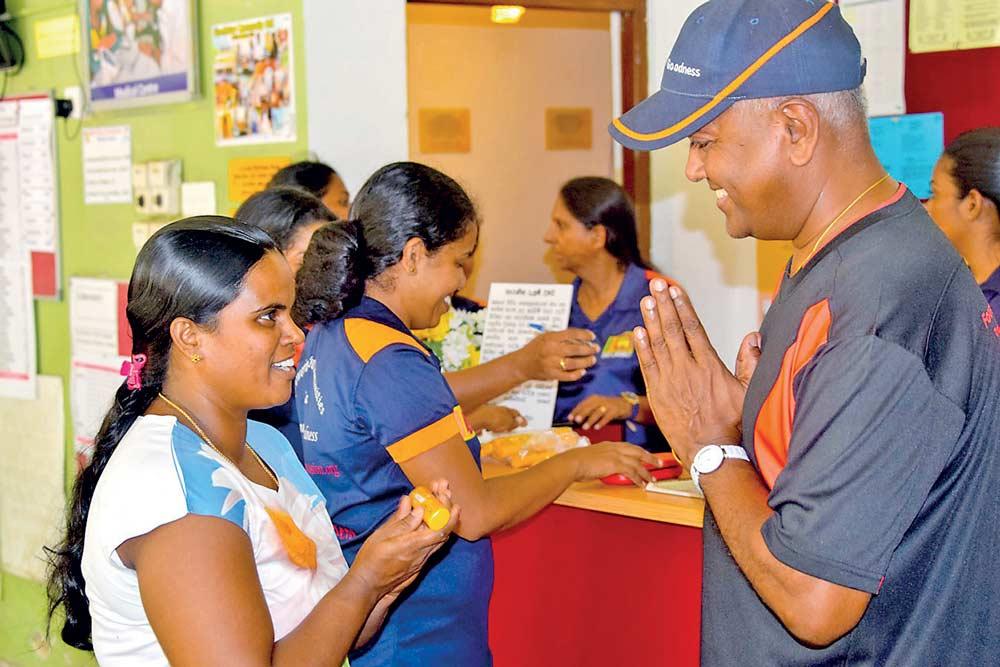
Gunasekera is seen inside one of the modest buildings where humanitarian work continues every day
By Allaam Ousman
Standing on the same ground that was once devastated by the 2004 Boxing Day tsunami, Kushil Gunasekera speaks with a quiet conviction born of lived experience.
The memory is vivid, the pain still raw two decades later. “I saw these eight young people who had no place to be buried. So, I gave this area for them to be laid to rest. It was an unbearable human stench - something no one could ever imagine. But here, this place became like a small cemetery within our sector. That day, I realised deeply that life is so fragile, nothing is permanent. Everything changes, and nothing lasts forever,” says Gunasekera.
From that moment of tragedy arose one of Sri Lanka’s most inspiring humanitarian efforts - the Foundation of Goodness (FoG). What began as a humble effort to help a few people has now become a model of rural empowerment and reconciliation, touching tens of thousands of lives across the island.
“When I was 16,” says Gunasekera, “I made a promise to help those who lacked opportunities. Compassion was my trigger. Seeing the suffering of others, I told myself I would do something. I never imagined how far it would go. But that’s the beauty of kindness - it multiplies.”
“In 1999, I decided to give back and created the first Village Heartbeat Empowerment Centre here, where our pre-school now stands. When I first worked with schools in this area, the hardships shocked me. Children had no electricity, no water, no shoes and sometimes just one book to write all eight subjects. For five years, I ran this centre, offering IT, English, maternity clinics, life skills, women’s empowerment, and children’s recreation,” he recalls.
“Then came the tsunami on 26 December 2004. At 9:30 in the morning, just before a scholarship ceremony, people ran inland shouting that the sea was coming. I barely escaped, guiding children and parents to higher ground in the temples. Minutes later, 30-foot waves destroyed everything here. In a few minutes, we were left with rubble,” he says.
“But that setback became a blessing. Waves of compassion overpowered the waves of destruction. With support from people across the world, we rebuilt and grew. What began as one empowerment centre has now expanded into 23 centres across Sri Lanka, serving 4,000 villagers and 10,000 registered students,” he says.
“One of our proudest outcomes was training 16 rural girls in computers after the tsunami. Within two years, they were running the back-office operations of Sri Lanka’s biggest conglomerate. Today, they work on supermarket invoices, hotel invoices, even bank reconciliations - while staying in their own villages. That changed their lives forever,” he adds.
“Our young people have gone on to become architects, software engineers, graphic designers, even national athletes. Two of our girls played in the Women’s World Cup, and six girls represented Sri Lanka in the U19 cricket series against Australia. Such stories inspire me every day,” he points out.
“I also remind myself of ten powerful two-letter words: If it is to be, it is up to me. That is exactly what you riders have embodied. You have created a legacy for Sri Lanka, not just through your effort, but through the lives you have touched,” he says.
Today, the Foundation of Goodness operates from the tranquil village of Seenigama near Hikkaduwa - once a region of heartbreak, now a beacon of hope. What began as tsunami recovery has evolved into a holistic village development model that spans education, health, women’s empowerment, sports, vocational training, and mental well-being.
Gunasekera gestures toward the modest buildings around him. “This is where I started,” he says. “There’s the island beyond - home to about 1,300 families. Sometimes we have to cross by boat at dusk, but we make it happen. That’s where our work continues every day” says
Inside the school, an environmental centre doubles as a creative classroom. “We collect and display letters from students - letters of kindness, gratitude, and friendship,” Kushil explains. “Every month, we select one student from each class who is kind, caring, generous, and friendly. We recognise them publicly, and these letters are preserved. It teaches values and builds a culture of goodness,” says Gunasekera.
The Foundation tracks everything meticulously. “We started doing this back in 2015,” he adds. “It’s about identifying positive patterns - because data can measure kindness too” he says.
Global partnerships
Over the years, the Foundation’s credibility has attracted powerful partnerships. “One of the biggest breakthroughs we had,” Gunasekera recalls, “was when Tesco gave us a grant of $500,000. I met their corporate officer in London, and they raised the funds in one night. That, along with another $500,000 from a U.S. pharmaceutical company, helped us rebuild key community services.”
Such support helped expand FoG’s reach - from rebuilding schools and clinics to establishing centres across the island. Today, 21 centres operate under its umbrella, serving more than 10,000 beneficiaries every year.
He shares a touching story about inclusion. “There was a young boy who was rejected by society because of his disability. I gave him a job, and he gained confidence. Then 25 mothers came to me saying, ‘We have children like him who can’t go to school.’ So, I built a new facility for children with special needs. Now, 25 such kids are learning, improving, and finding dreams,” he reminisces.
Empowering women
As he walks into the Women’s Empowerment Centre, Gunasekera’s tone turns warm and proud. “This is one of my favourite places,” he says. “We offer eight courses - from dressmaking and beauty care to baking, soft toys, and desserts. Over 18 years, we’ve graduated 7,269 women from 177 villages,” he adds.
He points to a group of young women carefully stitching school bags. “When they come here, many can’t even operate a sewing machine. But after six months, they produce 3,000 school bags for us. We buy back their products and give them steady income. It’s skill with dignity,” says Gunasekera.
Each year, FoG donates 10,000 school packs to children who cannot afford basic supplies. “The women who make them were once unemployed,” he smiles adding, “Now they are entrepreneurs. When you empower a woman, you empower her whole family and the nation”.
The Foundation’s internal data shows a striking trend. “Out of all our centres, 65% of students are girls and only 35% are boys,” he notes. “I don’t know what has happened to the boys in Sri Lanka,” he adds with a half-smile, “but the girls are diligent and steadfast. They study with purpose - and that gives me great joy.”
Healing Minds
Beyond education and skills, the Foundation also addresses mental health and social wellbeing - subjects still considered taboo in many rural areas. “Counselling is not easily accepted in these villages,” says Gunasekera. “So, we proactively visit classes to talk about domestic violence, substance abuse, relationships, and mental wellbeing. We save lives by changing mindsets,” he says.
 “In 1999, I decided to give back and created the first Village Heartbeat Empowerment Centre here, where our pre-school now stands. When I first worked with schools in this area, the hardships shocked me. Children had no electricity, no water, no shoes and sometimes just one book to write all eight subjects. For five years, I ran this centre, offering IT, English, maternity clinics, life skills, women’s empowerment, and children’s recreation”
- Kushil Gunasekera, Foundation of Goodness
His philosophy is rooted in Buddhist wisdom. “Mental health is one of the biggest challenges today. Many people cannot accept change. But if we understand impermanence - that nothing lasts forever - we can handle both joy and sorrow. I often speak of the eight worldly conditions: gain and loss, fame and disgrace, praise and blame, pleasure and pain. No one can escape them. But if you’re prepared, you can rise above them,” he explains.
He continues: “For World Mental Health Day 2021, I wrote about impermanence, letting go, positivity, gratitude, kindness, and patience. I also believe in the three gems - speaking the truth, not yielding to anger, and giving even if you have little to give. That’s what we practice here every day.”
A teenager’s gift
Among FoG’s most unique projects is its dental clinic - born from post-tsunami recovery work. “After the tsunami, Aviva UK offered to build a dental clinic but couldn’t provide long-term funding,” Gunasekera recalls. “I knew it was my only chance. I said yes, and 17 years later, it’s still running strong. We’ve treated 28,591 patients so far,” he adds.
Innovation is woven into everything they do. “Two Sri Lankan software engineers created an app that explains dental procedures step by step - the only one of its kind in Sri Lanka,” he says.
Then comes the story of a 13-year-old girl that has since become legend at FoG. “A girl named Sonali Manavir from California visited the clinic and started a charity called Recycling for Smiles,” he says proudly. He adds: “She collected recyclable waste, earned $700 a month, and donated it to fund dental care for 60 children every month. Between ages 13 and 19, she raised $50,000 and helped 5,000 kids. That’s how kindness multiplies.”
Notebook of dreams
He finally holds up a simple, well-worn notebook - the symbolic heart of his journey. “This is where most of the planning, brainstorming, and ideas are born. Everything you see today began here - in these pages,” he says.
Inside are handwritten notes tracking every programme, target, and partnership. “Out of our 21 centres, 13 are now sponsored. I’m still finding sponsors for the rest, but we’ll get there. Each centre teaches 10,000 students island-wide. It’s growing beyond what I ever imagined,” he explains.
He smiles, his eyes glinting with both humility and purpose. “I never set out to build something this big. I only wanted to help a few people in need. But when you start with compassion, everything else follows,” says Gunasekera.
Legacy of Goodness
From a village that once buried tsunami victims to a foundation that now lifts entire communities, Kushil Gunasekera’s story is one of resilience and quiet strength. His Foundation of Goodness has become a living testament that kindness, when organised and sustained, can rebuild not just homes - but humanity itself.
“That’s the way kindness multiplies in abundance,” he says softly. “I’m so pleased to have met all of you and worked with all of you. May your lives encounter blessings in abundance, to experience what is possible - and keep going from life to life,” he says.
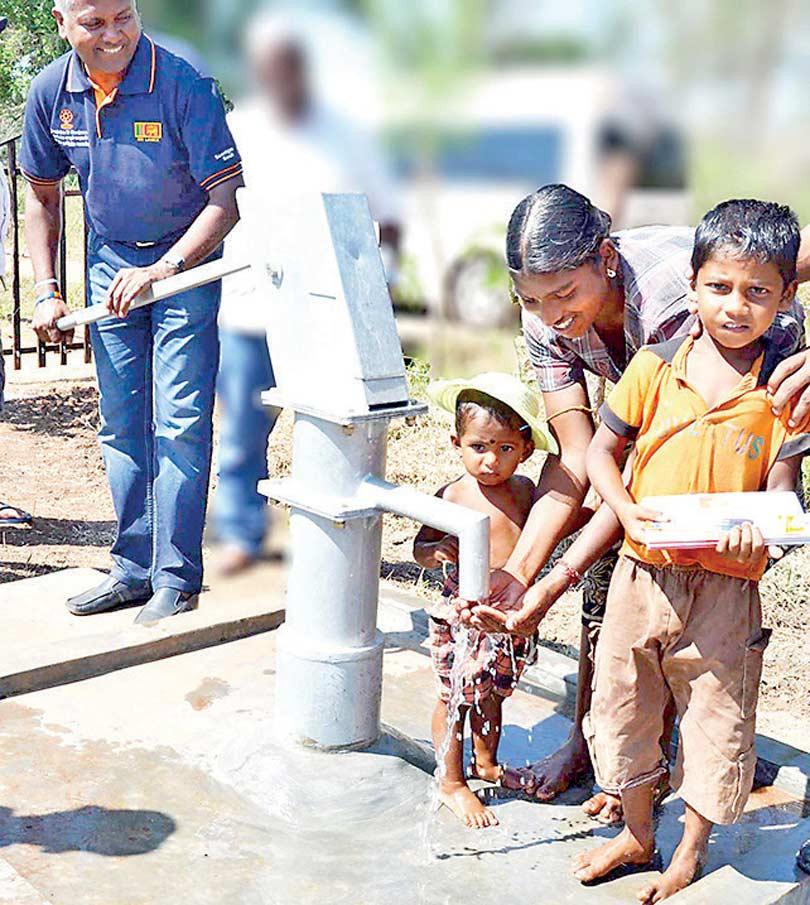
Today, 21 centres operate under FoG’s umbrella, serving more than 10,000 beneficiaries every year
12 Jun 2026 3 minute ago
12 Jun 2026 12 minute ago
12 Jun 2026 19 minute ago
12 Jun 2026 23 minute ago
12 Jun 2026 26 minute ago