13 May 2025 - {{hitsCtrl.values.hits}}
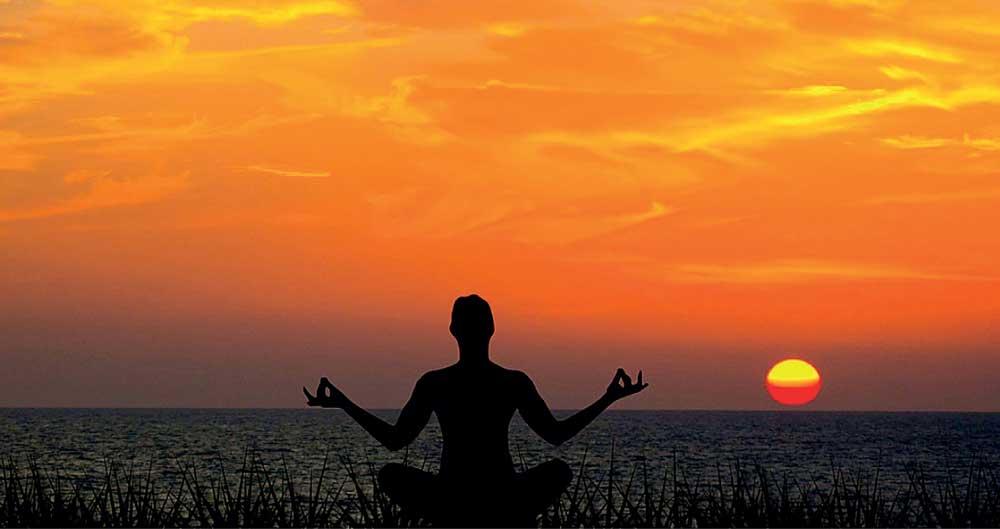
Taming your mind: Being fully aware of one’s thoughts, actions, and surroundings with clarity and presence can be used as a kind of meditation
 Meditation originally began as a spiritual practice closely intertwined with ancient cultural and religious traditions, which has now evolved into a global phenomenon for its potential mental and physical health benefits.
As scientific research delves deeper into its effects, both the advantages and negative aspects are coming to light.
Let’s explore the history of meditation, various alternative practices, their benefits and the possible adverse effects linked with them and the possible solutions to the problems.
A Brief History Of Meditation
Meditation’s origin traces back thousands of years, with early practices documented in ancient civilisations such as Egypt, China and India.
In India, meditation was integral to Hindu traditions, later influencing Jainism and Buddhism. Buddhist meditation practices, including Zen and Vipassana, emphasised mindfulness and concentration. As these philosophies spread across Asia, diverse meditation techniques emerged, adapting to each country’s unique cultural and spiritual traditions.
As I spoke to a prominent monk in Mount Lavinia, he started with a value-based message, a moral statement which said, “Sanwara Kala Hitha Salasai yahapatha”, meaning, “A mind cultivated through discipline fosters peace and well-being”.
According to him “mindfulness” or Sati in Pali is a central practice for achieving inner peace, wisdom and liberation”. As Lord Buddha says, He continued, “In everyday life, being fully aware of one’s thoughts, actions, and surroundings with clarity and presence can be used as a kind of meditation where you practice the “taming of your mind.” here are some key teachings of Lord Buddha:
1. Mindfulness:
In daily activities, be mindful that when you walk, you’re walking, When you stand, you’re standing and when you’re lying down that you know you’re lying down.
In other words, be absolutely present with yourself.
2. Guarding our minds:
“All that we are is the result of what we have thought”— Dhammapada 1:1. While being mindful, you become aware of the negative thoughts that cross your mind, so you can prevent unwholesome actions.
3. Right mindfulness:
Where you’re mindful of your body, feelings, the mind, thoughts, emotions and desires.
4. Living in the present: “Do not dwell in the past, do not dream of the future, concentrate your mind on the present moment”.
These statements from our valued priest bring our attention to the American Neuroscientist, Tara Swart, where in one of her podcasts, she states that as she does her daily chores like cooking and even having her meals, etc. She is mindful of each and every action she does, being fully aware. “Most people, while having meals, either read their emails or the newspaper or are involved in some activity, thinking they save time doing so. Instead, try being aware of what you do, each and every action, the benefits you gain to your brain and mind are limitless.” It is heartening to see that the West has begun to embrace these age-old practices of the East, recognising their benefits for the mind, body and soul. As the act of meditation continues to conquer the world, with potential mental and physical health benefits, emerging research also highlights that there may be adverse effects for some individuals if it is done in the wrong manner.
Proven Benefits
1. Mental Healing:
Even brief sessions of loving-kindness meditation were found to alter brain waves associated with emotional regulation, resulting in potential therapeutic benefits for conditions like anxiety and depression, states the 2025 study from Icahn School of Medicine at Mount Sinai.
2. Pain Reduction:
Research from the University of California, San Diego, documented that mindfulness meditation has the potential to effectively reduce pain perception. People trained in mindfulness reported less pain compared to people given placebo treatments.
3. Tackling Addiction and self-control:
Mindfulness practices have been shown to help people with addictions by enhancing self-awareness and self-control, leading to reduced addictive behaviour.
4. Among the other benefits are lowering of blood pressure, improving sleep quality, boosting the immune system and aiding in digestion, etc.
Potential Adverse Effects
1. Psychological distress:
A systematic review led by Coventry University found that approximately 8% of individuals who practice meditation experienced unwanted negative effects and cognitive anomalies.
2. Re-experiencing trauma:
For some individuals, traumatic memories may be re-experienced during meditation, leading to increased distress, particularly noted in people with a history of trauma or PTSD.
3. Physical symptoms:
Studies have reported physical symptoms such as nausea, headaches, and dizziness during intensive meditation practices. These may be linked to changes in the autonomic nervous system during meditation.
Safe Practice
1. Start gradually:
Begin with short sessions, then gradually increase duration as comfort allows.
2. Seek guidance:
Especially for those with a history of mental health issues, practising under the guidance of a qualified instructor can help mitigate potential adverse effects.
3. Monitor experiences:
Be attentive to any negative physical or psychological symptoms and consult healthcare professionals if they arise.
4. Personalise practice:
Recognise that meditation is not one-size-fits-all. Different techniques may be more suitable for different individuals.
As meditation serves as an umbrella term for a range of mindfulness techniques that have taken the West by storm, in recent decades, the number of adults practising meditation more than doubled from 7.5% in 2012 to 17.3% in 2022.
The writer also had the opportunity to speak to her long-time friend residing in Australia, who chooses to be anonymous. On her journey with this practice as a novice, she states that even though the beginning was tough with difficulty in concentration, now with time and practice, she has developed longer hours of mindfulness, which has benefited her immensely as “the retention power increases and so does the strength of your mind”.
It is a wholesome practice with the promise of unlimited benefits to your mind, body and soul, grounded in both science and spiritual traditions. Which is like a reset button for your inner world. This is a gentle, consistent practice that can transform how you experience life from the inside out.
The writer is a teacher and a graduate of the University of Colombo, Faculty of Science.
11 Jun 2026 51 minute ago
11 Jun 2026 56 minute ago
11 Jun 2026 2 hours ago
11 Jun 2026 2 hours ago
11 Jun 2026 2 hours ago