05 Mar 2025 - {{hitsCtrl.values.hits}}
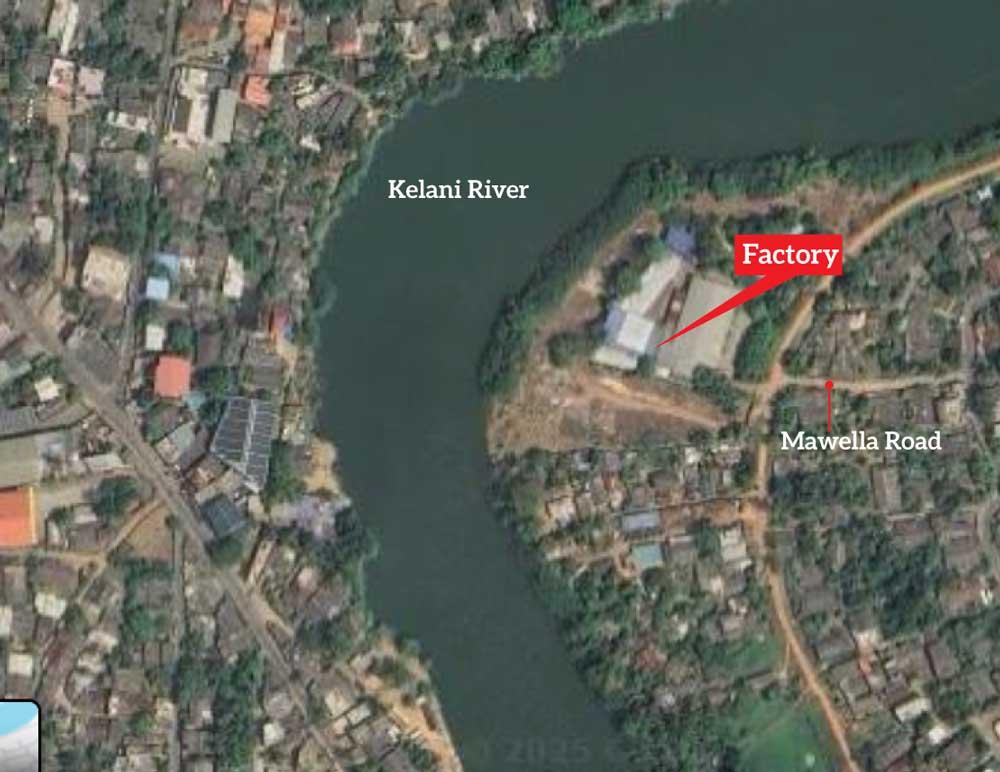
 Allegations have surfaced that a copper and brass extracting company is discharging heavy metals into the Kelani River, the main water source for Labugama and Kalatuwa. This company, located in the Pethiyagoda area of Kelaniya, has begun producing copper through an electrolysis process. As a result, gases such as sulfur oxide, nitrogen oxide, and carbon dioxide are being released into the Kelani River and the surrounding air through vents, causing breathing difficulties among local residents, according to them. They also pointed out that copper sulfate and sulfuric acid used in the electrolysis process are contaminating the groundwater, soil, and the Kelani River.
The factory conducting this copper and brass extraction and manufacturing process is situated just 30–40 metres from the river. As a result, there is a significant risk of toxic chemicals and heavy metal residues accumulating in the water. Given that this is a drinking water catchment area, the absence of accountability for the impact of these pollutants poses a serious problem. The lack of an institution to take responsibility further exacerbates the issue.
The provisions of the National Environmental Act No. 44 of 1980, along with Gazette Notification No. 1534/18 dated 02.02.2008 and Extraordinary Gazette No. 2264/18 dated 27.01.2022, require industries that release or deposit large-scale pollutants into the environment to obtain Environmental Protection Licences. However, questions are posed regarding the environmental factors considered when granting such licences to the company engaged in copper and brass extraction and production in the Pethiyagoda area of Kelaniya.
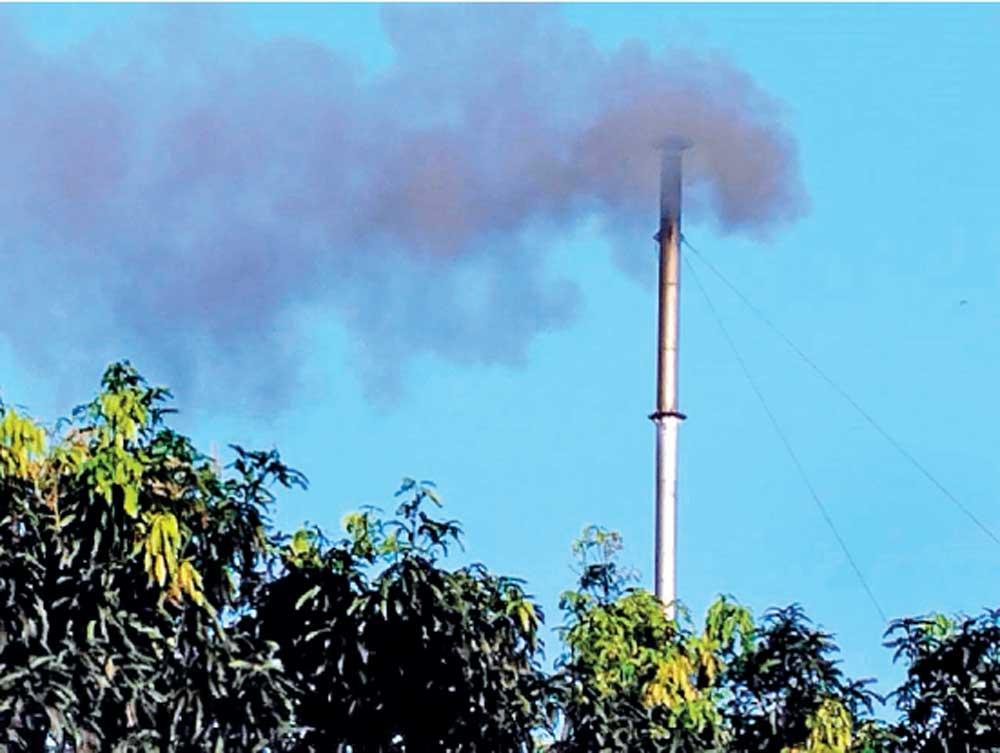
The factory emitting poisonous smoke
This factory, reportedly established as a Board of Investment project, is not located in an industrial zone, but in the picturesque village of Pethiyagoda, Kelaniya, which has been inhabited for centuries. The Kelaniya-Pethiyagoda River Valley is a residential area with beautiful surroundings where people have lived peacefully and comfortably for generations. Previously, a plywood factory operated at the heart of the village as a Board of Investment project, but after its closure, a copper factory was established in its place, also as a Board of Investment project. For this operation, an Environmental Protection Licence (No. A 16969(R2)) was obtained from the Central Environmental Authority on 18-01-2023, but it expired on 01-11-2023.
According to the provisions of the National Environment Act, an application must be submitted to the Central Environmental Authority three months before the expiry of an environmental protection licence and one month before any modernisation or improvement is introduced to the industry. However, the relevant company has not submitted such an application. As a result, local residents have filed complaints with the Central Environmental Authority, alleging that the electrolysis process used in copper and brass production is causing large-scale environmental damage to the Kelani River.
Irreparable damage
Sustainable development is not only about maintaining a productive economy, but also about effectively managing the irreparable damage to the environment and biosphere that arises from the pursuit of unlimited economic growth. Institutions such as the Ministry of Environment and the Central Environmental Authority should regulate and control these activities. However, the failure to do so remains a serious concern for the public.
The Kelani River, which flows through this area, is the main water source for the Labugama and Kalatuwawa reservoirs, supplying drinking water to Colombo and its suburbs. Besides occasional floods, residents have not faced significant environmental issues until now. However, pollution caused by the copper and brass extraction and production industry, along with the electrolytic copper production facility established near the Kelani River a few years ago, has had a severe impact on the local community.
Toxic gases such as sulfur oxide, nitrogen oxide, and carbon dioxide are released into the environment without proper control. Therefore, various chemicals, including copper sulfate and sulfuric acid, both byproducts and substances used in the process, mix with the water and soil of the Kelani River. The introduction of these highly toxic chemicals—harmful to human health—into drinking water sources and the surrounding environment poses a serious threat to the residents’ right to life. According to the locals, their fundamental rights have been violated.
Despite repeated complaints to the relevant authorities regarding the environmental and health damage caused by the factory, no proper action has been taken. Residents attribute this inaction to the duplicity of officials. Even as irreversible harm is being done to the environment and public health, authorities hesitate to take decisive action due to the influence of a former politician from the Kalutara district. This hesitation stems from the fact that a relative of the politician in question holds shares in the factory. Although it is claimed that there is no longer any political power and that the politician is no longer active in politics, people pointed out that his relative, benefiting from bureaucracy, continues to influence those who oppose the factory’s operations.
According to the provisions of the National Environmental Act No. 44 of 1980 and the regulations outlined in Extraordinary Gazette No. 1534/18 dated 02.02.2008 and Extraordinary Gazette No. 2264/18 dated 27.01.2022 industries that release or deposit pollutants and cause large-scale environmental pollution must obtain an environmental protection licence. However, these legal requirements seem ineffective against the factory in the Pethiyagoda area, which operates right on the border of the Kelani River. As a result, the factory continues to function illegally, causing severe environmental harm while concealing the true extent of its impact.
As part of recent developments at the factory, copper production through electrolysis is now being carried out. Residents claimed that the relevant authorities obtained licences for copper and brass extraction and production from scrap materials while concealing the truth. The company obtained an environmental protection licence for 2023 under licence No. A 16969(R2), issued by the Central Environmental Authority on 18.01.2023. However, this licence expired on 01.11.2023. According to the provisions of the National Environmental Act, an application for licence renewal must be submitted to the Central Environmental Authority three months before its expiration, and any modernization or improvements to the industry require an application at least one month in advance. However, residents alleged that the factory management failed to comply with these requirements. Due to public protests, the Central Environmental Authority ultimately rejected the industry’s applications for an extension of the environmental protection licence. The Authority highlighted the public nuisance caused by the establishment of the industry in a residential area, and factors such as night operations in violation of licence conditions, non-compliance with prescribed standards leading to excessive air pollution, an increase in production capacity without proper prior approval, and the failure to obtain environmental recommendations for the location of this large-scale polluting industry. It is commendable that the Central Environmental Authority has finally recognised the damage being caused to the Kelani River and its water sources.
However, unsatisfied with the decision, the authorities of the factory filed an appeal with the Secretary of the Ministry of Environment. The appeal hearing took place on 20.05.2024 at the Ministry of Environment, chaired by the Secretary, with local residents also submitting objections. As a result, the ministry ordered further field observations to be carried out regarding the activities of the factory. Residents, however, claimed that the officials of the factory prevented residents in the area from participating in the field investigation.
They are deeply concerned that the Ministry of Environment representatives who conducted the investigation failed to take appropriate action. Police assistance was required to protect local residents who had filed legal protests. In this situation, the people alleged that the field investigation was conducted unilaterally and without transparency, involving only ministry officials and the officials of the factory.
Re-issuing the environmental protection licence
Against this background, conditions were set for re-issuing the environmental protection licence to the industry through Appeal No. 02/08/EPL/07/2024, which was submitted to the Ministry of Environment. The final decision in this regard was issued by the Secretary of the Ministry of Environment on 29.08.2024. Therein, the Secretary of the Ministry, justifying the Central Environmental Authority’s refusal to issue the environmental protection licence to the industry, has informed the industry management to submit a new application to obtain an environmental protection licence based on the current performance of the industry. That is without any investigation into the environmental damage being caused. The Ministry of Environment has also issued a recommendation that the Central Environmental Authority may consider granting the licence. The people of Pethiyagoda are questioning what this double-edged policy of the Ministry of Environment is.
According to Gazette No. 2264/18, issued on 27.01.2022, this large-scale polluting industry, classified under the “B” category (A19), has reportedly not obtained the necessary environmental recommendations from the Central Environmental Authority for its location. Residents also alleged that the industry has been operating without hindrance despite failing to obtain a scheduled waste management licence. Additionally, the copper sulfate and sulfuric acid used in the electrolysis process to extract copper must be discarded after prolonged use. Since these solutions contain heavy metals, the chemical is stored and disposed of along the banks of the Kelani River.
As a large-scale polluting industry, the electrolysis industry should not be allowed to operate in the environmentally sensitive zone along the Kelani River, as highlighted in the schedule of Cabinet Decision No. 93/340/166, dated 24.06.1993. It is concerning that the Central Environmental Authority, which has halted factory establishments in Kaduwela, based on this Cabinet decision, is not applying the same regulations to the Pethiyagoda Copper Factory.
The industry is expanding and modernising its capacity, exacerbating the burden on the public, while the absence of any action to control or regulate its operations remains a serious issue. Despite complaints being made to the police, no investigations have taken place. The Central Environmental Authority has also remained silent, despite an appeal being submitted to the Ministry of Environment, according to residents. While the Ministry of Environment was made aware of this situation, the public believes that the Ministry’s authorities are considering the basis for the appeal and investigation as being rooted in the conditions that existed at the time, rather than addressing the current, ongoing situation.
Local residents questioned the basis on which permission was granted to establish industries that should have been located in an industrial zone, but were instead set up in a residential area based on false information. It is crucial to determine the grounds on which the authorities allowed these industries to be set up and continue operating in this area, which is rich in drinking water sources and lies within a highly sensitive ecological zone, just 25-30 meters from the Kelani River.
Bordered by the Kelani River on one side and the flood control dam, which is an irrigation reserve, on the other, the industry is currently carrying out development and expansion work by constructing structures that could damage the dam. On the other hand, Kelaniya Pradesha Sabha has issued a business licence for the industry. The people also pointed out that unauthorised construction is taking place at the factory despite not having the authority; these activities are carried out based on a building plan approved in 2008.
Environmentally harmful chemicals, such as sulfuric acid and copper sulfate, which are used in the industrial processes and produced as by-products, should be stored safely until disposal. Furthermore, proper safety procedures must be followed during their transportation.
However, recently, a container carrying dangerous chemicals overturned due to unsafe transportation, spilling its contents all over the road. Although the Ministry of Environment was informed about this incident, no positive response had been received. According to the conditions of the previous environmental protection licence, the industry is allowed to operate only from 6 am to 6 pm. However, the factory operates at its own discretion; starting its activities as early as 4:30-5:00 am, which is said to disturb the sleep of nearby residents. While a pipe has been installed to emit the toxic gases produced by the industry, the fumes often escape and mix with the surrounding environment in other areas of the industrial premises. Depending on the wind speed and direction, these toxic gases easily spread into the surrounding environment, and the local residents unknowingly inhale these polluted gases. It is also reported that the local residents in this area are already suffering from asthma, wheezing, and various respiratory disorders.
The people of the area have no issue with the industry itself, but only with its location. Therefore, their sole request is that the necessary steps be taken to relocate the industry to a more suitable area, such as an industrial zone. While the Ministry of Environment and the Central Environmental Authority are reportedly aware of this situation, it is believed that they are being influenced by an unseen political hand. As a result, the people alleged that these authorities are hesitant to make a decisive ruling on the matter. The Secretary of the Ministry of Environment explained the reasons for refusing to issue the environmental protection licence at present. The industry management has the ability to obtain an environmental protection licence by submitting a noise measurement report for the factory. According to the secretary’s decision, when a new application is submitted, the Central Environmental Authority has the authority to issue an environmental protection licence in accordance with the standards and criteria outlined in the National Environmental Act. The residence in the area argued that the official of the factory are exploiting political power to cause significant environmental harm and viewing it as a privilege. Furthermore, despite submitting written complaints to the Secretary of the Ministry of Environment and the Director General of the Central Environmental Authority, the residents in the area said that no proper action had been taken so far.
When inquiries were made, the director of this company, stated that the factory holds all necessary environmental and extraction certificates. He added that most of the villagers are employed by the factory, with only a few individuals opposing its presence. He claimed that the factory is situated 150 metres from the Kelani River, asserting that no chemicals are released into the river and no gases are emitted into the atmosphere. The director assured that the factory follows proper environmental protection procedures.
However, attempts to contact Padmasiri Moonamale, Director General of the Central Environmental Authority (CEA), were unsuccessful. His office confirmed that no formal complaint had been submitted regarding the matter.
K. R. Uduwawala, Secretary of the Ministry of Environment, provided the following statement: “We are currently investigating whether licences were issued in violation of environmental standards and legal guidelines of the Central Environmental Authority, leading to environmental harm. If licences were granted outside of these procedures and are causing distress to the public, we will pursue legal action and revoke the relevant licenses. We are committed to investigating this matter and will make a prompt decision.”
03 Jun 2026 03 Jun 2026
03 Jun 2026 03 Jun 2026
03 Jun 2026 03 Jun 2026
03 Jun 2026 03 Jun 2026
03 Jun 2026 03 Jun 2026