16 Dec 2025 - {{hitsCtrl.values.hits}}
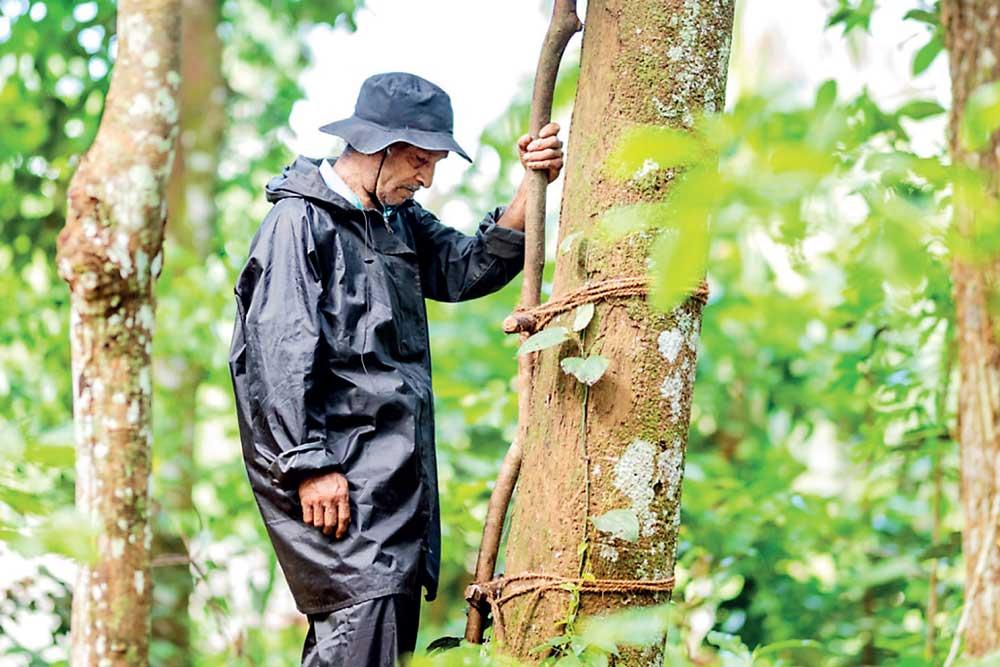
As a living heritage, kithul tapping in Sri Lanka is integral to communal harmony, shaping cultural identity and values, and reflecting both unity and a deep spiritual connection with nature
Indigenous technology for tapping Kithul in Sri Lanka has been officially inscribed on UNESCO’s Representative List of the Intangible Cultural Heritage of Humanity. Announced at the twentieth session of the Intergovernmental Committee for the Safeguarding of the Intangible Cultural Heritage, this marks the third element on UNESCO’s Lists of Intangible Cultural Heritage from Sri Lanka.
Kithul tapping is an ancient indigenous practice of extracting sap from the Kithul tree (Caryota urens), found across 13 districts in Sri Lanka. The fresh sap is consumed as a beverage, but also used to produce treacle (Kithul honey or Kithul pani), jaggery (hakuru), traditional alcoholic drinks such as Kithul toddy, and a range of sweets and vinegar. These products, which also carry medicinal value, are shared widely during ceremonies, festivals, and communal gatherings on the island nation.
The practice is passed down through informal family channels – transcending caste and ethnicity – coupled with village cooperatives. It upholds long-held beliefs, including forms of tree worship linked to local deities, and is vital to rural livelihoods. As a living heritage, kithul tapping is integral to communal harmony, shaping cultural identity and values, and reflecting both unity and a deep spiritual connection with nature.
“Kithul Madeema, practiced for centuries by rural communities spans over 13 districts across the Southern, Central, Sabaragamuwa, and Uva Provinces of Sri Lanka, flourishing in forests, home gardens, and natural landscapes. This inscription marks a significant milestone in strengthening Sri Lanka’s commitment in preserving its living heritage and celebrates the creativity, resilience, and ecological wisdom of the Kithul tapping communities,” states the Permanent Delegation of Sri Lanka to UNESCO
“This ancient practice of tapping the Kithul tree and transforming its sap into treasured foods and beverages reflects deep knowledge, a spiritual connection with nature, and shared expertise across generations by both women and men. UNESCO is honoured to stand with Sri Lankan communities to safeguard this living heritage so it may endure for generations to come,” states Tim Curtis, Director & Representative, UNESCO Regional Office for South Asia.
The twentieth session of the Intergovernmental Committee for the Safeguarding of the Intangible Cultural Heritage (20.COM) took place from December 8-13 in New Delhi, India.
To safeguard the living heritage transmitted by communities across generations, UNESCO adopted the Convention for the Safeguarding of Intangible Cultural Heritage in 2003.
Intangible Cultural Heritage, or living heritage, includes oral traditions and languages, performing arts, social practices such as rituals and festivals, traditional craftsmanship, and knowledge about nature and the universe.
To advance implementation of the 2003 Convention, UNESCO convenes an annual meeting of Member States and cultural bodies. The Intergovernmental Committee oversees the Convention’s implementation by reviewing nominations, and other functions. Sri Lanka ratified the Convention in 2008, marking 17 years of engagement in safeguarding living heritage.
07 Jun 2026 27 minute ago
06 Jun 2026 06 Jun 2026
06 Jun 2026 06 Jun 2026
06 Jun 2026 06 Jun 2026
06 Jun 2026 06 Jun 2026