16 Oct 2025 - {{hitsCtrl.values.hits}}
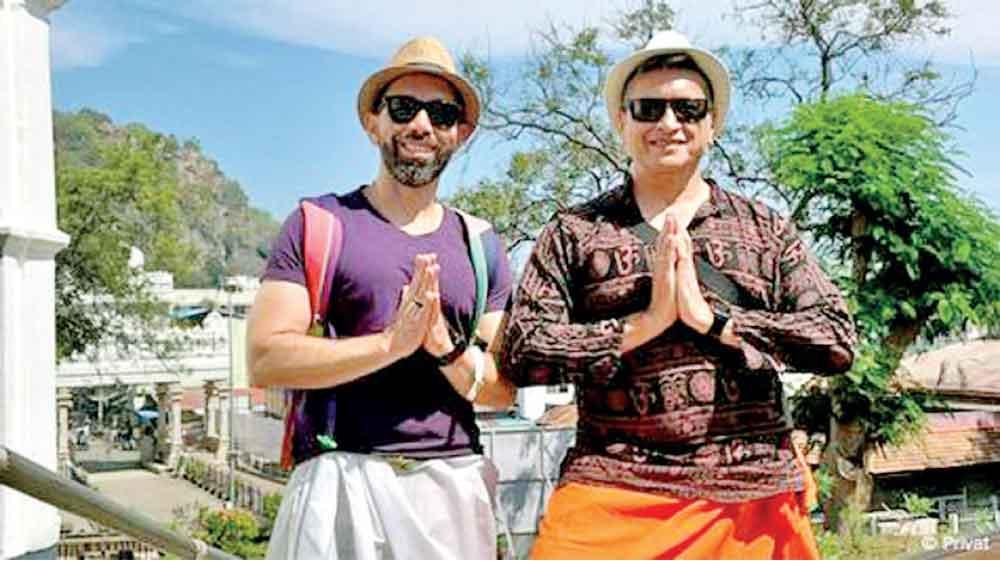
India’s LGBTQ tourism sector is doing well
 The ongoing debate about abolishing corporal punishment in Sri Lankan schools is lively. It is also deplorable because, as far as this writer is concerned, the consensus should be overwhelmingly towards abolishing corporal punishment. Unfortunately, opinion seems to be strongly for retaining a sadistic and cruel system of punishment which is now illegal in most countries.
Let’s look at the international picture. Corporal or physical punishment against children in any form is totally banned in 68 countries, while such punitive action in schools is banned in 128 countries, including our neighbour India. To look at the South Asian region is eye-opening.
It is banned in Pakistan following the Prohibition of Corporal Punishment Act of 2021. It is banned in all Pakistani educational institutions, including public and private schools, and religious seminaries.
It is banned in Bangladesh. It was declared unconstitutional by the Supreme Court in 2011 and prohibited by the Ministry of Education.
It is banned in Nepal, not only in schools, but also at home after a new Act relating to children passed in 2018. It replaced the Children Act of 1992, which defended the use of ‘scolding and minor beating’.
All our neighbours in the South Asian region, big or small, are ahead of us in this vital area. But the idea of finally retiring the cane (or the foot ruler on the knuckles, another form of torture described as ‘disciplining’ during my school days) makes our teachers, parents and even the clergy stand up and protest.
One argument is that beating erratic, ill-disciplined students will reform them and they will enter society as law-abiding adults. This idea is farcical. I can remember students in my school who could not be ‘put straight’ by any amount of advice or beatings. They were delinquents and should have been sent for rehabilitation. Start caning them, and they end up being either criminals, corporate thieves, robber baron politicians or thugs in uniform. This is a universal truth: I think it’s Susan Sontag who wrote that most of the delinquents in her class joined the American police force.
Students are beaten by teachers for reasons other than lack of discipline. One is being weak in a particular subject. Terror does not improve memory, though the police follow this principle when they torture suspects for information. Inability to memorise tables or poems at school is another matter. The female Advance Level student who committed suicide recently due to peer pressure at school was allegedly caned by her mathematics teacher for being weak in that subject.
The idea that punishment will improve memory is medieval, when the rack and fire were being used to extract confessions or punish crimes, real or imagined. The case of someone who beat his wife because the food got roasted – she was dashing out of the kitchen to watch a teledrama – comes to mind. That husband, I’m willing to bet, got caned at school quite a lot. Such people often leave school with a simmering rage.
What puzzles me is how we as a nation became so backward while other countries in the region have updated both attitudes and legislation, not just in corporal punishment, but in other vital areas such as prostitution, LGBTQ rights and animal welfare (a mixed bag, for sure. But it goes to show just how wide the scope is, and cruelty is common to all these areas).
LGTBQ tourism is the other topic which incensed the clergy, the pious, and the dimwitted – or rather, the dimwitted among the clergy, the pious and political opportunists. The protests were strong enough to make the government back down, making us look silly in the eyes of the more intelligent observers around the world. But this is the same sorry lot who screamed not so long ago: ‘We don’t want international opinion or interference.’
Nobody is interfering with the rights of our LGTBQ people except ourselves. Sri Lanka is still smarting under an antiquated British law against homosexuality (‘Carnal intercourse against the order of nature’) which sent playwright Oscar Wilde to jail and ruined him back in the 19th century. England and Wales freed themselves from this legal embarrassment by decriminalising homosexuality in 1967, but we remain staunch representatives of Victorian morality to this day.
South Asian record
The South Asian record when it comes to this issue is mixed. India is again way ahead, abolishing archaic British laws with landmark decisions, and ‘less developed’ Nepal has surged ahead in LGBTQ rights since 2007, decriminalising homosexuality and establishing the ‘third gender’ category in its legal system. In Pakistan and Bangladesh, LGBTQ people have no legal rights, face discrimination and activists face uphill battles. Turkey is the only Muslim country where same-sex activity is legal, with decriminalisation dating back to 1958, though Turkish LGBTQ community members lack legal protection from discrimination.
The protests which made the government backtrack were not even about local LGBTQ rights. They were about promoting LGBTQ tourism. Again, we should look at India, and how it has approached this issue. It too, is a country with a populace vastly divided by religion, politics and sectarian issues, with vast numbers of religious fanatics, and with the tectonic plates of tradition and modernism constantly shifting. But India’s legislators have kept their sanity and made the correct decisions without fear.
The Indian LGBTQ tourism sector has benefitted from the Supreme Court’s landmark decision to decriminalise LGBTQ activity in 2018. This is the step Sri Lanka should have taken before thinking of introducing LGBTQ tourism and then backtracking embarrassingly
India’s LGBTQ tourism sector
According to the International LGBTQ+ Travel Association (IGLTA), a network of LGBTQ+ tourism businesses, India is a positive market, though LGBTQ travellers are cautioned against open displays of affection in a country that is deeply conservative in many areas. According to the 2024 Gay Travel Index compiled by the Berlin-based international Spartacus Gay Guide, India is ranked 44 out of 213 countries or LGBTQ+ travel safety.
India has a lower literacy rate than Sri Lanka, and ranks below us in the Human Development Index. But, when it comes to these vital issues, India is ahead, looking more progressive. What is wrong with Sri Lanka? What makes our politicians fear the clergy so much? Forget the older generation brought up by thundering whacks to their palms or behinds. Were those still less than forty rendered brain dead by populist politicians advocating ‘normalcy’ and traditions, even if that means being stuck in a medieval time warp forever?
But we don’t know. We haven’t asked anyone. Someone should hold an opinion poll.
12 Jun 2026 2 minute ago
12 Jun 2026 11 minute ago
12 Jun 2026 18 minute ago
12 Jun 2026 22 minute ago
12 Jun 2026 25 minute ago