09 Jan 2026 - {{hitsCtrl.values.hits}}
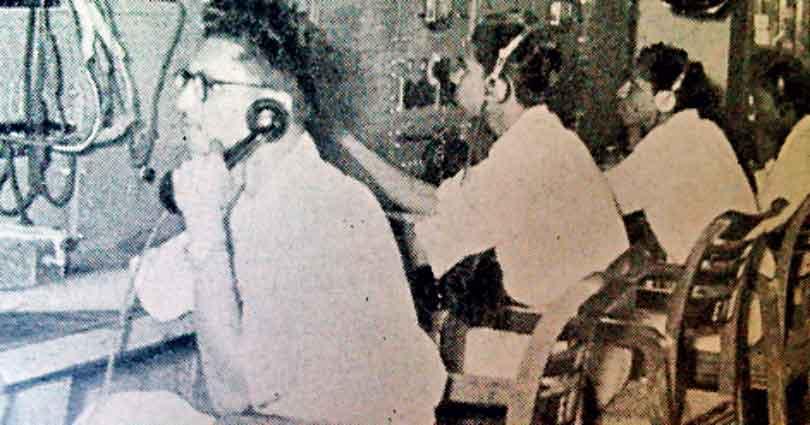
Sri Lanka’s radio service was the first in Asia
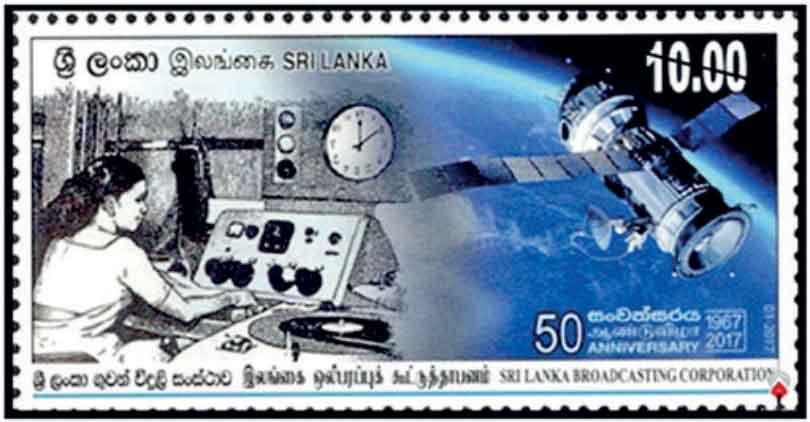
Stamp released for the 50th anniversary
By Colvin Jayaweera
The SLBC, the premier media institution, completed 100 years of unparalleled meritorious service on December 16, 2025. For an individual, it is a time period that renders him or her feeble, needing to be looked after with care and concern. However, for an institution like the SLBC, it is a time for reflection and renewal as its vibrancy remains intact.
Hundred is a significant milestone and this flashback will reveal the tremendous efforts, achievements and strides made by the SLBC and its contribution towards economic growth, preservation of traditions and customs, safeguarding human rights, promoting understanding among communities, reconciliation of divergent views enhancing the standard of art, music and culture, exposure of corrupt practices, assisting educational advancement, instigating action against child abuse and drug addiction, upholding women’s rights, focus on social and environmental problems and helping resolve conflicts.
Broadcasting commenced in Sri Lanka on an experimental basis on June 27, 1924. On this memorable day, Sir William Henry Manning, the then Governor of Ceylon, Broadcast a message to the engineering association of Ceylon. A regular Broadcasting service was officially inaugurated on December 16, 1925. Radio broadcasting was introduced mainly due to the pioneering efforts of Mr. Edward Harper, Chief Engineer, Telegraph and the Ceylon Amateur Wireless Society.
Sri Lanka was the first British colony in South Asia to commence radio broadcasting just three years after its introduction in Europe. Western music, weather reports, road reports and market reports were broadcast.
Commercial and National Services
The service was initially administrated by the Department of Post and Telecommunication. In 1949, a separate department of broadcasting was set up by the government. The signature tune was Radio Ceylon. Radio Ceylon had an organised structure and programmes were broadcast over the commercial and national services in Sinhala, Tamil and English. The programme division comprised officers with a profound knowledge of broadcasting and receptive to listener response.
On 05.01.1967, under the broadcasting act no. 37 of 1966, the service was brought under a state corporation which was charged with the responsibility of promoting a public service broadcasting system as a means of information, education, entertainment and specially development.
These tasks of broadcasting necessitated the grant of a greater degree of autonomy and viability which a Government Department, by its very nature, could not execute. The new corporation came to being as the Ceylon Broadcasting Corporation which subsequently became “The Sri Lanka Broadcasting Corporation” - SLBC.
Mr. Nevil Jayaweera, the first Chairman/Director general of the Ceylon Broadcasting Corporation recognised the potential of the medium for national development, and gave special importance to development broadcasting. But, apart from the lack of programme planning, critical factors militated against the realisation of objectives of development broadcasting.
News is the component area in broadcasting, and a vital part of programming output. Educational broadcasting has been in existence in Sri Lanka for the last 100 years. Radio’s place in education had been debated throughout the years by various experts in the field.
Regional Broadcasting Station
Broadcasting is becoming more sophisticated with rapid advancement in technology. Broadcasting responsibility to make the airwaves meaningful. Radio is the most effective, flexible and fastest medium to disseminate news which will reach every nook and corner, town or a village, valley or mountain without any kind of barriers. Radio has made a tangible impact in the field in indigenous/folk music. It is to everybody’s satisfaction that the SLBC has given due recognition to the music component of broadcasting by establishing a separate department.
The first regional broadcasting service “Rajarata Sewaya” was set up at Anuradhapura in the North Central province in 1979. The rationale was to take radio to the people. The regional network was thereafter extended to the Southern Province, and the second regional broadcasting station “Ruhunu Sewaya” commenced broadcasts from Matara in 1980. The third regional broadcasting station “Mahanuwara Sewaya” was started at Kandy in the Central Province in 1983.
Thereafter, the regional network was extended to the other provinces. Community broadcasting Sri Lanka commenced in October 1981 under a tripartite agreement by SLBC, UNESCO and DANIDA. The Mahaweli Community Radio station was established at a grassroots level. The aim of the Mahaweli Community radio programme was to motivate the Mahaweli community in order to uplift their social, economic and cultural standards. The policy of the SLBC was to bring radio more intimately to the people.
The top-level appointees were often woefully lacking any experience in radio broadcasting or broadcast administration. Their complete ignorance of the mistakes made, and lack of sensitivity to the medium affected the work and morale of the motivated and efficient programming staff.
Information technology today has a key role to play in assisting measures and buttressing efforts to accelerate and ensure that the targets of Nations Development Programmes materialise as scheduled and intended.
It has to serve as a catalyst for changes in attitudes, a vehicle for disseminating information to entrepreneurs, agriculturists, academics, scientists, social reformists, youth and other strata. Radio will survive in an era when media has grown in numbers mainly due to its intrinsic strength based on immediacy, reach, mobility and the influence it exerts on a listenership which is steadfastly attached to the SLBC over this long period. Efforts must be made to review and maintain the high standard of the broadcasting as in the past.
Colvin Jayaweera is a Retired Deputy Director General of the Sri Lanka Broadcasting Corporation
04 Jun 2026 7 minute ago
04 Jun 2026 10 minute ago
04 Jun 2026 36 minute ago
04 Jun 2026 39 minute ago
04 Jun 2026 44 minute ago