22 Jan 2026 - {{hitsCtrl.values.hits}}
By Mrs. Jeevani Senevirathne
A messy book rack and a copy of The Wizard of Oz spark a profound reflection on modern management. Senior Lecturer Jeevani Senevirathne explores how workplaces function like complex ecosystems, part fairy tale, part farm, where progress depends on respecting the institutional memory of the old and the creative energy of the new
Last December, on an ordinary afternoon shaped by routine, fatigue, and the quiet intimacy of parenting, I noticed the state of my son’s room. Like most children’s rooms, the chaos wasn’t dramatic—just familiar. The bed was unmade, toys lay scattered, but it was the book rack that caught my eye. It leaned slightly, overstuffed and uneven, bearing the quiet signs of neglect. I told him, gently but firmly, that it was time to bring some order to it before the day ended. I didn’t hover, but as parents often do, I watched from a distance, unaware that this simple domestic moment would soon unfold into an unexpected lesson about people, purpose, and the value of every role we play.
As I passed his room again, my attention was drawn to a small pile of books near the bed. On top sat The Wizard of Oz. I remembered buying it for him years ago, when he loved the cartoon. Back then, he couldn’t read it properly, but he would flip through the colourful pages, absorbed in its world.
Without thinking twice, I picked up the book and began turning its pages. Reading it now, as an adult, felt entirely different. What once seemed merely fun and magical revealed itself as layered with meaning. I noticed how each character had a role, how even small actions mattered, and how the journey could only succeed because of collective effort. In that quiet moment, I realised something profound. Just as every character in Oz contributes to the story, every person in a workplace matters. No task is too small, no role insignificant. Everything fits into a larger picture.
That thought lingered long after I closed the book, reshaping how I think about workplaces and the people who inhabit them. In many workplaces, Dorothy is easy to recognise—the individual moving steadily toward a goal down the yellow brick road, reminding everyone why the journey began. But without the Scarecrow, the one who pauses to think, question, and suggest a wiser path, the team risks moving forward without reflection. The Tin Man appears in those who bring empathy into difficult moments, quietly holding teams together when the road becomes heavy. Then there is the Cowardly Lion, often underestimated, whose hesitant courage emerges precisely when difficult decisions must be made. Even the Wizard, impressive in title and authority, cannot move the journey forward alone. His success depends entirely on those who walk beside him. In many organisations, he is a familiar figure appearing to lead, claiming credit, while others do the work. Instructions flow downward, recognition flows upward, and few challenge the arrangement, not because it is right, but because silence feels safer.
This reflection took me back nearly twenty years, to my early days as a newly recruited lecturer. A senior academic once invited me to sit in on her lecture —not to evaluate, but to observe and learn. The session was on organisational change and development. I listened closely, absorbing not just the content, but the deeper wisdom behind it.
At one point, she said something that has stayed with me ever since. Changing people in a workplace is never easy, she explained, because a workplace is much like a farm. On a farm, each animal behaves according to its nature. There is the frog, croaking endlessly at everything. The rooster, announcing routines and deadlines with unwavering consistency. The peacock, proud and showy, drawing attention yet sometimes contributing little to the actual work. The cat, quiet and observant, acting only when necessary. The dog, loyal and eager to help, though sometimes distracted. The old tortoise, slow and often grumbling, whose careful observation hides quiet wisdom. The young goat, restless and defiant, challenging tradition and questioning established ways. And finally, the chickens—small and unassuming, yet essential in maintaining the daily rhythm of the farm.
Her point was simple but profound. Identifying what needs to change and how to change it is never straightforward because we are dealing with people. Each with habits, histories, and perspectives. Just as animals respond differently on a farm, employees react differently to the same situation. Some are vocal, some cautious, some restless, and others steady. Change cannot be imposed uniformly. It requires patience, observation, and an understanding of human behaviour.
In psychology, this process is known as social learning. We learn not only from what is formally taught, but from what is modelled. In workplaces, employees take cues from how others speak, act, and respond, and from which behaviours are rewarded or ignored. Over time, these subtle signals shape beliefs and habits far more powerfully than policies or training manuals ever can.
Just as Dorothy and her companions grew wiser through their shared journey, workplaces evolve through the interplay of different voices and temperaments. The quiet insights of a senior employee, the creative spark of a new recruit, and the careful questioning of a cautious colleague all leave their mark, shaping what the organisation learns and how it moves forward.
However, for such learning to flourish people must feel safe enough to contribute. In her book The Fearless Organization, Amy Edmondson explains that psychological safety is not about being “nice” or lowering standards. It is about trusting that every voice matters. Often, it is the quiet voice, the cautious perspective, or the unasked question that holds the greatest potential for improvement. When leaders create environments where people feel safe to speak up, the organisation enters what Edmondson calls a “learning zone”. A space where people feel both challenged and supported, and where change becomes possible.
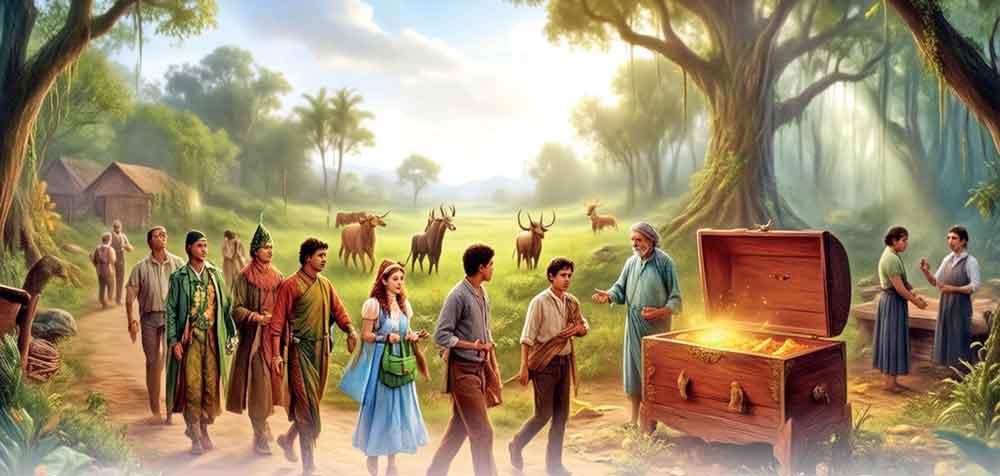
As I reflected on this, another image came to mind—one rooted closer to home. In many Sri Lankan households, there is a ‘pettagama’. A large wooden chest, heavy and rarely moved. It holds items not used every day but never discarded—documents, heirlooms, things of lasting value. Passed down through generations, the pettagama may not always be fashionable, but its worth is unquestioned. Often, younger generations add their own touches, giving it a renewed look while preserving its essence.
In a way, this mirrors the modern workplace. Senior employees, like the ‘pettagama’ carry institutional memory, experience, and perspective. Younger colleagues bring energy, creativity, and fresh ideas. One does not replace the other. Instead, value is created when the old is respected and the new is welcomed.
Once, during a department meeting, I said that support staff sometimes attend to tasks after fulfilling their own needs. A senior lecturer, now a professor, replied, “They are human too. We cannot expect everyone to move at our pace.”. His words quietly reminded me that workplaces function best when every contribution, visible or unseen, is valued. Like each generation shaping the pettagama it inherits.
As Thich Nhat Hanh reminds us, “A community is not a group of perfect people. It is a place where we learn to live together, respecting and supporting each other’s strengths.”. Progress requires tolerance, compromise, and the recognition that every role, quiet or visible, cautious or bold matters.
Standing there with a children’s book in my hand, next to a messy book rack, I realised that workplaces, like stories, are made meaningful by their people. The thinkers and the carers. The brave and the cautious. The young and the old. Just as the journey to Oz required every character, and just as a farm thrives only when every animal plays its part, organisations succeed when everyone contributes in their own way. Every role matters. Every contribution counts. And when we learn to recognise and value one another, we discover that the real magic of the workplace was never hidden – but always there.
Writer, Mrs. Jeevani Senevirathne is a Senior Lecturer, Department of Business Administration, Faculty of Management Studies and Commerce
University of Sri Jayewardenepura. [email protected]
08 Jun 2026 29 minute ago
08 Jun 2026 48 minute ago
08 Jun 2026 1 hours ago
08 Jun 2026 1 hours ago
08 Jun 2026 2 hours ago