16 Jun 2025 - {{hitsCtrl.values.hits}}
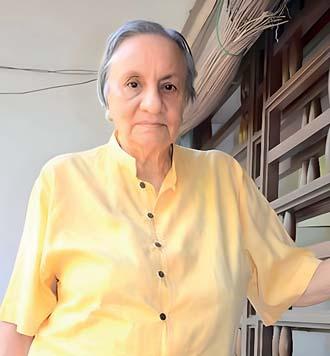
 Dr. Kumari Jayawardhana is a distinguished scholar whose academic contributions have significantly advanced labour and trade union studies in Sri Lanka. Her critical work on trade unionism, gender in labour, and labour policy reform remains widely respected. This year, in a symbolic gesture of gratitude, IHRA is honored to celebrate Dr. Jayawardhana’s birthday on June 16 (today), recognizing her contributions to the fields of labour empowerment and education
By Prof. W.S. Chandrasekara (Director/IHRA)
|
Dr. Kumari Jayawardhana |
The Institute of Human Resource Advancement (IHRA) of the University of Colombo celebrates a significant milestone this year: fifty years of unwavering commitment to accessible, practical oriented education for the working population of Sri Lanka. From its inception as a modest movement rooted in labour empowerment to becoming a national hub for higher education in human resource development, IHRA’s journey is a compelling narrative of vision, perseverance, and transformation.
Origins in the Workers’ Education Movement
IHRA’s story begins in 1971 with the launch of the Workers’ Education Movement, a pioneering initiative inspired by the belief that education should be a right accessible to all, regardless of occupation or social class. The Movement took root amid a rising consciousness of labour rights and the need for structured academic opportunities for workers. In 1973, 22 worker-students were enrolled in a Special Degree in Development Studies at the University of Colombo. Simultaneously, 160 additional students joined the Worker Education Course, marking the formal beginning of an educational transformation.
By 1975, the movement had reached a new milestone. Fifty-eight students who had undergone rigorous academic training advanced to follow the Bachelor of Development Studies program. Their graduation in 1979 symbolized the transformative power of education in changing the trajectories of working individuals.
Founding Visionaries: Professor Osman Jayarathna and Dr. Kumari Jayawardhana
The success of this ambitious project was made possible through the visionary leadership of two pioneers: the late Professor Osman Jayarathna and Dr. Kumari Jayawardhana. Their passion for worker education laid the foundation for what would eventually become IHRA. Professor Jayarathna’s legacy lives on in the structure and ideology of the institute, while Dr. Jayawardhana continues to contribute intellectually and symbolically to its growth.
Dr. Kumari Jayawardhana is a distinguished scholar whose academic contributions have significantly advanced labour and trade union studies in Sri Lanka. Her critical work on trade unionism, gender in labour, and labour policy reform remains widely respected. This year, in a symbolic gesture of gratitude, IHRA is honored to celebrate Dr. Jayawardhana’s birthday on June 16 (today), recognizing her contributions to the fields of labour empowerment and education.
Formalizing the Institute
Recognizing the success and the need to institutionalize the educational efforts, the University of Colombo established the Institute of Workers’ Education (IWE) in 1975. The institute made significant strides by tailoring its operations to the needs of working individuals. Lectures were held in the evenings, allowing students to continue their employment while pursuing academic qualifications. This model of inclusive education quickly became a blueprint for adult and worker education in Sri Lanka.
A defining moment came in 1979, when the IWE was reconstituted under Ordinance No. 11, giving it a strengthened academic and administrative structure. The transformation signaled the University’s long-term commitment to the concept of worker-centered education.
Physical and Academic Expansion
By 1987, IWE had secured a plot of land on Bauddhaloka Mawatha, Colombo, and in 1990, a dedicated institute building was completed. While lectures continued at the College House premises initially, the institute’s growing stature demanded an upgrade in facilities. In 2002, the library was relocated to the Faculty of Education, enhancing access to academic resources.
The next significant transformation occurred in 2006, when the Institute was renamed the Institute of Human Resource Advancement (IHRA). This rebranding reflected a broader academic vision that went beyond workers’ education, focusing instead on professional development, human capital enhancement, and postgraduate education.
Advancing Postgraduate and Professional Education
With its new identity, IHRA expanded rapidly. In 2007, it launched its first Postgraduate Diploma in Human Resource Advancement, offered in the English medium. The program set a precedent for academic rigor and relevance, combining theory with practical HR applications.
Building on this success, the institute introduced Service Management (SMgt) courses in 2011, further diversifying its postgraduate offerings. These programs targeted mid-career professionals and aspiring managers, bridging the gap between academic learning and workplace demands.
Expansion of Undergraduate Programs
IHRA’s commitment to broadening educational access continued with the launch of Bachelor of Labour Education (BLE) and Bachelor of Labour Management (BLM) degree programs in 2020. Endorsed by the University Grants Commission (UGC), these programs offer structured learning tailored to the modern labour market while retaining a strong focus on the foundational values of workers’ empowerment.
These undergraduate programs are particularly popular among working professionals who seek to formalize their knowledge and ascend in their respective careers. Delivered in both Sinhala and English, the programs attract students from diverse backgrounds, reinforcing IHRA’s status as a national institute.
Embracing Modern Teaching Practices
In response to technological changes and shifts in pedagogy, IHRA has integrated advanced teaching methods and digital tools into its academic delivery. Online platforms, hybrid classrooms, and e-learning modules ensure that IHRA remains current and flexible in its approach, especially vital for working learners with limited time and mobility.
Its academic staff comprises highly qualified and experienced lecturers, many of whom are recognized experts in fields like labour relations, economics, strategic management, and education. Their dedication ensures that IHRA’s academic programs maintain relevance and excellence.
Aligning with National and Global Needs
The broader purpose of vocational and worker education is to foster economic, social, political, and personal development. IHRA’s programs are carefully aligned with employment demands, focusing on skills and attitudes essential for national development.
Successive governments in Sri Lanka have acknowledged the critical role of vocational and human resource education. A conference held in 1989 in Sri Lanka praised the model of education promoted by IWE (now IHRA), reinforcing the institute’s reputation as a leader in inclusive education.
Today, IHRA’s graduates are well-represented across Sri Lankan society and beyond serving as university professors, administrative officers, members of the security forces, private-sector executives, and community leaders. Their success is a testament to IHRA’s enduring value and impact.
Honoring a Scholar and a Founder: Dr. Kumari Jayawardhana
As IHRA celebrates its 50th anniversary, the institute will also pay tribute to Dr. Kumari Jayawardhana, co-founder and an eminent scholar in the field of trade union studies. Her seminal writings have explored the intersection of class, gender, and labour rights, making substantial contributions to both academic discourse and policy formulation.
Dr. Jayawardhana has been a vocal advocate for recognizing the educational needs of the working class, and her research has been instrumental in shaping inclusive education policies in Sri Lanka. As IHRA celebrates her birthday on June 16, her presence serves as a reminder of the founding principles of social justice, equity, and the transformative power of education.
Looking Ahead
The future of IHRA lies in its ability to remain adaptable, innovative, and inclusive. As the world of work undergoes radical transformation through digitization, globalization, and policy shifts, IHRA is uniquely positioned to lead Sri Lanka in creating a knowledgeable, skilled, and socially responsible workforce.
Its roadmap includes enhancing international collabourations, expanding digital learning opportunities, and continuously updating curricula to reflect real-world challenges.
As it celebrates fifty years of service, the Institute of Human Resource Advancement stands tall as one of Sri Lanka’s most enduring and transformative academic institutions. Rooted in the ideals of the Workers’ Education Movement and nurtured by visionary leaders like Professor Osman Jayarathna and Dr. Kumari Jayawardhana, IHRA has consistently embodied the principles of inclusion, empowerment, and excellence.
With thousands of graduates contributing to the nation’s growth and many more aspiring professionals enrolling each year, IHRA’s legacy continues to thrive a true testament to five decades of educational empowerment.
14 Jun 2026 1 hours ago
14 Jun 2026 3 hours ago
14 Jun 2026 4 hours ago
14 Jun 2026 4 hours ago