19 Sep 2025 - {{hitsCtrl.values.hits}}
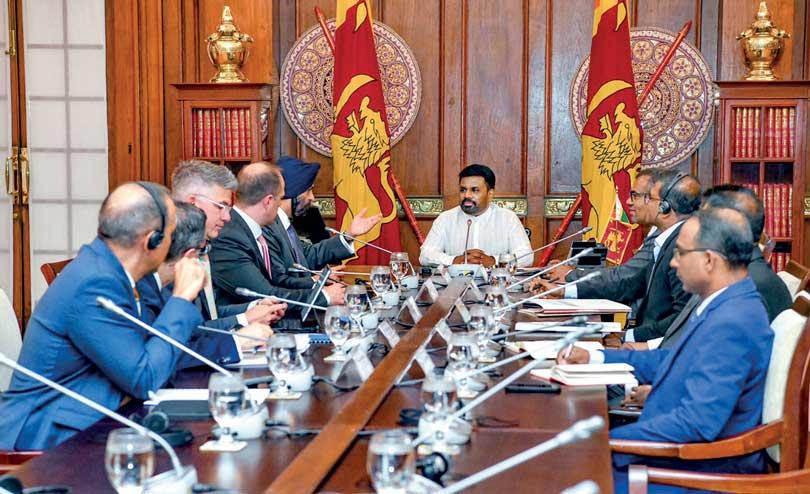
Sri Lanka’s economic recovery gains global recognition, but experts stress the need for stronger
governance and planning. FILE PHOTO

By Mirudhula Thambiah
|
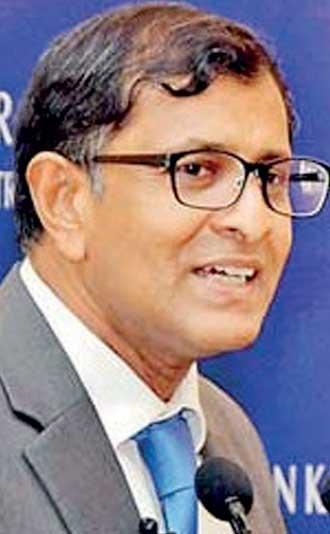
Dr. Ganehsan Wignaraja
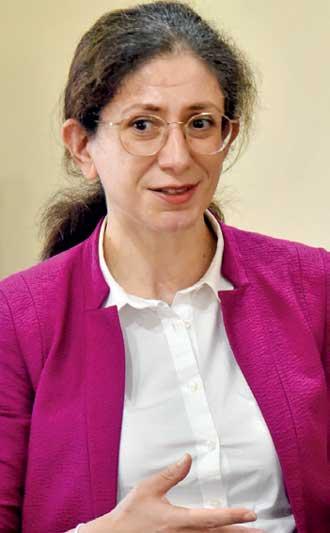
Dr. Annalisa Prizzon
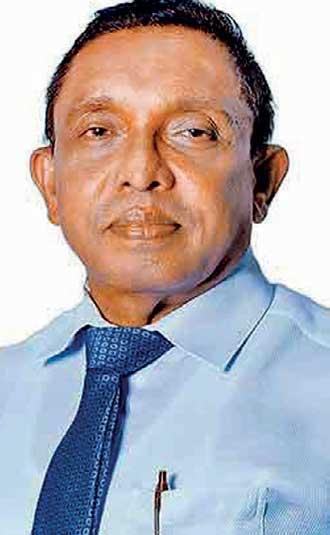
Prof. Sirimal Abeyratne |
The World Bank (WB) last week announced that Sri Lanka has made remarkable strides in stabilising its economy, undertaking one of the largest fiscal adjustments in its history, equal to nearly 8% of the Gross Domestic Product (GDP) over three years, and doing so faster than most countries. While this signals remarkable economic progress, development and public finance experts caution that the effectiveness of Multilateral Development Bank (MDBs) projects can vary. Projects aligned with national priorities and backed by strong feasibility studies are approved quickly, but initiatives driven primarily by MDBs may face delays if government prioritisation is weak.
Principal Project Fellow, Development and Public Finance from ODI Global in the United Kingdom, Dr Annalisa Prizzon, noted that the delays in the project approval phase in Sri Lanka serve as a cautionary example. She emphasised that while MDBs are taking steps to streamline their procedures, much depends on the quality of project preparation at the national level.
This was highlighted at a session organised by the Centre for Poverty Analysis (CEPA) last week, which brought together researchers, representatives from international financial institutions, the media and other stakeholders to discuss the role of MDBs in enhancing economic growth and reducing poverty in developing countries.
Dr Prizzon’s visit to Sri Lanka was driven by the motivation to understand how MDBs—such as the World Bank, Asian Development Bank (ADB) and the Asian Infrastructure Investment Bank—can operate more effectively in supporting countries like Sri Lanka. The focus was on how these institutions, individually and collectively, can help advance economic transformation
She pointed out that having a clear checklist and timelines is essential, adding that in some countries, projects not implemented within a set period are returned to the initial pipeline to maintain efficiency. Dr Prizzon also observed that the removal of commitment fees by the WB may have reduced urgency in project implementation.
She further explained that MDB reforms are being driven by the need to reduce the length of project cycles, delegate authority to country offices and improve collaboration. She cited the WB’s success in reducing project cycle approval times from two years to 12 months as an example of progress.
This discussion also touched on broader MDB reforms, including the G20 review of capital adequacy frameworks, designed to squeeze more efficiency out of MDB balance sheets. Reforms under consideration include hybrid capital instruments and measures aimed at increasing MDB lending capacity by 20% up to 2030, without additional shareholder contributions.
Dr Prizzon further highlighted the issue of governance, noting that borrowing countries need greater representation in MDB decision-making. “Ultimately, we can change the finances and policies of the MDBs, but unless borrowing countries can voice their concerns within the institutions, we won’t have a sustainable path for the MDBs to deliver,” she noted.
Dr Prizzon observed, “These are very difficult times for international public finances,” She continues, “Expectations for bilateral aid and official development assistance are limited. Major economies like the United States, the United Kingdom, Germany, and France have all reduced or reconsidered their aid budgets. Aid is increasingly tied to national interest rather than purely development objectives. At the same time, the number of development agencies has grown to over 500 in the past two decades, creating fragmentation in development cooperation. In this context, having a system that reduces fragmentation and makes aid more effective is more important than ever”.
She said that the current wave of MDB reform began with the G20’s focus on global financial governance. “Significant milestones include the Independent Review of MDBs’ capital adequacy frameworks, which explored how MDBs could leverage more resources without compromising risk management or credit ratings. This work culminated in the Italian G20 presidency in 2023, which launched an independent expert panel to review the vision for MDBs. The resulting framework—commonly referred to as the ‘Three Bs’—calls for MDBs to be Better, Bigger, and More Effective”.
“While the Better, Bigger, and More Effective framework sets the agenda, we also need to ensure that MDBs reflect the priorities and preferences of client countries in their strategies and policies,” Dr Prizzon adds.
Explaining the client perspectives and the learning from cross countries, she added, “In 2021 and 2022, we conducted a client survey to capture the perspectives of government officials and MDB staff across 73 countries. Nearly 500 respondents participated, focusing on six MDBs, including the WB and other legacy institutions. The survey was designed to reflect the composition of countries borrowing from MDBs, including concessional financing and regional representation. We collected closed-ended responses to allow strong quantitative analysis and cross-regional comparison”.
She further noted, “For the second edition of the survey, launched in early 2024, we refined the methodology to focus exclusively on MDBs, eliminating questions related to bilateral donors. This allowed us to integrate insights from recent G20 reforms. Combined with country visits—including this one to Sri Lanka—these surveys help us understand the real-world challenges and opportunities for MDB reform from the perspective of borrowing countries.”
Adding to the debate, Senior Advisor of CEPA and Visiting Fellow of ODI Global, Dr Ganeshan Wignaraja, made suggestions stating, “When you think of Sri Lanka, it is a middle-income country and MDB money has declined”. Thus, he said survey questions can be posed as do MDBs provide a package for service vis-à-vis other lenders, such as China or India.
He pointed out that Sri Lanka has often struggled with poor project preparation, weak national planning and limited cost-benefit analysis, leaving the country in a passive position during MDB negotiations. Dr Wignaraja drew attention to competition among MDB country directors and project officers, where incentives often reward the size of projects rather than coordination. “We are putting too much pressure on the MDB cycles, which I agree are difficult. But I think there are domestic factors that come into play, which are probably more important,” he added.
Sri Lanka has access to development assistance from MDBs in areas such as infrastructure, social sectors and technical support. But experts warn that the country must actively prepare to make the most of these opportunities. Executive Director of CEPA, Prof. Sirimal Abeyratne, said, “While MDB assistance is available, our capacity in key areas – negotiations, project preparations and keeping pace with global development trends is still weak”.
He pointed to gaps in technical expertise and environmental knowledge, highlighting the need to strengthen negotiation and implementation abilities. Prof. Abeyratne emphasised that bureaucratic processes often hinder projects, resulting in inefficiency. Projects may be approved, but the approval process, implementation and completion are often too long and cumbersome. Without reforms, implementation capacity will continue to lag.
Prof. Abeyratne also underscored the importance of proactive engagement with MDBs. “We have achieved good results with infrastructure development and technical assistance, but it is our responsibility to identify our problems and propose solutions, particularly in capacity building. Even to do that, we must have done our homework,” he said.
The discussion also examined how the MDBs are working together to reduce costs for governments. The WB and ADB have signed a full mutual reliance framework on social development frameworks and procurements. Such agreements, Dr Prizzon said, are intended to reduce transaction costs for governments that otherwise face duplicative paperwork. At the same time, speakers cautioned that collaboration does not add value unless it reduces burdens on government officials and improves efficiency.
Dr Prizzon pointed out that capacity building for government officials remains critical, especially given the high turnover of staff working on MDB projects.
She added that while MDBs can lend or suspend, their capacity to act is limited by the resources committed by shareholders. “It would be very naïve to discuss this situation in the context of Sri Lanka without considering these constraints,” she said.
This discussion comes at a time when the WB’s latest fiscal report has noted a relatively quick economic recovery in Sri Lanka, comparing favourably with other countries. Experts suggested that effectively leveraging MDBs—through both reforms and stronger domestic governance—could further reinforce this recovery.
Commenting on the recent World Bank statement in regard to Sri Lanka’s economic recovery, Prof. Abeyratne stated, “The economic recovery is good compared to many other countries. It could be quicker to come back, but not without a cost. Our people have made huge sacrifices, which is acceptable for stability, but economic stability cannot be sustained without growth”.
He emphasised that the country needs long-term growth. “4-5% growth is not enough. We need sustained growth to 8-10% over 20-25 years. Without it, risk and uncertainty will remain high, progress will be slow”.
08 Jun 2026 7 minute ago
08 Jun 2026 49 minute ago
08 Jun 2026 1 hours ago
08 Jun 2026 2 hours ago
08 Jun 2026 2 hours ago