04 Dec 2025 - {{hitsCtrl.values.hits}}
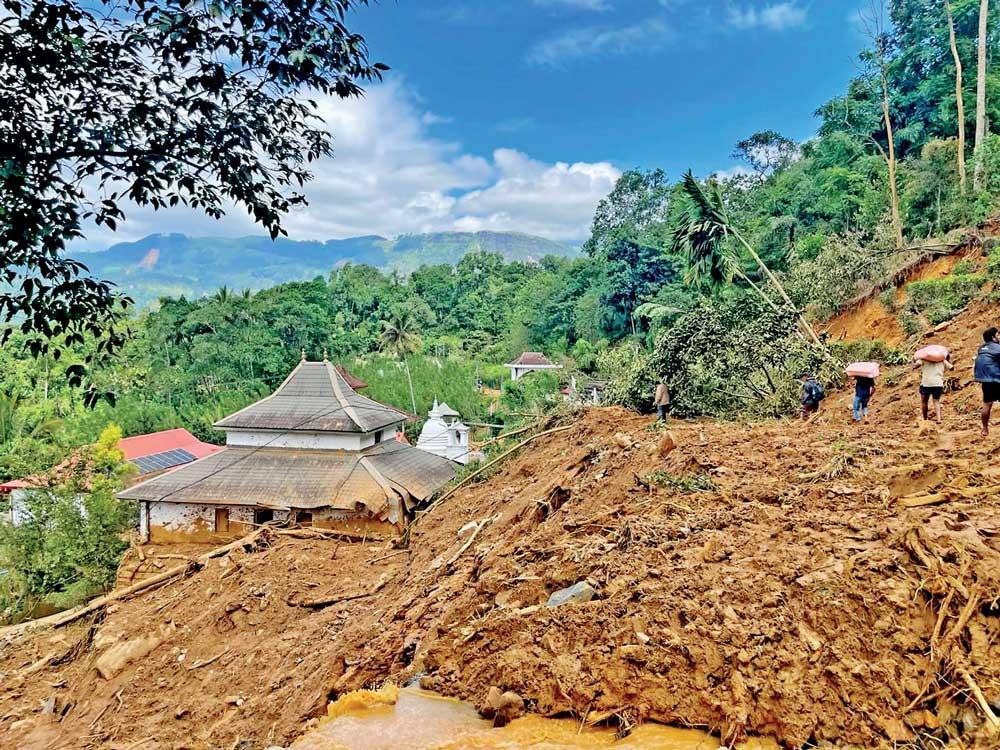
Landslide near Niyam Gandara Temple in Kotmale
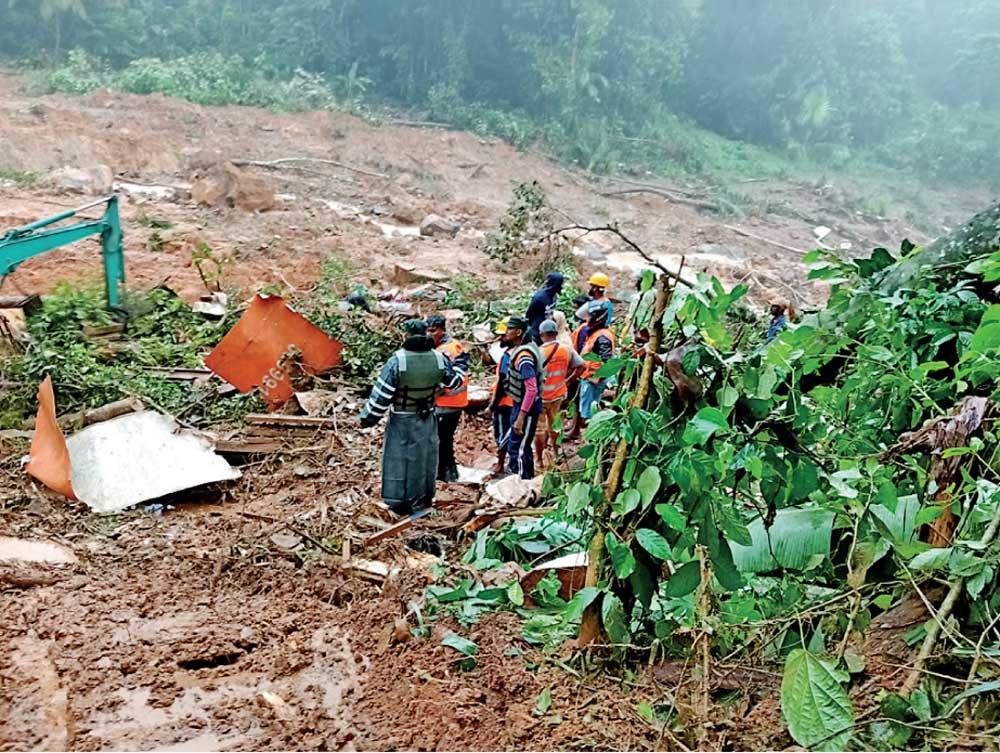
Landslide near Kurunegala Imbulgoda hill
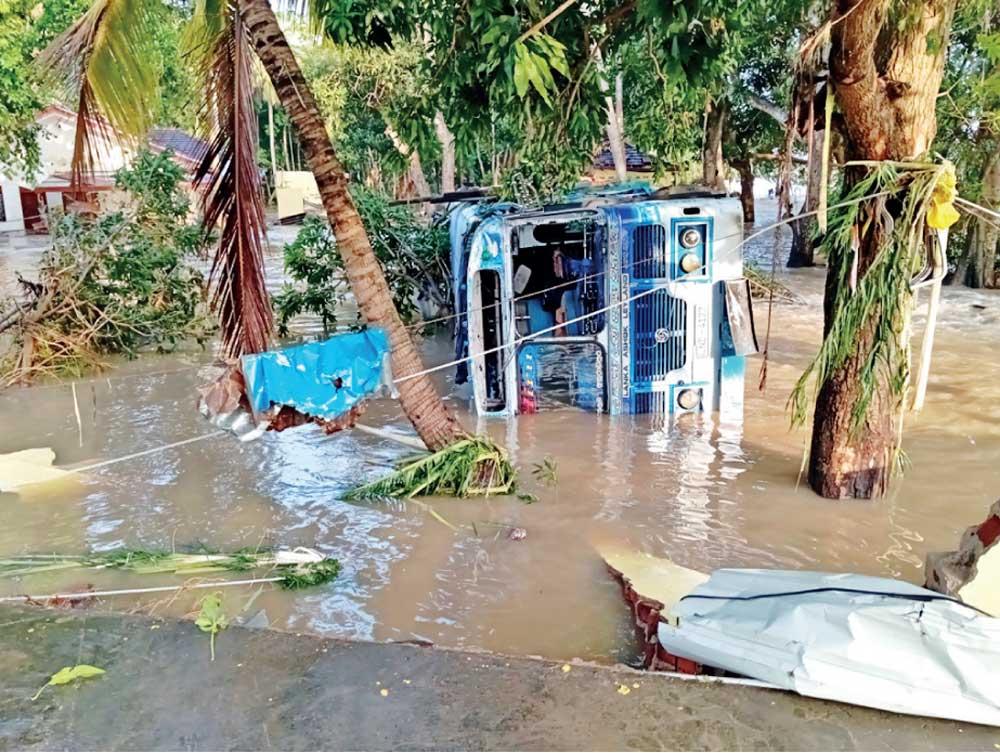
The bus that was caught in the Kala Oya floodwaters
By Prageeth Sampath Karunathilaka and Sudharika Gurusinghe
The worst natural disaster Sri Lanka faced in recent history was the tsunami. The next major disaster that struck the country after that was the Ditwah cyclone and the severe floods that followed. Disaster-management programmes were implemented in advance to handle any potential emergencies, and rehearsals were carried out for such situations. During the disasters that followed, the Ministry of Disaster Management, Ministry of Public Administration, the Ministry of Health, the Ministry of Transport, the Department of Meteorology, the Department of Irrigation, Sri Lanka Police, the Tri-Forces, other state institutions, political authorities, and the general public made a healthy response. As a result, any disaster that occurred was managed in keeping with plans, reducing loss of life and damage to property.
However, there was still ample opportunity to further reduce the destruction caused by the recent cyclone and floods. If early action had been taken in an era when technology is so advanced, the loss of life and damage to personal property could have been significantly reduced. The Meteorological Department had warned about a depression-type cyclone as early as November 12. The Irrigation Department had also issued an early notice that a major flood situation could arise and requested permission to gradually open the sluice gates along the main rivers. But proper approval was not granted by the higher authorities.
First signs from Kadugannawa
Another concern is that the first sign of the coming disaster appeared in Kadugannawa. Even then, the government did not take adequate action. Following the Kadugannawa landslide, as the rain intensified, Cyclone Ditwah had already entered Sri Lanka. When rains began, red alerts were issued for landslide-prone areas. If the risks had been properly assessed much earlier, many lives could have been saved, and the overall damage wouldn’t have been so severe.
Samagi Jana Balawegaya MP Kabir Hashim stated in Parliament on the December 1 that the city of Gampola was submerged because water had been released suddenly from the Kotmale reservoir dam. Nearly 1,000 people died as a result of this situation. Similarly, the sudden opening of the Deduru Oya reservoir dam also caused severe damage.
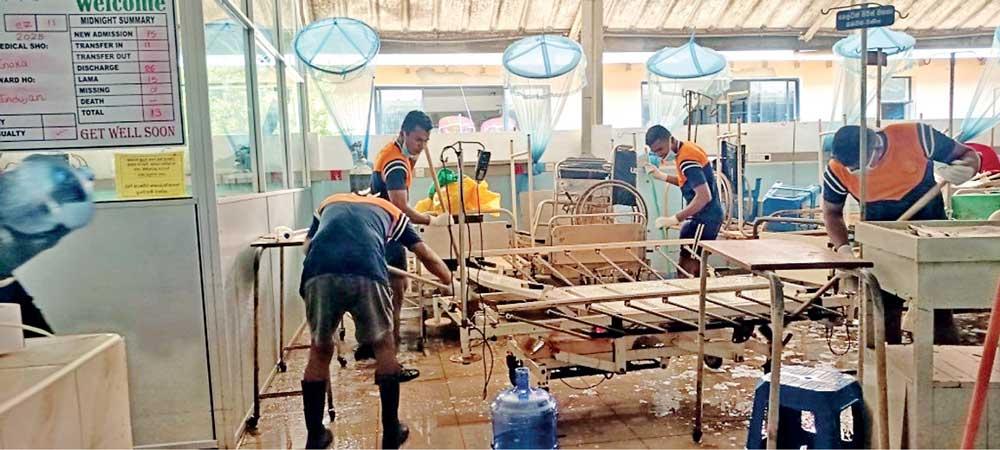
Army soldiers cleaning a hospital
When a red alert is issued for landslide risk, people are instructed to move to safer locations. However, if proper measures had been taken and safe locations had been designated, this level of destruction could have been avoided, since early warnings had already been issued for a disaster of this scale. There was no ‘proper’ disaster-management centre in the country to plan how to respond to a disaster of this nature. The existing disaster-management centre and its operations were dismantled by the current regime, labelling it a white elephant. At the same time, the state machinery should have been strengthened to face such a crisis. Instead, all government employees (except those on essential duty) were given leave on November 26, with the claim that it was for their safety. Essential services were not formally identified. In a disaster of this magnitude, every government institution becomes essential. However, no such designation or organised process was evident.
The government didn’t declare a state of emergency when Cyclone Ditvah first entered the country. It was declared only two days later, on November 28 (Sunday), by which time the country was already facing a severe risk of flooding. Safe camps and shelters for people displaced by landslides were extremely difficult to find. The existing circulars proved to be an obstacle for District Secretaries and Divisional Secretaries in providing assistance to the people affected in their respective jurisdictions. They had no proper way of supplying food or water, and they also lacked the means to rescue people. As a result, they were forced to turn to social media to request help.
The American Weather Agency and the BBC both warned on November 12 that the cyclone could affect Sri Lanka, while Al Jazeera issued a similar prediction on November 14. The Department of Meteorology and the Geological Survey and Mines Bureau issued red alerts on November 26. After the cyclone struck on November 27 and all the damage occurred, a disaster committee was appointed. It was only once deaths had been reported that a circular was issued on November 28 instructing divisional secretaries to report to work. A disaster management director was appointed in the evening of the 29th.
A natural disaster cannot be prevented, but the dangers that arise from it can be controlled. For that, a basic preparedness plan is essential. There was more than ample time, yet the current government chose not to take action. Hospitals, food distribution, sanitation facilities, disaster-relief services, and safety centres were not planned or organised in advance.
In December 2020, when the Burevi Cyclone was reported to be approaching, the Disaster Management Centre back then responded immediately. Information was gathered through satellite technology and the Meteorological Department. Special attention was given to the coastal areas of Sri Lanka and the zones expected to be affected by the Burevi Cyclone. People in those areas were evacuated, and the necessary relief teams were quickly supplied with food and medicine.
But this time, no such preparation was seen. Athula Karunanayake, Director General of the Department of Meteorology, warned of the cyclone on November 12. Based on his experience, he warned of a possible major threat and highlighted the need to appoint a disaster relief committee. Even though he avoided labelling it a cyclone at that early stage, all relevant institutions had been informed about the possible danger. However, it remains doubtful whether the decision makers of those institutions had passed this information on to the cabinet ministers. The matter wasn’t even discussed in Parliament.
Although the Irrigation Department also warned that a serious disaster was approaching, there were issues about how the warnings were handled. According to the Irrigation Department data, the matter was discussed on the 17th and 18th of November, but only through phone calls and video conferences. It was confirmed during these discussions that a major flood was likely to occur due to the increasing rainfall by the 23rd and 24th of November. Despite these findings, it remains questionable whether the officials implemented the necessary actions in response.
Even if a disaster had occurred despite warnings from the Meteorological Department as well as the international community, such a loss of life could have been avoided had the response been properly planned. Entire villages would not have been wiped out. At the time of writing this article, the reported death toll stands at 358, with around 390 people missing. These figures are not accurate; they are only the numbers currently reported. There is still no information about the people who lived in villages that were completely flattened. Although it was reported last Saturday that around 200 people were missing, the exact figures weren’t properly disclosed to the country.
The authorities had enough time to identify the approaching disaster and examine the 103 rivers and streams surrounding Sri Lanka. If the estuary mouths had been widened, and if water levels in the rivers, streams and dams had been reduced beforehand, the severity of the disaster would have been less. Had these measures been taken, the loss of life could have been significantly reduced.
Only four people died when Cyclone Ditwah struck India. India was well prepared in advance to minimise the damage—and that was because the people had a citizen-focused government. In contrast, our government is fishing in troubled waters. They were able to provide even a single meal to the displaced people only by Sunday. It is the citizens of this country who have stepped forward to provide food and essential items; otherwise, people in the camps would have faced death from hunger.
Even though the government has 159 parliamentary seats, its members have been largely inactive. Even cabinet ministers stated that necessary relief would be provided by the government. Some sought help and assistance from the public, while others distributed the aid brought by citizens as if it were their own.
Meanwhile, the President was able to effectively manage the situation during the Mavil Aru Dam wall breach. Damage was minimised, and lives were saved. In the same way, if there had been proper interest and action regarding Cyclone Ditwah, at least half of the devastation could have been prevented.
The state of emergency was declared only after the Opposition Leader made a request it in Parliament. Former President Ranil Wickremesinghe has already sought assistance from Japan, China, and the United States to rebuild the country. However, some government members have opposed this, claiming that they don’t require assistance from the opposition. At present, the economy of Sri Lanka has collapsed completely. It is uncertain when the tourism industry which once generated revenue for the country will recover. When compared to the tsunami, this disaster has brought an even greater impact.
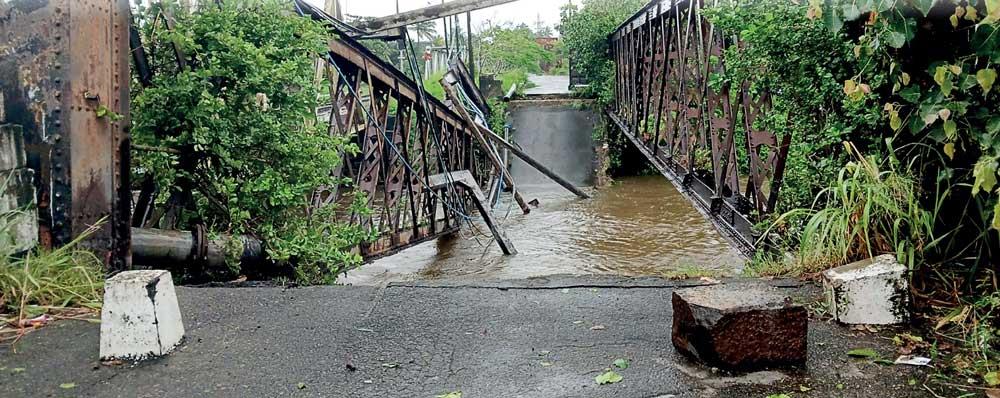
The flood waters didn’t spare the Bentota Bridge
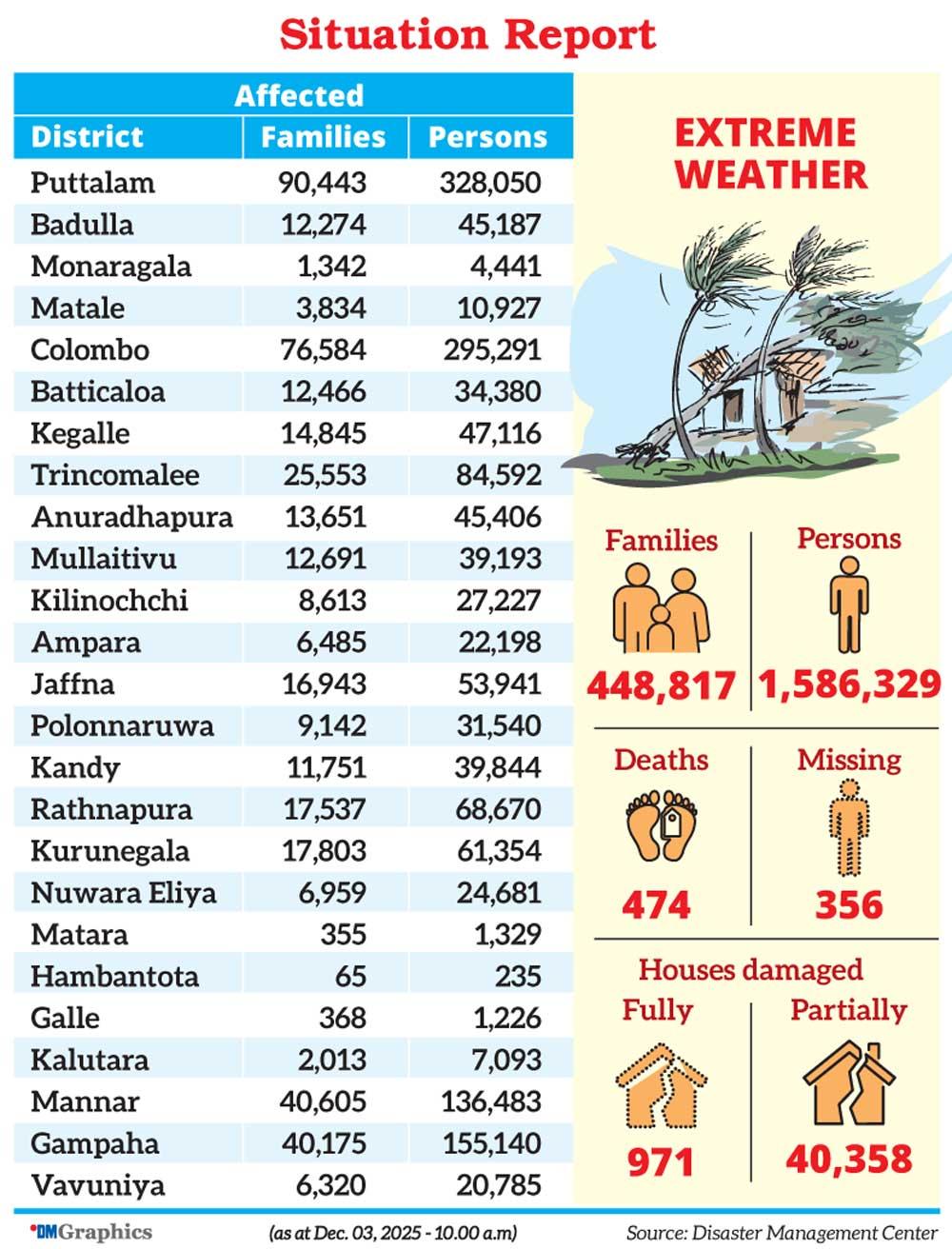
Recently, the President addressed the nation and stated that 30,000 million rupees allocated for disaster response in the previous budget remain unspent, and that this amount will now be directed to those displaced by the current disaster. In addition, a 2024 audit report shows that out of 15,070 million rupees allocated for research on flood and landslide prediction, only about 3,000 million rupees have been spent. The report indicates that the expected outcomes of the project have not been achieved. Therefore, the relevant authorities must take steps to give greater attention to floods and landslides.
07 Jun 2026 22 minute ago
07 Jun 2026 3 hours ago
07 Jun 2026 4 hours ago
07 Jun 2026 4 hours ago
07 Jun 2026 5 hours ago