22 Sep 2025 - {{hitsCtrl.values.hits}}
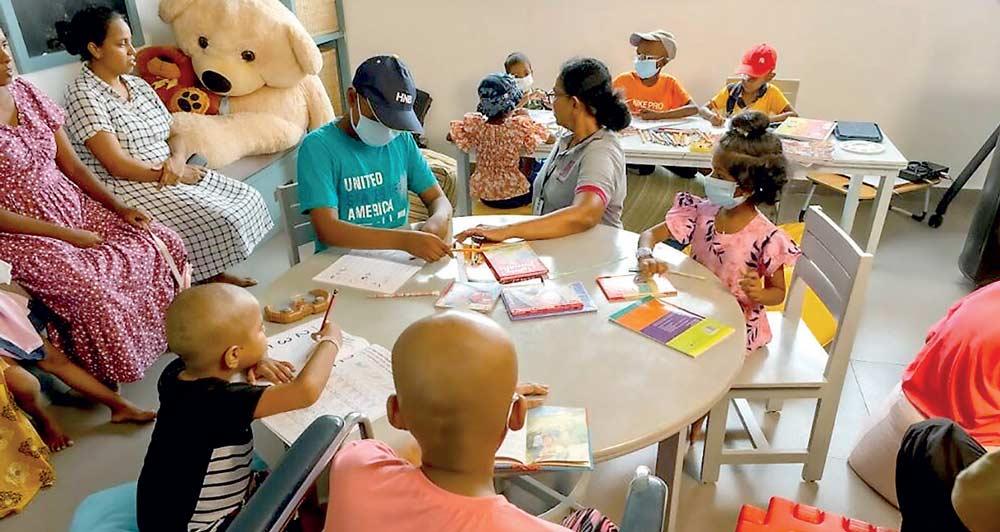
‘Little warriors’ having time to engage in studies despite their futures being heavily dependent on treatment
 According to recent statistics, boys are more prone to fall victim to cancer compared to girls
Most childhood cancers stem from genetic changes and are largely non-preventable
With timely detection and proper treatment, doctors stress that childhood cancer is no longer a barrier to a normal life
By Mirudhula Thambiah
In the heart of Sri Lanka, September is more than just another month – it’s Childhood Cancer Awareness Month, a time to shine a light on the realities, challenges and triumphs of children and adolescents battling cancer and to rally families, communities and healthcare providers around early detection, care and hope.
A persistent fever, an unexplained swelling, a child too tired to play, for many families across the island these subtle warning signs can mask a frightening diagnosis – cancer. Yet with timely detection and proper treatment, doctors stress that childhood cancer is no longer a barrier to a normal life.
Number of cases
|
Dr. Sanjeewa Gunasekera |
Addressing the media recently, Consultant Community Physician of the National Cancer Control Programme (NCCP), Dr. Suraj Perera said that approximately 900 cases of childhood cancer are reported with around 200 children dying annually. “In 2022, out of all cancer patients identified, 904 children were diagnosed. When we look at data over the past 15 years, it clearly shows that there hasn’t been a significant increase in childhood cancer cases. The number has typically remained within the 600-800 range,” he added.
According to recent statistics boys are slightly more affected than girls. In 2021 alone, 1,032 new cases were recorded with leukemia, lymphomas, brain tumours, bone cancers and melanomas among the most common types. Of these, leukemia cases are the highest recording 341 followed by 148 lymphoma cases. According to the National Cancer Registry, 2%-5% of all cancers are related to those in their childhood or adolescent years. The data from the World Health Organization (WHO) shows that in high-income countries, 80% of children with cancer are cured and in low- and middle-income countries, less than 30% survive.
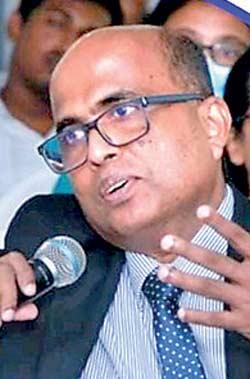 “In 2022, out of all cancer patients identified, 904 children were diagnosed. When we look at data over the past 15 years, it clearly shows that there hasn’t been a significant increase in childhood cancer cases. The number has typically remained within the 600-800 range”
- Dr. Suraj Perera, Consultant Community Physician of the National Cancer Control Programme
Challenges in diagnosis, types and treatment
Speaking to Daily Mirror Dr. Perera explained that the slight rise in reported childhood cancer cases is largely due to improved data collection from treatment centers and better patient presentation, rather than a sudden surge in cases. He emphasised that most childhood cancers stem from genetic changes and are largely non-preventable. “Early detection, accurate diagnosis and proper treatment with consistent follow-up can achieve near-total cure rates,” he said.
Dr. Perera underscored that early symptoms can be subtle – recurrent infections, prolonged unexplained fever, fatigue, weight loss, abnormal swellings, bleeding or enlarged lymph nodes. Brain cancer may be presented as persistent early- morning headaches with vomiting or behavioural changes; eye cancers can show as a white spot or visual defects and bone cancers may appear as abnormal growth or persistent pain in active children. He stressed that early assessment by the family doctors, pediatricians or hospitals is crucial, cautioning that delays often occur when symptoms are misattributed to minor injuries or common illnesses.
While early detection is key, delayed diagnosis remains one of the biggest challenges in Sri Lanka. Founder of the Cancer Care Association of Sri Lanka and Chairman of Hospice Sri Lanka Alliance Dr. Samadhi Rajapaksa noted that mild or prolonged fevers are often overlooked, leading families to visit peripheral hospitals multiple times before reaching specialist centres.
“A little one gets a fever. It could range from three days, four days to a week. They are not given any attention sometimes. Then they go to a nearby doctor and eventually reach tertiary care where they are referred to the Maharagama Cancer Hospital or an oncologist. Therefore, it is a significant delay,” he explained.
While highlighting the need for advanced diagnostic facilities, Dr. Rajapaksa said, “Earlier we said it is leukemia, now we are not saying leukemia – we classify down to the last cell. Then you can do targeted therapy, give exactly the right drug. But the lack of a genetic lab is a major limitation in our country,” he added,
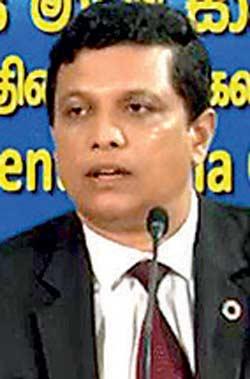 “Earlier we said it is leukemia, now we are not saying leukemia – we classify down to the last cell. Then you can do targeted therapy, give exactly the right drug. But the lack of a genetic lab is a major limitation in our country”
- Dr. Samadhi Rajapaksa, Chairman Hospice Sri Lanka Alliance
Dr. Rajapaksa pointed out the absence of a dedicated genetic laboratory as a barrier to precision therapies and stressed that one of the biggest gaps in childhood cancer care in Sri Lanka is the lack of a government run genetic laboratory. “At present, most genetic testing facilities are in the private sector, and the costs are extremely high. Without these advanced tests, we cannot always reach an exact diagnosis. Many samples have to be sent abroad, and that creates further delays,” he explained. He noted that Sri Lanka already has the manpower and specialists, but not the equipment, reagents or infrastructure. “If the government could establish a sophisticated, next-generation genetic lab, we could overcome many of these challenges,” he said.
Currently, families face unbearable financial burdens. “Some of these tests cost several millions of rupees. How can patients manage? They can’t. Thus, it keeps dragging. Samples are sometimes sent overseas without families knowing exactly which country. Reports occasionally come back. Sometimes the blood sample has clotted, so the test cannot proceed. Then it has to be repeated. This is a huge struggle. It has become a mafia, a business and unfortunately patients are the ones who suffer,” Dr. Rajapaksa cautioned.
He concluded by highlighting the need for holistic support for families. He stressed that sometimes the mother or primary caregiver focuses entirely on the sick child and may neglect other children. He said, “Psychological support for the whole family is essential,” adding that financial support remains critical, with many families needing assistance to cover treatment-related expenses. Childhood cancer statistics may sound overwhelming, but the context matters. Sri Lanka records the abovementioned numbers in cases and deaths annually. Yet Consultant Pediatric & Adolescent Oncologistat the National Cancer Institute of Sri Lanka in Maharagama (Apeksha Hospital) Sanjeeva Gunasekera is careful not to let the numbers paint a picture of despair. “The slight increase is not alarming – it’s mainly linked to population growth rather than a global trend,” he explained, warning that raw death figures without context may create unwanted confusion. For him, the central message is one of possibility. Childhood cancers, when caught early and treated properly, offer “a very good chance of a cure.” But that chance, he stressed, depends on families completing the full course of treatment. “Basically, you will get rid of it for the rest of your life. You can go back to a normal life,” he said.
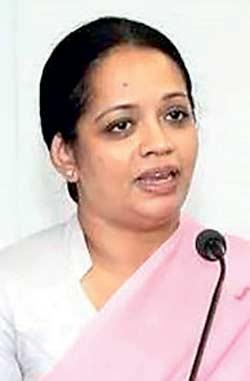 “Ours is the first pediatric palliative care centre in Sri Lanka (Suwa Arana) and we are affiliated with St. Jude’s Research Hospital, a collaborating centre for childhood cancer here. Indira Cancer Trust is also part of the National Technical Advisory Committee, representing patients across the country”
- Dr. Lanka Jayasuriya Dissanayake, Chairperson Indira Trust
At the same time, Dr. Gunasekera acknowledged that treatments such as chemotherapy and radiotherapy, while lifesaving, for some patients can carry long-term side effects that need careful monitoring. He also pointed to the essential role of charities and public donations in complementing government resources. But he cautioned against ad-hoc efforts, “Sometimes people post about donations on social media without proper organisation, and this can create confusion or inefficiency” Ultimately, his takeaway for families is clear, childhood cancer should not be seen as a hopeless fight. “With proper management and adherence to treatment, children have a real chance at complete and lasting recovery,” he said.
Holistic and community support
Beyond hospitals, non-governmental organisations such as palliative centres play a critical role in supporting children with cancer and their families. Chairperson of Indira Trust Dr. Lanka Jayasuriya Dissanayake described the comprehensive care her organization provides. “We cover all meals and essentials free of charge. We assist with medicines, investigations and any equipment a child might need,” she said.
While the Indira Trust also offers services for adults, she highlighted the organization’s pioneering role in Sri Lanka, “Ours is the first pediatric palliative care centre in Sri Lanka (Suwa Arana) and we are affiliated with St. Jude’s Research Hospital, a collaborating centre for childhood cancer here. Indira Cancer Trust is also part of the National Technical Advisory Committee, representing patients across the country,” she added. Holistic care lies at the heart of their approach. The Trust supports everything from bone marrow transplants to the everyday needs of children, working closely with doctors at the College of Oncology and Apeksha Hospital, the only hospital in Sri Lanka treating pediatric cancer. Accommodation is another key aspect. “When a child gets cancer, treatment is not measured in days, but months, sometimes years. Families are often separated, unable to visit due to financial constraints. We provide transport support and housing, so families can stay together,” she added.
Rainbow Rooms at the centre allow extended families to remain close during treatment, Dr. Dissanayake noted that most children receiving care at the centre come from rural areas. “Many children who reach our centre come from rural regions, even though urban children are diagnosed more frequently. They access government-provided services at Apeksha Hospital, but specialised support like ours is crucial. Sri Lanka is advancing pediatric cancer care, working closely with the World Health Organization (WHO) and specialised doctor teams, and rural children are benefiting significantly from these services,” she said.
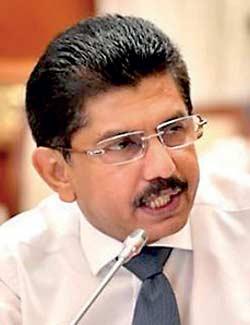
“Childhood cancer care and related facilities are being given strong priority”
- Secretary to the Ministry of Health
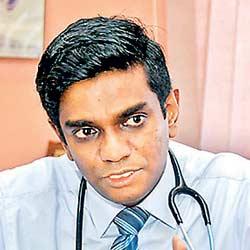
Dr. Anil Jasinghe
 Government support has been a cornerstone in strengthening childhood cancer care across Sri Lanka. Secretary to the Ministry of Health Dr. Anil Jasinghe, highlighted the scale of budgetary allocations for medicines this year. “Budget allocations for medicines this year amount to Rs.185 billion, with most of the orders already placed for the coming year,” He noted that a significant portion of this allocation is directed toward cancer cure drugs. “While some drugs were earlier categorised as expensive ‘name patient drugs,’ many have since been included in the formulary, becoming standard medicines,” he added. Addressing concerns about recent medicine shortages, Dr. Jasinghe explained that these were due to past performance issues but assured that measures are in place to ensure a smooth supply chain next year.
International assistance has also strengthened pediatric oncology, Dr. Jasinghe told Daily Mirror that through a United State of America (USA) charity, Sri Lanka is receiving children’s cancer drugs free of charge. “An agreement has been signed with a hospital and university in the USA, with the arrangement channeled through the WHO, procured by United Nations Children’s Fund (UNICEF), and funded by St. Jude Children’s Research Hospital in Tennessee. Initially, these supplies will benefit children at Apeksha Hospital,” he added. He emphasised the unprecedented expansion of hospital facilities. Major hospitals across the country are being strengthened with radiotherapy equipment, including linear accelerators, brachytherapy units, and mammogram machines. At Apeksha Hospital, he noted, “Bone marrow transplants for children are now being successfully carried out—an advancement that previously required patients to travel to India or other countries.” He also highlighted a new children’s complex opened six months ago at Apeksha Hospital, funded by Ruhunu Maha Kataragama Devalaya.
Dr. Jasinghe concluded by stressing that childhood cancer care remains a strong government priority. “Childhood cancer care and related facilities are being given strong priority, describing the area as one the government considers essential to safeguard.” he said.
08 Jun 2026 2 minute ago
08 Jun 2026 3 minute ago
08 Jun 2026 11 minute ago
08 Jun 2026 53 minute ago
08 Jun 2026 1 hours ago