02 Dec 2025 - {{hitsCtrl.values.hits}}
By Chaturanga Pradeep Samarawickrama
Sri Lanka is facing a growing humanitarian crisis as Cyclone Ditwah continues to cause severe damage across the island. Authorities warn that the death toll could rise above 1,000 as more people are reported missing. The cyclone hit the eastern coast on 28 November after forming in the Bay of Bengal and has destroyed or damaged areas in almost every district.
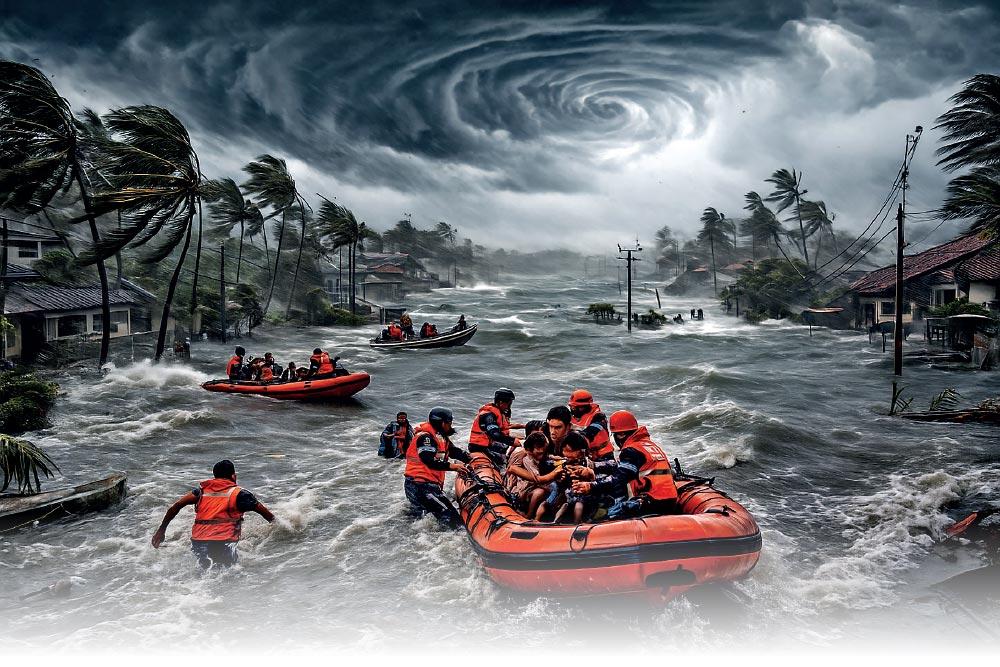
Heavy rain and strong winds have caused major flooding and landslides, leaving hundreds of thousands of people stranded, displaced, or unable to access basic services.
Officials confirmed 390 deaths, 352 missing, and nearly 1 million people affected. Around 180,000 to 200,000 displaced people are staying in over 1,200 government shelters, and emergency teams warn that the situation could worsen with continued bad weather.
Many towns and villages are underwater, especially in low-lying areas like the Colombo suburbs, where the Kelani River has flooded entire neighbourhoods. In the central highlands—Kandy, Badulla, and Matale—deadly landslides have buried homes and wiped out villages.
Infrastructure has suffered severe damage. More than 200 roads are blocked or washed away, at least 10 bridges have been destroyed, and rail lines are flooded. Power and communication lines are down in many areas. Over 15,000 homes have been destroyed and tens of thousands damaged, leaving families homeless and vulnerable. Farmlands, shops, and small businesses have also been swept away, creating long-term economic challenges.
Rescue teams say they are finding it difficult to reach the worst-hit areas due to blocked roads and ongoing landslides. The military and police have deployed over 24,000 personnel, using helicopters and boats to rescue stranded families, many of whom remain cut off.
The Disaster Management Centre (DMC) reports major problems distributing food and dry rations in high-risk areas because roads are blocked and many government officials are also victims of the disaster. In Nuwara Eliya and Badulla, several Grama Niladharis and District Secretariat officers are missing or displaced, making it hard to identify who needs help.
Officials also raised concerns about looting in flood-affected areas. The DMC urged people to stop stealing from abandoned homes after several incidents were reported in Kolonnawa, where some residents refused to evacuate because they feared losing their belongings.
India and other international partners have started sending aid, including rescue teams, medical supplies, and emergency relief materials. The government has declared a state of emergency to better coordinate response efforts and international assistance.
Experts say Cyclone Ditwah highlights the increasing risk of severe weather linked to climate change and shows the need for better early-warning systems and disaster-ready infrastructure.
Despite the widespread destruction, thousands of volunteers, community groups, and humanitarian organisations have stepped forward to help affected families. Many stories of bravery and kindness are emerging as people rescue neighbours and support those who have lost everything.
While the main focus remains on saving lives, Sri Lanka now faces the long and difficult task of rebuilding homes, repairing infrastructure, and helping communities recover from one of the most destructive cyclones in recent history. Authorities warn that the true scale of the disaster will only be known once floodwaters recede and rescue teams reach areas still cut off from the rest of the country.
19 Jun 2026 2 hours ago
18 Jun 2026 5 hours ago
18 Jun 2026 6 hours ago
18 Jun 2026 7 hours ago
18 Jun 2026 7 hours ago