29 Dec 2025 - {{hitsCtrl.values.hits}}
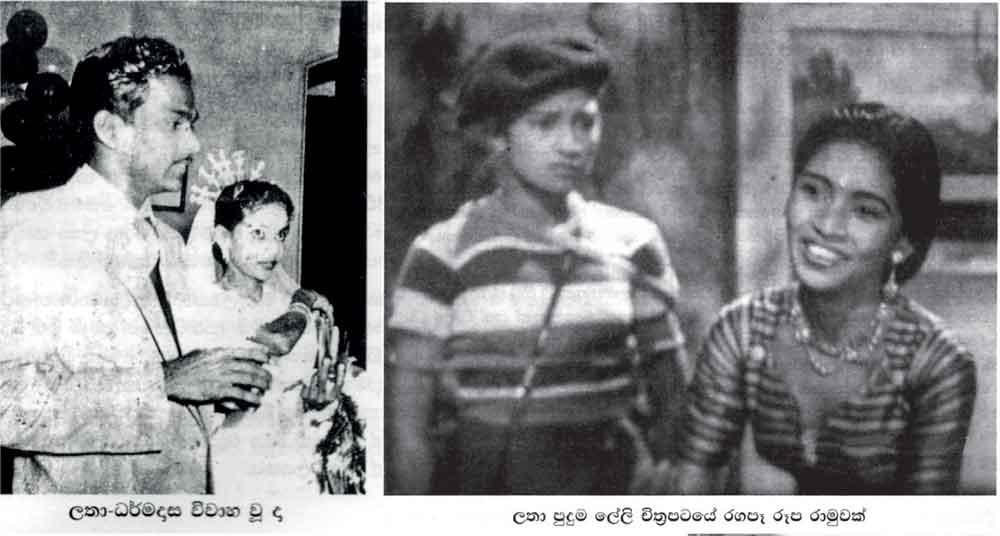
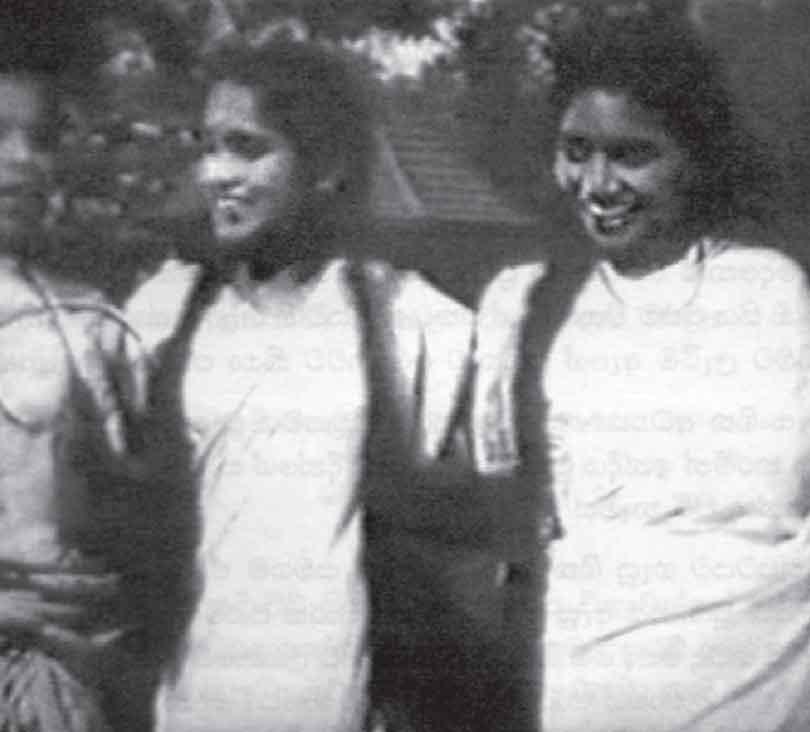
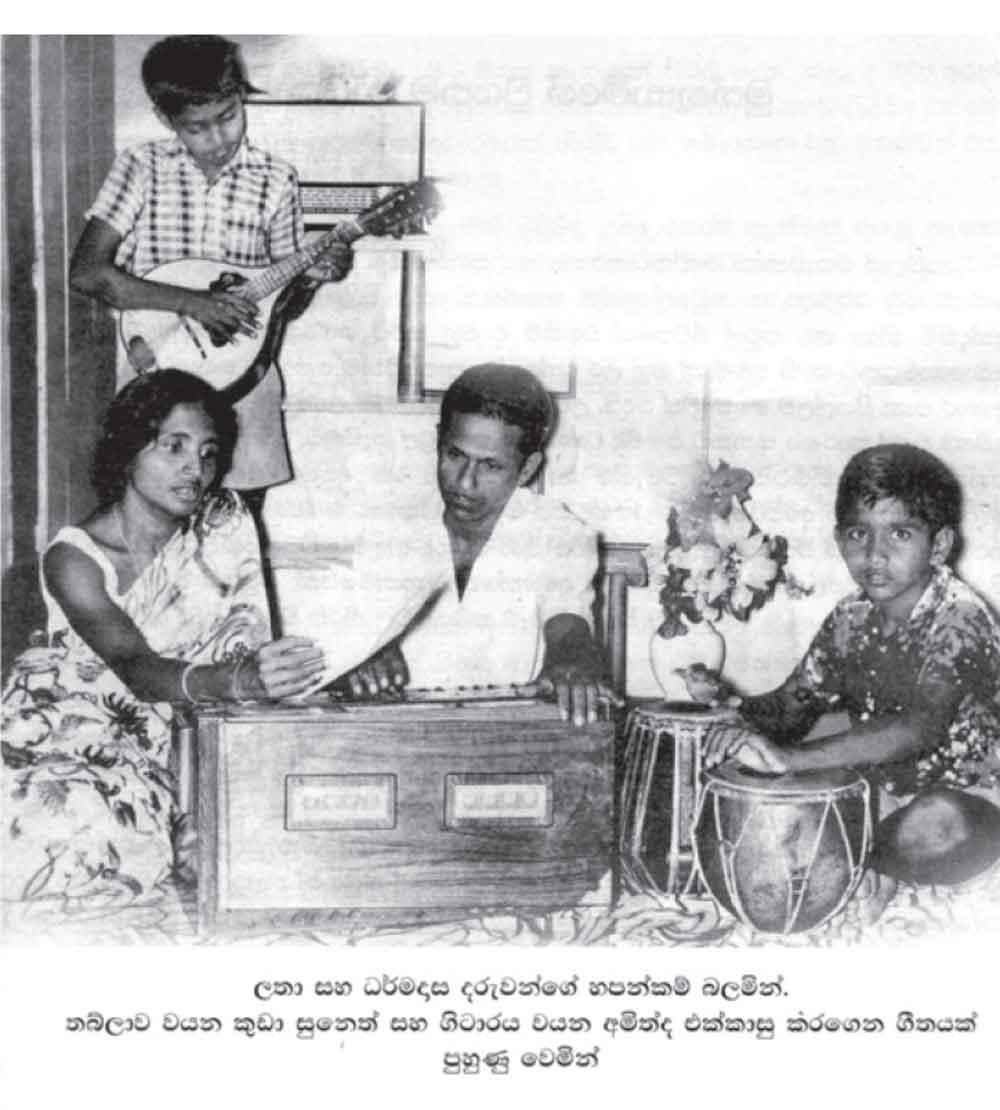
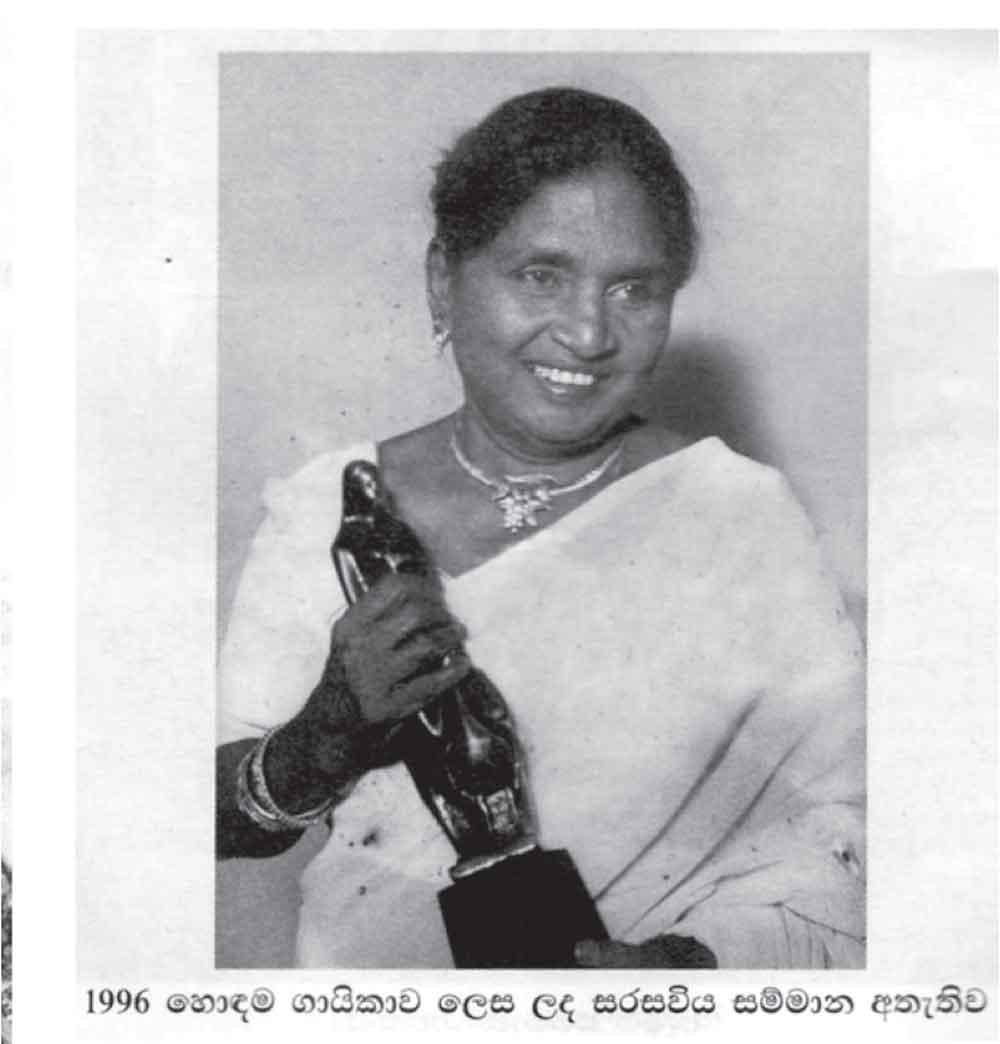
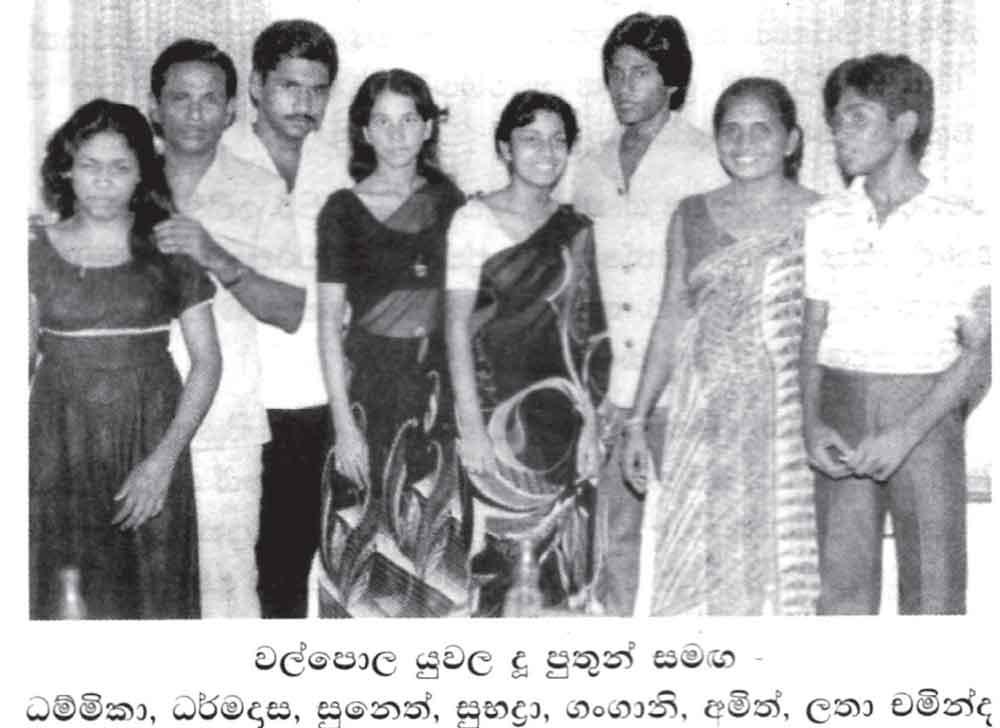
 Sri Lanka today mourns the passing of one of its most treasured voices. Deshamanya Matharage Rita Genevieve Fernando, beloved to generations as Latha Walpola, passed away on 27 December 2025 at the age of 91, leaving behind a musical legacy unmatched in the island’s cultural history. Revered as “The Nightingale of Sri Lanka,” her voice shaped the golden era of Sinhala music and cinema, and continues to echo in the collective memory of the nation.
Born on 11 November 1934 in Mount Lavinia, Latha Walpola was the youngest child of Joseph Leenus Fernando, an employee of Cargills Ltd., and Elizabeth Muriel, a schoolteacher whose encouragement proved pivotal in nurturing her daughter’s extraordinary talent. Raised in a family of five children, young Rita Genevieve displayed an uncanny musical gift from an early age. While other children learned hymns by rote, she mastered complex melodies sung in Latin at church, astonishing even her elders with her perfect pitch and vocal control.
Her formal education began at St. Anthony’s College, Mount Lavinia, where she soon became the leader of the church choir. It was here that her innate ability to command a room with her voice became evident. Living in Mount Lavinia placed her at the heart of a thriving artistic community, and fate intervened in the form of family friend C.A. Fonseka, the legendary radio dramatist who introduced many pioneering artistes to Radio Ceylon.
At just 12 years old, Rita Genevieve Fernando joined the Radio Ceylon choir in 1946. The following year marked a turning point that would change Sinhala music forever. In 1947, she sang her first solo song, “Kandulu Denethe Vehena,” written by Sarath Wimalaweera and composed by Vincent de Alwis, Radio Ceylon’s resident violinist. The song announced the arrival of a rare voice - pure, emotionally resonant, and technically astonishing.
Under the guidance of masters such as Mohammed Gauss, P.L.A. Somapala, B.S. Perera, Susil Premaratna and C.T. Fernando, her career gathered unstoppable momentum. By the early 1950s, Latha Walpola had become a household name, celebrated for songs such as “Mal Bara Himidiriye Pipune,” “Salalihini Kowul,” “Lo Ada Ninde,” and “Jesu Rajanani.” Her duets with C.T. Fernando and Susil Premaratna remain among the most cherished recordings in Sri Lankan music history.
It was Susil Premaratna who famously likened her voice to that of India’s Lata Mangeshkar, bestowing upon her the name “Latha” - a title that would soon eclipse her given name and define her destiny. Remarkably, Walpola achieved this without any formal training in music. Gifted with the ability to sing effortlessly across three octaves - a rarity even among accomplished vocalists - she possessed a crystalline clarity that remained unchanged for decades.
Her transition to cinema was equally groundbreaking. Beginning with Eda Rae in 1953, Latha Walpola went on to contribute playback singing to nearly 600 Sinhala films, becoming the most prolific female playback singer in the country’s history. Her voice lent emotional depth to characters portrayed by cinema legends such as Nimmi and Anjalidevi, and she worked alongside icons including W.D. Amaradeva and Premasiri Khemadasa, who composed many of her most enduring melodies.
In 1959, she married fellow singer Dharmadasa Walpola, forming one of Sri Lanka’s most admired musical partnerships. Their harmonious duets delighted audiences, and together they raised four sons and a daughter. While their collaboration ended with Dharmadasa’s untimely death in 1981, Latha Walpola’s voice continued to soar, undiminished by personal loss.
Her contributions were recognised repeatedly over the decades. She won the Sarasaviya Award four times, the Deepasika Award in 1974, and numerous lifetime achievement honours. In 2005, the Sri Lankan government conferred upon her the Kala Suri award, and in 2017 she received the Deshamanya, the nation’s second-highest civilian honour - an acknowledgment of her immeasurable service to arts and culture. Even in her eighties, she continued recording, singing a new composition at the age of 86.
Latha Walpola was more than a singer; she was a national treasure. Her voice narrated love, devotion, sorrow and hope through eras of profound social change, remaining steadfastly elegant and sincere. As tributes pour in from artistes, admirers and institutions around the world, Sri Lanka remembers a woman whose song became the soundtrack of its soul.
04 Jun 2026 1 hours ago
04 Jun 2026 1 hours ago
04 Jun 2026 1 hours ago
04 Jun 2026 2 hours ago
04 Jun 2026 2 hours ago