24 May 2025 - {{hitsCtrl.values.hits}}
By Sheain Fernandopulle
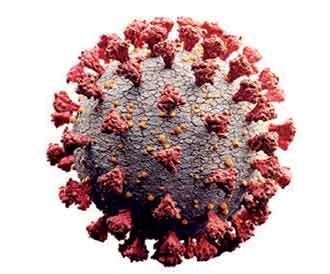 The Ministry of Health has reassured the public that there is no threat of a new COVID-19 variant spreading in Sri Lanka.
According to Health Ministry Secretary Dr. Anil Jasinghe, no new variant has been detected locally, based on data from the Epidemiology Unit.
“Surveillance and testing are ongoing across selected hospitals, and no significant rise in COVID-19 cases has been observed,” the ministry added. Recent media reports have noted rising infections in some Asian countries, but Dr. Jasinghe explained this could be due to reduced immunity and other factors, not necessarily a new variant. The Ministry confirmed that laboratory and respiratory surveillance systems are functioning actively to detect potential outbreaks early.
“While minor increases in respiratory illnesses like influenza or COVID-19 may occur from time to time, the overall risk to the public remains low,” the ministry added. All you need to know about the new COVID variant
What’s driving the surge?
The current rise in cases is believed to be caused by a new COVID-19 variant known as JN.1, along with its offshoots LF.7 and NB.1.8. These variants are part of the Omicron family, which has caused previous waves of the virus.
The World Health Organisation (WHO) has classified JN.1 as a “variant of interest,” meaning it is being monitored closely but is not yet considered dangerous enough to be labelled a “variant of concern.” According to WHO, the global public health risk from JN.1 is currently low.
Where are the cases rising?
Hong Kong and Singapore have seen a significant increase in COVID-19 activity. Authorities in these cities report that the virus is “quite active” and have recommended new booster doses. In India, active cases have risen from 12 to 56 in Maharashtra within a week. As of now, India has 257 active cases, with Kerala, Maharashtra, and Tamil Nadu reporting the highest numbers. Most of the cases are mild, according to health officials.
Symptoms to watch for:
The symptoms associated with the JN.1 variant are mostly mild and similar to previous Omicron variants. These include:
Fever, Runny nose, Sore throat, Headaches, Extreme fatigue, Muscle weakness, Minor stomach issues (like nausea or loss of appetite)
While the new variants are not believed to be more dangerous or deadly, experts say the rise in cases could be due to waning immunity among the population.
Is vaccine effective against current variant?
Vaccination is the best way to prevent severe symptoms from new COVID variants. The vaccines have been designed for the new variants, and therefore, it is recommended to get a booster shot every 6-12 months, particularly for those at high risk. Vaccination helps lower the risk of severe illness, hospitalisation and long COVID.
05 Jul 2026 2 hours ago
05 Jul 2026 2 hours ago
05 Jul 2026 2 hours ago
05 Jul 2026 2 hours ago
05 Jul 2026 2 hours ago