16 Oct 2023 - {{hitsCtrl.values.hits}}
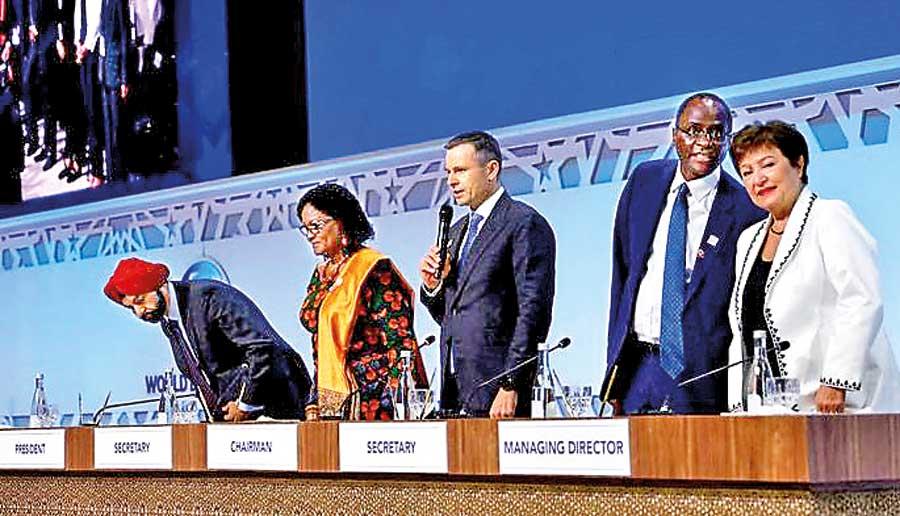
MARRAKECH, Morocco (Reuters) - Overshadowed by fresh Middle East violence and hosted by a country still recovering from an earthquake, the week-long annual meetings of the International Monetary Fund and World Bank wrapped up on Saturday.
Discussions in the Moroccan city of Marrakech ranged from the prospects for a world economy weighed down by debt, inflation and conflict to the growing wealth gap between rich and poor countries and floundering efforts to tackle climate change.
Limping economy
The new IMF outlook - signed off before the escalation of the conflict between Israel and Hamas - sees global economic growth slowing from 3.5 percent last year to 3 percent this year and 2.9 percent next year, a 0.1 percent point downgrade from a previous 2024 estimate.
Global inflation is seen dropping from 6.9 percent this year to a still-high 5.8 percent next. Central bankers signalled readiness to end interest rate hikes if events allow, hopeful that inflation can be finally tamed without too hard a landing.
JP Morgan chair of global research Joyce Chang put it another way.
“The bond vigilantes are back, and the Great Moderation is over,” she told a panel of the two-decade era of relative economic calm before the 2008/09 financial crisis.
One policy area where this could have a knock-on effect is the fight against climate change. Vitor Gaspar, head of the IMF’s fiscal division, warned current subsidies-based policies were failing to deliver net zero emissions and that scaling them up would explode public debt. “Countries will need a new mix of policies with carbon pricing at the centre,” the Fund concluded.
Debt details and reforms
Looking beyond the major developed economies, higher policy rates, a strong dollar and geopolitical uncertainties are adding to challenges for the rest of the world.
Turkey was in the spotlight as Finance Minister Mehmet Simsek pitched its reform plan. “The biggest structural issue is to bring inflation down. And they’re working on it,” said Murat Ulgen, Global Head of Emerging Markets Research at HSBC.
Kenya is looking to avoid slipping into debt distress and its Central Bank Governor told Reuters it plans a buyback of a quarter of its US$ 2 billion international bond maturing in June - pushing its 2024 bond up 1.2 cents on the dollar.
One debt restructuring deal emerged: Zambia finally agreed a debt rework memorandum of understanding with creditors including China and France.
Progress on Sri Lanka was less clear. Sri Lanka said on Thursday it reached an agreement with the Export-Import Bank of China covering about US$ 4.2 billion of debt, while talks with other official creditors are stalling.
Risks skewed to downside
High interest rates will put some borrowers in more precarious positions, the IMF warned in its Global Financial Stability Report. Around 5 percent of banks globally are vulnerable to stress if those rates remain higher for longer, it estimated, and a further 30 percent of banks - including some of the world’s largest - would be vulnerable if the global economy enters a prolonged period of low growth and high inflation.
Jostling for influence
The Ukraine war, growing trade protectionism and tensions between the United States and China are all making consensus-building tougher: In the end, there was not enough agreement to issue the usual final communique at the end of the meetings. There was much talk ahead of Marrakech on revamping the IMF and World Bank to better reflect the emergence of economies like China and Brazil. A U.S.
proposal to boost IMF lending power but save a review of shareholdings in the fund till later won broad support. A pact announced on Saturday spoke of a «meaningful increase» in quotas by end-2023 but gave few other details. Anti-poverty groups were sceptical of what had been achieved. “The big theme this week is G7 countries papering over the cracks of shattered promises,” said Kate Donald, Head of Oxfam International’s Washington DC Office. “Despite the wringing of hands about the billions of dollars needed to tackle poverty and climate breakdown, there has been no sign of new money.”
23 Jun 2026 1 hours ago
23 Jun 2026 1 hours ago
23 Jun 2026 2 hours ago
23 Jun 2026 2 hours ago
23 Jun 2026 2 hours ago