10 Dec 2025 - {{hitsCtrl.values.hits}}
By Srilal Miththapala
The deadly cyclone that hit Sri Lanka has left in its wake hundreds dead, thousands of houses destroyed and a devastated infrastructure across many parts of the island. The estimated damage is said to be over US $ 5 billion. In response, the government has swiftly established the nationwide programme ‘Rebuild Sri Lanka’ to fast-track the rehabilitation work.
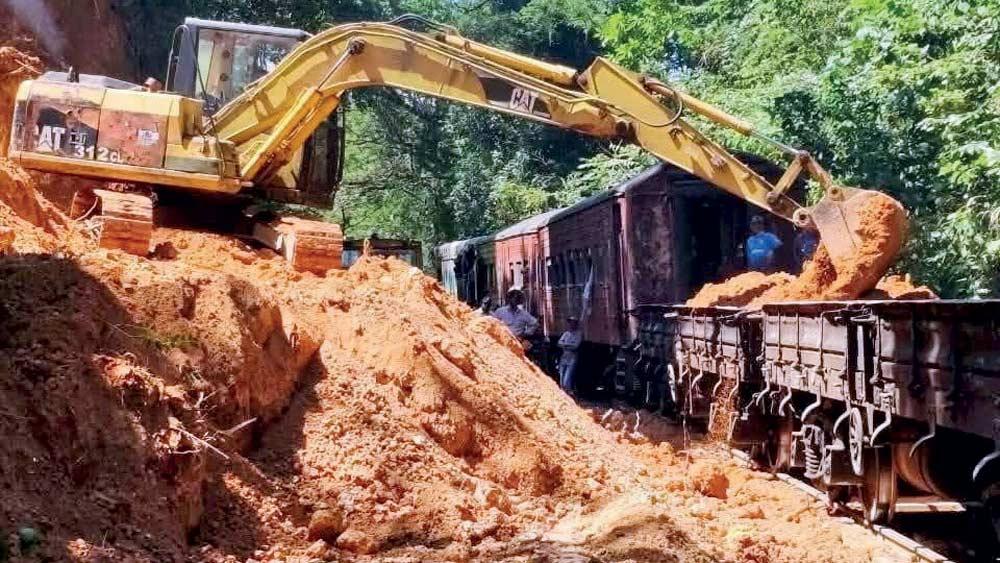
Across the country, there is powerful momentum: government agencies mobilising, foreign governments pouring in aid, the armed forces working round the clock, volunteers lining up to help the affected communities and the private sector stepping to support. Rebuilding work has commenced at breakneck speed, roadways are being cleared of debris and repaired, power lines re-erected, water supplies restored and even bridges are being reconstructed. A crash programme to rebuild the destroyed houses is also on the cards.
Speed is essential under the circumstances to ensure that food and other essentials can be transported to the needy in the affected areas, which were hitherto isolated and cut off. Immediate relief and the restoration of the basics is of vital importance.
Uncomfortable question
But within the humanitarian effort this lies an uncomfortable question: Are we only rebuilding what was destroyed or are we rebuilding what never should have existed in that form in the first place? Because there is a fundamental difference between repairing the damage and rebuilding a nation.
Speed is necessary but speed without a vision can be dangerous. By rushing into large-scale rebuilding are we risking repeating the single biggest mistake countries make after disaster? Rebuilding exactly what was wrong and failed in the first place and watch it fail again?
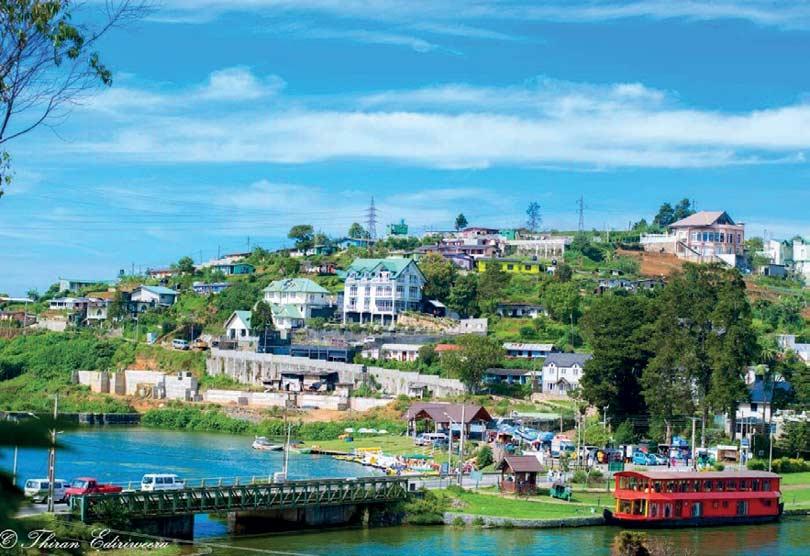
It is well known that unplanned development, politically motivated settlements and annexing of low-lying lands (especially in the suburbs of Colombo), deforestation, clearing of mangroves, etc. have drastically affected the environmental landscape and the rain water drainage network, which was providing protection from floods. Several dubiously approved development projects have been set up in such environmentally sensitive areas (e.g. Muthurajawela). What about the numerous small houses along the embankment of the Kelani river which are illegally built on the setback from the river? Are we going to restore them and let them flood again at the next big rainfall? The picturesque hill country is dotted with buildings (particularly small hotels) on steep inclines, obstructing the table drains and weep holes, which normally allow for rainwater drainage and seepage, which could then lead to possible landslides.
The city of Colombo and its suburbs, with a network of 36 wetlands and nearly 50 km of canals, was recognised by the Ramsar Convention as a globally significant Wetland City in 2018, the only capital with this status in South Asia. Seven years down the line, with illegal settlements and mass unplanned development, I wonder if this accreditation will be still valid?
Yes, we need to rebuild fast but we must rebuild better, stronger and smarter. Without a long-term plan, we are simply resetting the clock until the next cyclone, the next flood, the next tragedy.
Disasters are sad but they are also opportunities
There are enough examples of global disasters that led to genuine transformation.
Japan rebuilt after the Kobe earthquake with new building codes and strict engineering standards.
New Zealand used the Christchurch earthquake to redesign entire districts with resilience and safety built in.
Thailand transformed its disaster management system after the 2004 tsunami into one of Asia’s strongest.
Don’t we remember the tsunami and what happened afterwards? Have we not learned enough lessons for tragedies past?
Sri Lanka must also ask itself the same question: Will this cyclone be another tragedy or a turning point?
A dual strategy is needed: Short term and long term
The basics must be restored quickly to stabilise communities and revive economic activity- Electricity, roads and bridges [SM1], potable water supply, essential housing and healthcare services.
Simultaneously, a properly planned national development blueprint needs to be prepared for long term (five to 10 years?)
This should include new infrastructure standards, stricter engineering codes, climate-resilient design and flood and storm-proof construction. Risky areas and vulnerable slopes need to be identified and excluded from any form of development or rebuilding. Modern hydrological and geotechnical modelling tools must be utilised.
Sri Lanka is now facing climate events far more extreme, more frequent and more unpredictable than ever before. If we rebuild the old Sri Lanka, we will inherit old vulnerabilities. Therefore, the opportunity must also be used to put in place a proper climate adaptation policy, including mangrove restoration, reforestation and introducing buffer zones.
This disaster must become the catalyst for a policy shift toward resilient infrastructure, evidence-based planning and accountable reconstruction.
19 Jun 2026 26 minute ago
18 Jun 2026 4 hours ago
18 Jun 2026 5 hours ago
18 Jun 2026 6 hours ago
18 Jun 2026 6 hours ago