14 May 2025 - {{hitsCtrl.values.hits}}
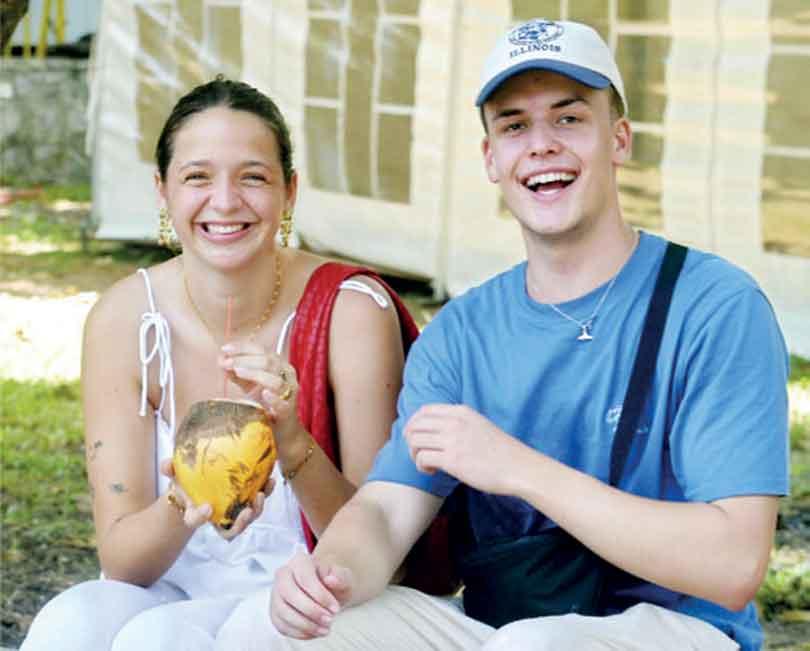
Tourists beat the heat in Colombo with a king coconut. Pic by Pradeep Pathirena
Sri Lanka’s tourism sector continues to maintain its recovery momentum as it recorded US$ 256.7 million in earnings for April 2025, a 13.7 percent increase year-on-year (YoY).
The month saw 174,678 international visitors, marking a 17.3 percent growth compared to April 2024. This makes April one of the strongest-performing off-peak months in recent years, affirming optimism that the country is back on the radar for global travellers. For the January to April period, tourism earnings reached US$ 1.379 billion, rising 10.2 percent from US$ 1.251 billion earned in the same period last year. Tourist arrivals for the four months stood at 896,884, a 14.3 percent increase. This improvement indicates both improved accessibility and growing confidence in Sri Lanka as a travel destination. The industry’s performance puts it on course toward the ambitious 2025 goal of 3 million arrivals and US$ 5 billion in earnings. By end-April, Sri Lanka had already achieved 30 percent of its arrivals target and just under 28 percent of its revenue goal.
While arrival numbers have grown at a faster pace than earnings, the marginal gap between the two suggests a mild compression in average spending per visitor.
Industry stakeholders have repeatedly stressed the need to accelerate product diversification, particularly in experiential, wellness, and long-stay tourism. From an economic point of view, Sri Lanka tourism offers the much needed external sector heft after remittances and garments.
The near-collapse of the industry in 2020 and 2021 due to the pandemic, and its delayed rebound amid political and economic turmoil in 2022, was a key driver of the foreign exchange shortfall that ultimately triggered the broader economic crisis. Since then, the sector has been on a steady path to recovery, emerging as a critical buffer for the country’s balance of payments and offering much-needed support to the macroeconomic framework.
21 Jul 2026 26 minute ago
21 Jul 2026 28 minute ago
21 Jul 2026 2 hours ago
21 Jul 2026 2 hours ago
21 Jul 2026 3 hours ago