07 Jun 2025 - {{hitsCtrl.values.hits}}
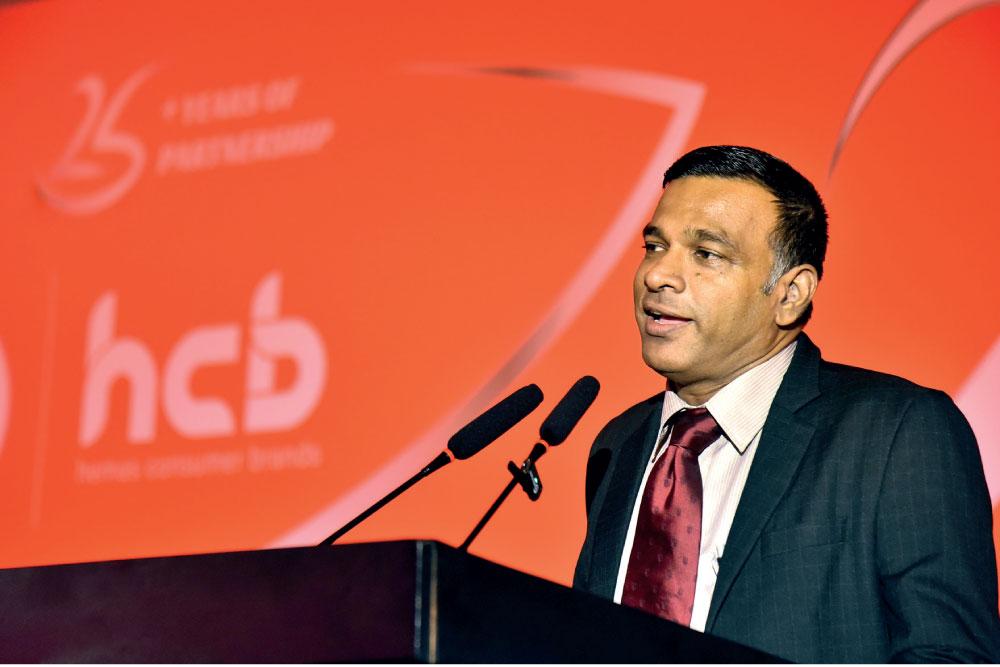
Prof. Ruwan Duminda Jayasinghe
PIC BY KITHSIRI DE MEL
By Nishel Fernando
Half of Sri Lankans suffer from some form of dental disease and a concerning 6 percent of the population has no teeth at all, according to the Sri Lanka Dental Association (SLDA), which has flagged poor oral hygiene as a “silent epidemic” requiring urgent, collaborative action.
This impacts everything from an individual’s ability to eat and speak to their overall confidence and quality of life, demands an urgent and collaborative response far beyond the bathroom sink.
The issue is not a lack of effort but due to a lack of awareness, according to experts.
“If you ask anybody in this country, other than a very, very minute fraction, they will say ‘we brush our teeth’,” noted SLDA President Prof. Ruwan Duminda Jayasinghe.
Speaking at an event hosted by Hemas Consumer Brands’ Clogard, he highlighted a critical paradox: despite the daily ritual of brushing, the nation’s oral hygiene status remains alarmingly poor.
The root causes are fundamental.
“People brush but they don’t do it in the proper way,” Prof. Jayasinghe explained.
“There are people who brush the teeth without the use of a toothbrush... without the use of appropriate toothpaste... [or] without fluoride.”
This knowledge gap carries a heavy price, both for individuals and the national economy. Tooth loss and dental disease hinder the ability to chew, speak and can negatively affect a person’s appearance and general performance.
On a global scale, the problem is even more pronounced. Prof. Jayasinghe revealed that oral disease is the world’s number one health issue, affecting 3.5 billion people in 2019. The economic burden is equally staggering, with an estimated global management cost of US $ 380 billion in that same year, a figure that dwarfs Sri Lanka’s GDP for an entire decade. Worryingly, developing nations such as Sri Lanka bear a disproportionate share of this burden.
“Four out of five people, who have oral diseases, are from foreign nations. Nations like us,” he stated.
The local statistics paint a grim picture across all age groups. A significant percentage of children suffer from dental caries (decay), while the majority of adults grapple with gum disease. For the elderly, tooth loss is rampant, culminating in the 6 percent who are completely edentulous. Compounding the issue is the serious threat of oral cancer, which affected 380,000 people globally in 2021, with a high mortality rate.
Recognising that the government’s limited budget cannot tackle this crisis alone, Prof. Jayasinghe made a powerful call for a unified strategy.
“The work that we have to carry out has to be multifactorial, multi-sectorial,” he urged.
“Without the involvement of multiple sectors, including the government, non-governmental as well as the industry and public, we will not be able to get it to the desired level.”
This is where strategic partnerships such as the one between the SLDA and private sector leaders such as Clogard become essential. Such collaborations have the potential to amplify public education campaigns, promote proper oral hygiene practices and support vital research. Critically, the solutions must be tailored to the nation’s unique challenges.
“We can’t compare what the West is doing in Sri Lanka. We face multiple issues that are unique to our own country,” Prof. Jayasinghe stressed.
The path forward, therefore, involves robust, localised research to identify these specific problems and develop targeted, effective interventions.
21 Jul 2026 25 minute ago
21 Jul 2026 27 minute ago
21 Jul 2026 2 hours ago
21 Jul 2026 2 hours ago
21 Jul 2026 3 hours ago