22 Mar 2025 - {{hitsCtrl.values.hits}}
|
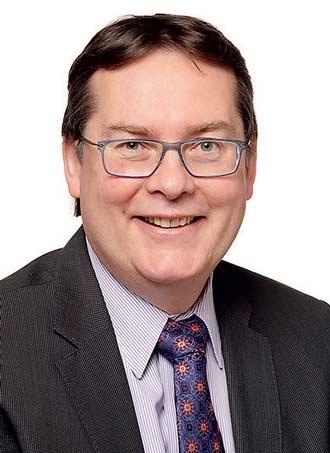
Martha Tesfaye Woldemichael |
Peter Breuer |
The International Monetary Fund (IMF) this week asserted that Sri Lanka’s path to economic recovery is ambitious, yet achievable, emphasising that maintaining the reform momentum would be key to a full recovery.
“This will benefit not only this generation but future ones as well,” said Peter Breuer and Martha Tesfaye Woldemichael in a joint Op-Ed.
Woldemichael has taken over as the IMF Mission Chief for Sri Lanka from Breuer.
The officials noted that the road to stable and inclusive growth, along with fiscal and debt sustainability, remains narrow. They reiterated that there is no room for policy errors.
“It will be important to continue to deliver revenues needed for essential government services, including by limiting tax exemptions. Scarce public resources need to be protected by restoring cost-recovery pricing for fuel and electricity and ensuring social support is well-targeted towards the most disadvantaged,” they said.
“The poor and vulnerable need to be given the opportunity to adequately participate in the economic turnaround. To unlock Sri Lanka’s long-term potential, capital spending in support of medium-term growth should be executed more predictably.”
This March marked the midpoint of Sri Lanka’s four-year economic reform programme supported by the IMF. In the two years since its inception, difficult but necessary reforms have been implemented, yielding significant gains.
The economy has rebounded strongly and quickly—it grew by 5 percent in 2024 and within 18 months, regained nearly half of the output lost between the peak in 2018 and the nadir in 2023. Skyrocketing inflation has been halted. Tax revenues as a share of GDP have increased by more than two-thirds and the government’s balance, excluding interest payments (primary balance), has improved by nearly six percentage points.
“The macroeconomic turnaround is remarkable, even as many households are yet to feel the impact,” the IMF officials said.
They acknowledged that the debt relief provided by the external creditors has eased the burden on Sri Lankans.
The external creditors have forgiven US $ 3 billion in debt and restructured another US $ 25 billion, which was due in the near term or already overdue, extending the repayment period over 20 years at significantly reduced interest rates.
The officials noted that Sri Lanka’s tradeable debt instruments are once again attracting investors, having been included in international bond indices. The country’s credit rating has been upgraded by at least three notches.
Markets have responded positively to Sri Lanka’s reforms, with domestic borrowing costs dropping sharply from a peak of 30 percent in 2023 to the current 8 percent. Additionally, the sovereign risk “spread” indicator in international markets has fallen from a peak of 70 percent to 5 percent. Responsible access to international markets should be within reach in the coming years.
Pointing out that Sri Lankans are paying a regrettably high price for past policy missteps and a lack of preparation for external shocks, the officials stressed that unsustainably low taxes and extensive tax exemptions—primarily benefiting enterprises rather than individuals—were an accident waiting to happen.
“The flipside of the government’s enhanced ability to fund its essential services today is that taxpayers have had to shoulder a higher burden, even as they are asked to contribute commensurate with their income and wealth.
Similarly, the full cost of fuel and electricity is now borne by their users without subsidies from the government, allowing scarce public resources to be directed to priority areas such as social protection.
These sacrifices are needed to ensure that Sri Lanka can extricate itself fully from its still very vulnerable position and prevent a return of the calamitous conditions experienced in 2022,” the officials said.
The IMF financing since 2023 has helped Sri Lanka avoid even worse economic consequences than those witnessed in 2022, before the programme began. The IMF-supported economic programme continues to provide a credible framework for reforms that attract financing from other multilateral and bilateral partners. It has also reassured creditors that the debt relief they granted would allow Sri Lanka to service its remaining debt post-restructuring.
Following last fall’s elections, the IMF quickly engaged with the new government to recalibrate the programme in alignment with the authorities’ policy priorities. Due to successful revenue mobilisation efforts, the government was able to provide some relief to the public while maintaining its ability to deliver essential services. Adjustments were made to the personal income tax regime; public sector wages were increased to partially compensate for the past high inflation and some relief was provided to the consumers of dairy products.
“At this midpoint mark, it is important to continue with the reforms and avoid the mistakes of the past. About half of the IMF programmes Sri Lanka had before this one ended prematurely, often followed by economic underperformance. It is important to arrest this boom-bust cycle and manage the economy, so that the recovery can be sustained even in an uncertain global environment and so that all Sri Lankans benefit from it,” said Breuer and Woldemichael.
21 Jul 2026 25 minute ago
21 Jul 2026 27 minute ago
21 Jul 2026 2 hours ago
21 Jul 2026 2 hours ago
21 Jul 2026 3 hours ago