06 Mar 2025 - {{hitsCtrl.values.hits}}
By Nishel Fernando
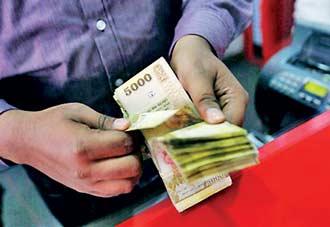 The fear of taxation may be contributing to the recent increase in cash circulation, highlighting Sri Lanka’s long journey towards a less cash-dependent society.
According to the latest (3Q24) Payment Bulletin of the Central Bank, the currency in circulation grew by 19.7 percent year-on-year (YoY) to Rs.1.33 trillion.
“Unfortunately, despite all these digital innovations and initiatives, we still see cash usage increasing. If I’m not mistaken, as per the latest Payment Bulletin, published quarterly by the Central Bank, cash in circulation has reached Rs.1.3 trillion, up from Rs.1.2 trillion in the previous quarter. So, for some reason, cash is still growing,” LankaPay CEO Channa De Silva said.
He made these remarks at a press conference in Colombo on Monday to announce LankaPay Technnovation Awards 2025, which recognises the leaders in ‘finnovation’.
When asked whether the fear of taxation was driving this rise in cash usage, he acknowledged that it is likely a major factor.
“It (fear of taxation) could be one reason. Another factor could be the Rs.5,000 notes handed out to many citizens during Covid and other crises. Those might now be coming back into circulation,” he added.
De Silva pointed out that 76 percent of the cash held by the public does not contribute to the economy.
“Out of this Rs.1.3 trillion, 76 percent is in the hands of the public—kept in cash boxes, under mattresses or in walls—essentially serving no purpose. Cash sitting idle neither generates interest for its owner, nor does it create any economic value for the financial sector,” he said.
He emphasised the need to channel this idle cash into the formal financial system, noting that Sri Lanka still has a long way to go.
“There’s no better way than digital payments (to integrate cash into the financial system) because money remains within the financial ecosystem when used digitally. We already have a robust infrastructure in place and we want it to be utilised more. Covid helped accelerate digital payment adoption but we still have a long way to go,” he added.
Citing various regional and international studies, he noted that maintaining cash costs governments around 1.5 percent of GDP.
“Imagine—Sri Lanka spends less than 2 percent of GDP on education, yet we waste 1.5 percent just to maintain cash. If we can shift even 30 percent of this cash to digital, we could save nearly 0.5 percent of GDP, which could instead be used for social welfare and other benefits for citizens,” De Silva pointed out.
In 2024, transactions processed through the LankaPay systems amounted to Rs.34 trillion, with Rs.17 trillion of them conducted in real-time, he said.
Promoting digital payments for government services remains a key focus, he added.
With the recent launch of GovPay, LankaPay aims to double the digital payments for government services, targeting a minimum of 100 government agencies.
21 Jul 2026 3 hours ago
21 Jul 2026 4 hours ago
21 Jul 2026 4 hours ago
21 Jul 2026 4 hours ago
21 Jul 2026 6 hours ago