17 Mar 2025 - {{hitsCtrl.values.hits}}
Sri Lanka is regaining its industrial strength, which weakened during and after the economic crisis in 2022, as reflected in the index that tracks industrial activity.
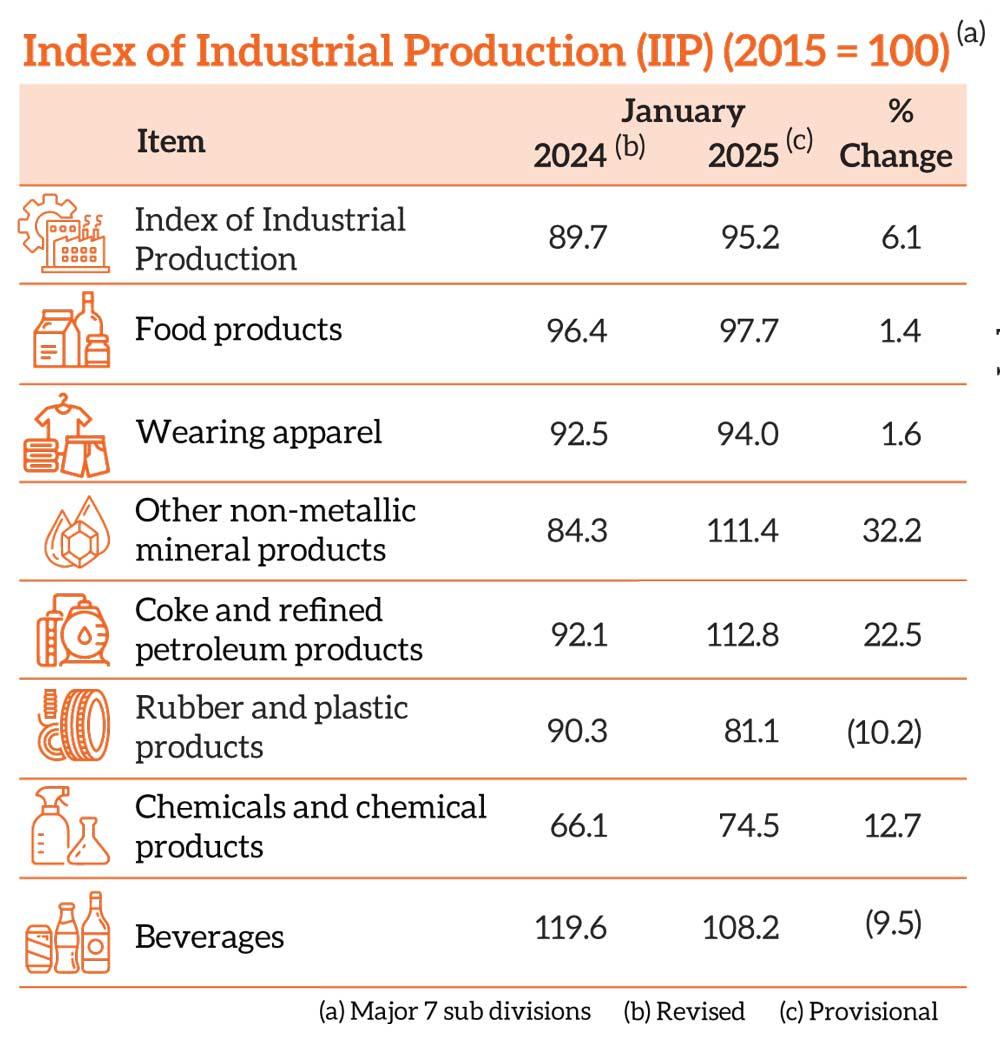
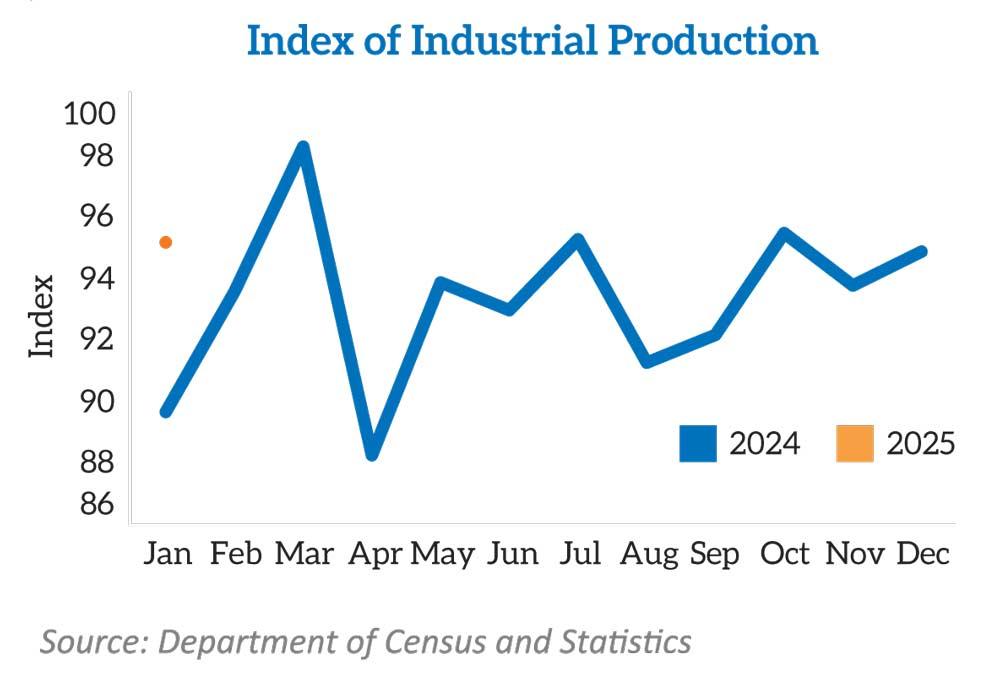
The Index of Industrial Production (IIP) recorded 95.2 points for January 2025, up 6.1 percent from the same month a year earlier, signalling a resurgence in related activities.
Industrial sector activity had been hampered since 2022 due to a foreign currency shortage, which led to stricter import controls.
The economic shock therapy came in the form of an exponential rise in borrowing and tax rates, curbing both business and consumer spending and shrinking the industrial sector and the overall economy.
The current revival is taking place as foreign currency availability has improved, import controls have been lifted, and business and consumer spending is picking up with a significant decline in borrowing costs and inflation.
In January, industrial production was driven largely by the growth of other non-metallic mineral products, coke and refined petroleum products, and chemicals and chemical products, which expanded by 32.3 percent, 22.5 percent, and 12.7 percent, respectively.
Meanwhile, major industries such as food manufacturing and apparel manufacturing also saw modest growth of 1.4 percent and 1.6 percent, respectively. However, beverage production declined by 9.5 percent year-on-year. Sri Lanka has a relatively shallow industrial sector, making its economy highly vulnerable to global shocks and disruptions, as seen during the pandemic. The country imports twice as much as it exports in merchandise, reflecting a weak industrial base heavily reliant on a few large-scale industries, such as apparel.
Food manufacturing is also not large or resilient enough, as evidenced during the height of the crisis when fears of food shortages arose due to limited imports.
Sri Lanka needs both broadening and deepening of its manufacturing activities while plugging itself into global and regional supply chains for a robust economy and better paying jobs.
21 Jul 2026 3 hours ago
21 Jul 2026 4 hours ago
21 Jul 2026 4 hours ago
21 Jul 2026 4 hours ago
21 Jul 2026 6 hours ago