09 Mar 2026 - {{hitsCtrl.values.hits}}
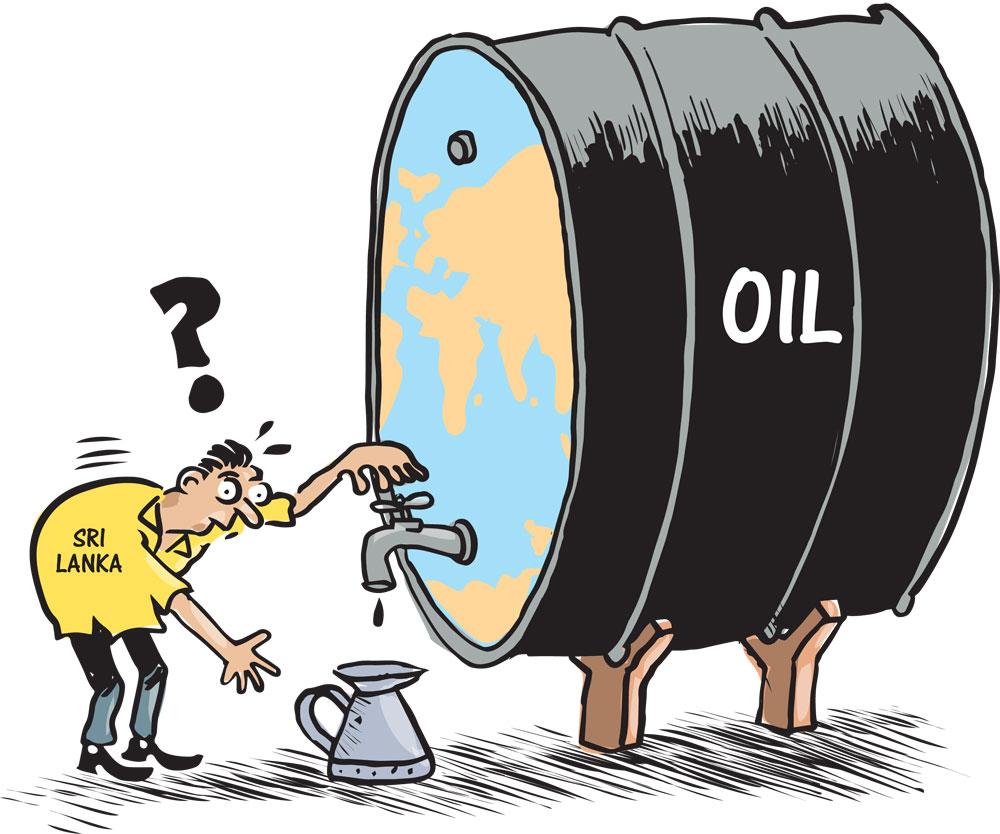
Colombo, March 9 (Daily Mirror) - Concerns are mounting in Sri Lanka over a potential fuel shortage after April, despite government assurances of adequate reserves.
Palitha said that before the National People's Power government, daily petrol sales reached 4,000 metric tons and diesel 4,500–5,000 metric tons, with nearly 1,000 metric tons of diesel supplied daily to the Ceylon Electricity Board (CEB) for power generation. At that time, roughly 8,000 metric tons of fuel were released daily. Currently, only about 4,500 metric tons are entering the market on average.
He questioned government claims regarding fuel availability at the Ceylon Petroleum Corporation (CPC), noting that the country’s main storage Muthurajawela (110,000 MT), Kolonnawa (40,000 MT), Sapugaskanda (25,000 MT), plus 15,000 MT in wholesale warehouse is insufficient.
Around 8,000 metric tons of stock covers only about 15 days.
Expansion of storage has stalled due to foreign exchange constraints, with 40% of earnings going toward fuel imports. Palitha also blamed poor CPC distribution management, particularly after the recent fuel price revision, with many filling stations delaying orders.
He highlighted that despite a USD 1.7 billion vehicle import allocation, daily fuel releases remain low at 2,500 metric tons of diesel and 2,000 metric tons of petrol. Recent shipments included fuel arriving on March 7 and aviation fuel on March 6, yet stock remains inadequate.
He warned a diesel shortage may occur if additional supplies are diverted to the CEB, and alleged that storage facilities are not fully utilized, including the China Bay tanks, due to delays in ordering additional shipments. Palitha called on CPC to disclose current diesel and petrol stocks, as well as holdings by Lanka IOC. Regarding LPG, machinery at Sapugaskanda capable of producing LP gas at Rs. 110 million remains unused.
He also said limited gas storage at Hambantota can hold 35 MT, yet only 20% of current stocks are stored there. Palitha rejected claims that shortages are due to LAUGFS Gas supply issues, pointing out capacity limitations and insufficient Litro Gas stocks.
Emerging developments in India have added to supply uncertainty. Reports indicate India may recalibrate fuel exports amid Middle East tensions near the Strait of Hormuz. Sri Lanka imports fuel from Singapore and U.S.-based suppliers like RM Parks, alongside PetroChina International and Vitol Asia, to manage supply security and foreign exchange.
If India reduces exports to prioritize domestic demand, local importers may face challenges. Analysts note that 40–55% of India’s crude passes through the Gulf, exposing supply to security risks. While no formal export ban exists, state-owned Mangalore Refinery and Petrochemicals Limited has declared force majeure on some gasoline shipments for March and April due to crude disruptions. India is reportedly exploring alternative sources, including Russia, and strengthening strategic reserves to reduce dependence on Gulf shipping routes.
Attempts to contact the Energy Minister, CPC and Lanka IOC for comment were unsuccessful.
Explainer: What is the Strait of Hormuz? How will its closure impact oil prices? Click here to read more
14 Jun 2026 2 hours ago
14 Jun 2026 4 hours ago
14 Jun 2026 6 hours ago
14 Jun 2026 7 hours ago