10 Jun 2025 - {{hitsCtrl.values.hits}}
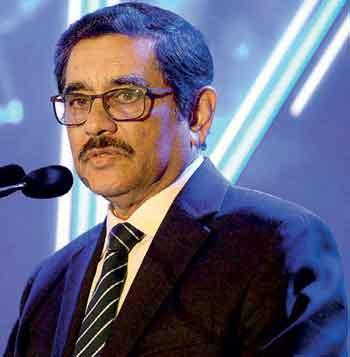 |
| Dr. Nandalal Weerasinghe PIC BY KITHSIRI DE MEL |
Central Bank Governor Dr. Nandalal Weerasinghe has stressed that the Credit Information Bureau of Sri Lanka (CRIB) must benchmark its practices against leading global and regional peers to stay ahead of the evolving trends in credit risk management and financial system regulation.
“It is vital for the CRIB to remain aligned with the best global practices and standards such as the World Bank’s General Principles for Credit Reporting,” Dr. Weerasinghe said.
“Participation in regional knowledge-sharing platforms and continuous benchmarking against international peers will help the bureau stay ahead of the evolving trends and regulatory expectations,” he added, addressing the CRIB’s CEOs’ Forum and Institutional Award Ceremony on Friday.
Dr. Weerasinghe’s comments come as the CRIB marks 35 years since its founding in 1990, a period during which it has evolved from a manual, limited-coverage registry into a fully digitised, nationwide system supporting the banks, non-bank lenders and other credit providers.
Today, the CRIB plays a pivotal role in the broader financial infrastructure. Dr. Weerasinghe pointed out that the bureau has become a critical data-driven policy tool for the Central Bank, particularly amidst increasing economic and regulatory complexity.
“The CRIB’s database is an invaluable resource. It supports the Central Bank’s supervisory and macroprudential functions, including the assessment of fitness and propriety of directors and key management personnel, credit risk monitoring, early warning signals and financial sector diagnostics,” he said.
The bureau has also upgraded its operations to offer mobile and online access to credit reports and has introduced value-added services like credit scoring. According to Dr. Weerasinghe, these developments have helped the lenders adopt more risk-sensitive pricing models and better assess borrower risk.
While commending the CRIB’s commitment to accuracy, confidentiality and data integrity, calling it foundational to the trust it has built across the financial system, Dr. Weerasinghe highlighted the bureau’s contribution to borrower empowerment, especially for individuals and small businesses seeking to build or restore their credit histories.
“By making credit information more accessible and transparent, the CRIB promotes financial discipline among the borrowers while encouraging responsible lending,” Dr. Weerasinghe noted.
Sharing his outlook, Dr. Weerasinghe outlined several priority areas for the CRIB’s continued evolution.
Integrating emerging technologies such as artificial intelligence, machine learning and big data analytics into credit risk modelling was highlighted as a key area. Doing so, he said, would allow the CRIB to offer more forward-looking insights and support real-time credit assessments, which is especially relevant in a rapidly digitising financial landscape.
Meanwhile, Dr. Weerasinghe also emphasised the need to bring in alternative data sources such as utility payments, rental history or digital transactions. This, he said, is to evaluate the creditworthiness of the informal sector workers, freelancers, youth and others who remain outside the formal banking network. Such efforts, he noted, would further deepen financial inclusion.
While the CRIB’s digital transformation has been extensive, Dr. Weerasinghe reiterated the need for stronger investment in cybersecurity and data protection protocols to safeguard the integrity of the credit reporting system.
“The CRIB has an opportunity to support the development of a broader digital credit ecosystem, including open banking, fintech partnerships and real-time credit assessments,” he said, highlighting the potential for public-private collaboration.
05 Jun 2026 2 hours ago
05 Jun 2026 2 hours ago
05 Jun 2026 3 hours ago
05 Jun 2026 3 hours ago
05 Jun 2026 3 hours ago