Reply To:
Name - Reply Comment
.jpg) The January 27, 2014 discussion between the representatives of Sri Lanka and India lasted till 1.30 am on the following day in Chennai. It was a meeting coupled with heated arguments and counter arguments.
The January 27, 2014 discussion between the representatives of Sri Lanka and India lasted till 1.30 am on the following day in Chennai. It was a meeting coupled with heated arguments and counter arguments.
The Sri Lanka delegation, consisted of Fisheries Ministry consultant Dr. S. Subasinghe, Assistant Solicitor General Suhada Gamlath and Director General of Fisheries Nimal Hettiarachchi, was steadfast in their stand that Tamil Nadu fishermen should stop intruding into Sri Lanka waters for illegal fishing. They also urged the state government of Tamil Nadu to prevail upon their fishermen to stop the use of bottom trawling as their fishing gear because it caused extensive damage to Sri Lanka’s maritime resources. The talks ended, with a positive note, because the two sides agreed to meet in Colombo next time.
Today, it has become a sine quo non for Sri Lanka to understand the seriousness of this problem given the high degree of deprivation caused to Sri Lanka by way of loss of livelihood opportunities, particularly for fishermen from the north, and damages to the marine environment.
Tamil Nadu gains immensely from poaching
Data, compiled and analysed by Dr. Subasinghe, show how Tamil Nadu has gained more from the fisheries sector than Sri Lanka despite having a smaller economic zone in the India Ocean and fishing fleet.
The coastal line is only 1,076 kilometres in Tamil Nadu whereas it is 1,582 kilometres in Sri Lanka. The size of Sri Lanka’s exclusive economic zone is 517,000 square kilometres whereas Tamil Nadu has only 190,000 square kilometres. There are 50,700 vessels in Tamil Nadu, but Sri Lanka has around 56,000 vessels. Nonetheless, the Tamil Nadu’s total fish production is disproportionately high. Dr. Subasinghe said its total fish production was as high as 760,000 tonnes as against that of 486,000 tonnes produced in Sri Lanka annually. This leaves scope for anyone to interpret that Tamil Nadu’s extra fish production was from poaching in Sri Lankan waters. Tamil Nadu earns US $ 450 million from its fish exports when Sri Lanka gets only US $ 220 million. In Tamil Nadu alone, there are 201 fish processing plants for European Markets. But, Sri Lanka has only 17.
.jpg)
Incalculable damage to marine resources
Apart from economic losses and deprivation of livelihoods to fishermen, Sri Lankan authorities are distraught over the damage caused by bottom trawling to the country’s rich marine resources in the Palk Strait, Bay of Bengal and Gulf of Mannar between the two countries. Bottom trawling is a method proscribed in Sri Lanka for fishing. Bottom trawling is the use of a large net attached to a heavy metal beam. That is towed across the seabed with the use of boats, scraping the seafloor. Dr. Subasinghe said it stirred up sediments killing marine resources such as corals, sponges, fishes and other animals.
Tamil Nadu fishermen drag such nets across the seafloor within the Sri Lankan side to catch shrimps mainly to be exported. Based on current market information, Dr. Subasinghe has calculated that the average value of shrimps caught by Tamil Nadu vessels is as high as Rs.2.1 billion. For one kilo of shrimp, the loss of by-catch is 18 kilos.
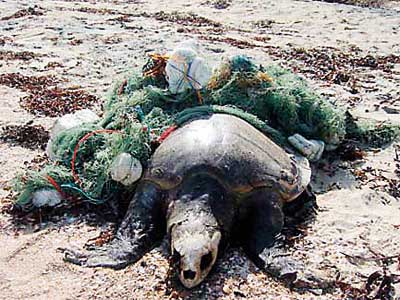 Shrimp, unlawfully harvested from the sea, is exported to markets in European Union. The narrow strip of sea between the two sides is rich with biological diversity. Marine creatures, living in it, are shrimps, sea cucumber, conch, pearl oyster etc.
Tamil Nadu fishermen also target conch shells and pearl oysters through bottom trawling.
“When the net is dragged, it also disturbs the underwater sediments and thousands of little creatures,” Dr. Subasinghe said.
The situation looks alarming for Sri Lanka at a time when the country has initiates steps to improve fish consumption as a way for the eradication of malnutrition. The country plans to increase per capita fish consumption for annum to 22 kilos by 2016 from 11 kilos reported in 2010. Also, fish production from the north and the east was 40 per cent prior to the war. During the war time, it dropped to seven percent. Now, it has increased up 20 percent.
SL at the receiving end
Against this backdrop, intrusions by Tamil Nadu vessels blur Sri Lanka’s prospects for such achievements in its national agenda. Sri Lanka Navy documented as many as 45,000 such intrusions last year, and of them 1317 boats were documented with their registration numbers now available with the fisheries authorities.
“This is only the tip of the iceberg. Navy does not intrude into the flotilla of vessels to avoid confrontations. Only one out of ten can be spotted. Ones remaining in the background cannot be noticed,” he said.
Tamil Nadu fishermen leave their shores in an organised manner at 2.00pm on fishing dates and reach Sri Lankan waters well by 10.00 pm. They leave by 4.00 am the following day to reach their coast by 6.00 am.
Amid controversy, Indo-Lanka Joint Fisheries Committee has been set up after ministerial level discussions. The committee will look at both short and long term modalities to address the issues related to the fisheries, and emphasis will be placed on sustainability of the industry. Long term sustenance of the resources and the improvement of livelihood of fishermen of both sides are two aspects.
The issue has taken epic proportions today warranting immediate attention to evolve a sustainable solution as soon as possible.
Meanwhile, the University of Colombo organised a workshop on the issue recently with the participation of academics and researchers from India, Sri Lanka, Europe and South Africa. Ajit Menon from Madras Institute of Development Studies analysed the fisheries issue from Tamil Nadu perspectives.
Mr. Menon said Tamil Nadu, with the advent of blue economic revolution in 1970s, introduced mechanised boats, improved facilities for fisheries, and export markets. Following the increased use of trawlers for fishing in its territorial waters, the fish stocks dwindled fast, prompting Tamil Nadu fishermen to intrude into Sri Lankan waters. By the time, there was less resistance from Sri Lankan fishermen who did not fish in the area due to the civil war. Following the end of the war, fishing restrictions were relaxed, making way for northern fishermen to undertake fishing. It led to frequent confrontations with Tamil Nadu fishermen who were poaching unabated in Sri Lankan waters till then. The International Maritime Boundary Line was demarcated only in 1974.
TN fishers unchallenged
Mr. Menon said the Tamil Nadu fishermen carried out fishing in Sri Lanka uninterrupted during the period between 1974 and 1983. After 1983, he said, there was an increase of trawlers engaged in fishing in Sri Lankan waters.
“The return of Sri Lankan fishermen to the area after the end of war amplified the problem,” he said.
There were fisher to fisher dialogues in the past. But, Mr. Menon said the failure on the part of Tamil Nadu to adhere to agreements on restrictions on fisheries. He stressed the need for the central government of India to be proactive in evolving alterative solutions to this problem.
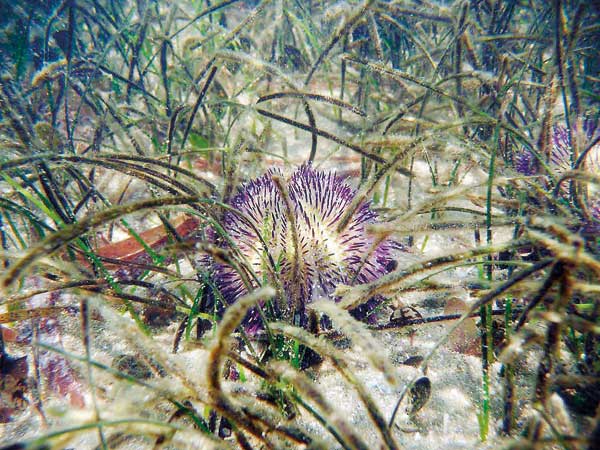
According to Dr. Terny Pradeep Kumara of Ruhunu University, the sea area is shallow with an average depth of nine metres. He said the sea is void of upwelling and ocean currents, and therefore remain calm for most parts of the year, barring turbulent periods during the north east monsoons. Biodiversity in the area include Foraminifera, Tintinnids 12, flora 143 (1), Sponges 275 (31), and corals.