AI SUMMARY GENERATED ONLY FROM THIS ARTICLE'S TEXT.
The problems faced by China in its drive to become a superpower and the world’s No. 1 economy in the 21st century were discussed recently in this column. With glaring rich poor gaps and an urgent need to overhaul its social-welfare system (basic health care, education, unemployment and retirement benefits) China needs to invest heavily in these sectors. China isn’t the only Asian powerhouse which needs to tread carefully in this regard, but let’s have a look at China first.
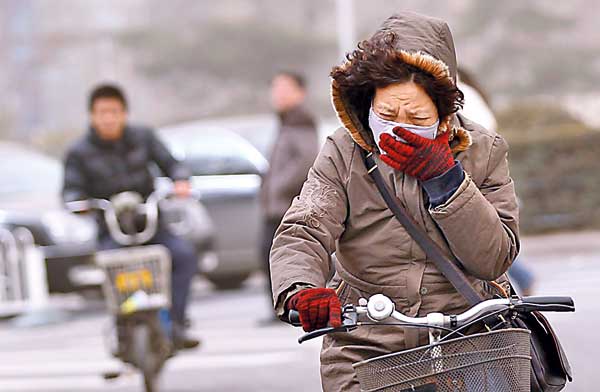
Then there is massive industrial pollution, which make cities like Beijing and Jinan almost unlivable, to deal with and that’s going to be very costly.
The industrialized West and ex-USSR were luckier because they caused massive pollution at a time when awareness of environmental damage was low and global warming was gathering steam but awareness of it minimal. Today, no country can afford to ignore these realities.
China’s population stands at 1.3 billion now, and that’s after several decades of successful but draconian one-child per family regulations. As the population becomes more upwardly mobile, pressure could mount on the government to relax the rules. In any case, as the current population begins to age, increasing health care and retirement concerns will burden the state.
Then there is the pressing need to improve the quality of those Chinese factories producing consumer goods for third world countries. These are cheap but disposable mass market products such as toys, shoes and electronic items.
As income levels of their customers too, go up, a demand for more quality products will follow. Japan and South Korea successfully met this challenge, but China still has a long way to go. But the spanner that could really wreak havoc with China’s dreams of superpower greatness is defence spending.
This may sound paradoxical since a superpower needs matching military might. But costly wars and huge peacetime military spending have done in many a mighty empire down the ages. The ex-USSR is but the latest example, and the United States might join the list if it continues with a tradition of pointless overseas military adventures.
China at present spends only 1.2 per cent of her GDP in annual defence spending. The US spends 3.6 per cent, Russia 3.1 per cent, India spends 1.2 and Japan recently massively increased her defence budget, though it’s still less than two per cent GDP. An arms race would be hugely detrimental to both countries. The lines are already drawn for a costly and pointless arms race in Asia, with China on one side and India and Japan on the other. Both have alliances with the U.S., which might use that as a tool to curb growing Chinese military power in the region. In the long term, China will have to try and match US military might if it wants to gain superpower status, but that’s going to be very costly and China’s current defence spending is not geared for that. Right now, Chinese leaders realise they have other priorities at home. The history of conflict in Asia, whether it’s Sino-Japanese or Sino-Indian, is bad. In the latter case, it was limited to border wars. In the former, Japan invaded China twice in the 20th century, the second time brutally. Instead of quarrelling with China over disputed East China Sea Islands, Japan should first of all make an official apology for wartime atrocities committed by Japanese soldiers, notably the ‘rape of Nanking’ followed by diplomatic talks over the disputed islands.
Like China, India too, is focused on riding on her new prosperity and becoming a superpower. But its domestic problems are even greater than China’s. Japan too, would be wise to refrain from massive re-armament. One often overlooked factors in her 1960s-80s economic miracle is low defence spending. With no large armed forces to maintain, Japan kept the defence budget to a minimum.
Today, the Japanese economy, though still very large and effective, is no longer the behemoth it used to be. Its markets for cheap consumer items have been largely usurped by China. Japan’s hawks can argue that a revitalized weapons industry producing military aircraft, tanks, warships, missile systems and other sophisticated hardware will create new markets and generate billions of dollars in income. But Japan’s hi-tech equipment will be in direct competition with American products, something which Washington will not take to kindly. Much of Japan’s military hardware now comes from the US, which is good business for American weapons manufacturers.
China and Japan, followed by India, should spend less on arms and more on pollution control, healthcare, education and foreign aid. All these countries have a shared cultural heritage. Both China and India have widespread poverty to deal with. Japan has less of a problem there but it will get worse if money that should go into social welfare and health is spent on arms.
But it will be nice to see the United States and Russia, which have serious poverty and healthcare problems, cut down their defence spending, along with other Western countries.
You don’t need a nuclear arsenal and massive amounts of tactical weaponry to deal with international terrorism. Providing more money as educational and health care aid will help reduce the number of would-be terrorists more than billions spent on counter-terrorism and smart bombs.
Comments - 0
Comments - Think again, China
222
Add comment
Comments will be edited (grammar, spelling and slang) and authorized at the discretion of Daily Mirror online. The website also has the right not to publish selected comments.



.jpg)