Reply To:
Name - Reply Comment
.jpg) Science is a systematic and concerted effort rendered towards understanding the nature of all elements through observations and / or experiments. Following this definition, scientific research could be carried out through pure observations or experiments. Observational and / or experimental scientific discoveries require proper dissemination through correct channels to be recognised as knowledge. Scientific research is not considered to be of value until it is accepted for publication in a peer-reviewed journal. New discoveries from research projects may be discussed and presented at conferences or symposia or even through the grapevine of news groups, but none of this is of significance until the data has appeared in a peer-reviewed journal. The journal publication process begins with the scientist or researcher drafting a ‘manuscript’ (referred to in such a way due to rather old-fashioned reasons).
Science is a systematic and concerted effort rendered towards understanding the nature of all elements through observations and / or experiments. Following this definition, scientific research could be carried out through pure observations or experiments. Observational and / or experimental scientific discoveries require proper dissemination through correct channels to be recognised as knowledge. Scientific research is not considered to be of value until it is accepted for publication in a peer-reviewed journal. New discoveries from research projects may be discussed and presented at conferences or symposia or even through the grapevine of news groups, but none of this is of significance until the data has appeared in a peer-reviewed journal. The journal publication process begins with the scientist or researcher drafting a ‘manuscript’ (referred to in such a way due to rather old-fashioned reasons).
The manuscript should contain a justification as to the significance of the research work, details on the methodology in such a way that the experiment could be replicated and reproduced, and a reporting of the results explaining their relevance to the known, juxtaposed with the unknown. The manuscript is then sent to the editors of a scientific journal, who then send it to a minimum of two reviewers (some journals even have a review panel of five scientists) who are experts in the area and are able to objectively evaluate the research work.
The grand finale to the months of labouring field work or laboratory experiments – the formal entrance, inclusion and incorporation of scientific research as scientific knowledge. It is the rest of the scientific community itself which decides whether the ‘manuscript’ is able to change the way of thinking of the world. This tedious process has been in existence even during the days of Sir Isaac Newton and has been deemed successful given that identifying and bringing forth major scientific breakthroughs such as Einstein’s theory of relativity or Planck’s quantum physics into light was accomplished in this manner.
With that said, this review process has its own share of subtleties. Acceptance of a manuscript in journals of the caliber of Science or Nature is considered as the pinnacle of any scientists’ career.
In summary, science becomes knowledge through publication of research results. This knowledge may then be generalised and disseminated as writers of textbooks select the content based on the published research papers, and as professors and teachers then decide what to stress from those textbooks. Details summarised here are based on the data appearing in the SCOPUS website. We analysed publications details which had appeared in the SCOPUS website, which is the largest abstract and citation database of peer-reviewed literature, featuring smart tools to track, analyse and visualise research which delivers the most comprehensive overview of the world’s research output in the fields of science, technology, medicine, social sciences and arts and humanities.
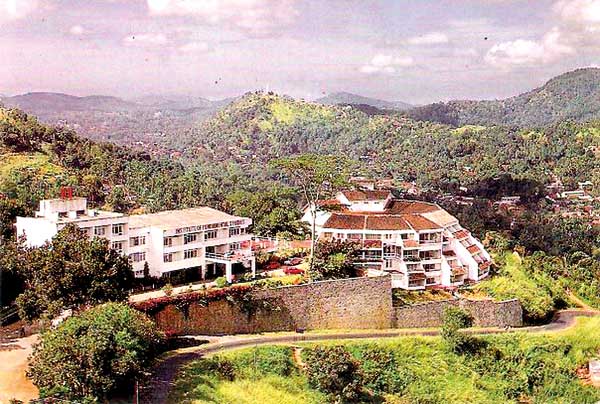
The University of Peradeniya is ranked the highest in the number of publications which is 2916 and the second best is the University of Colombo with 2469 articles. University of Kelaniya, University of Moratuwa followed by the Institute of Fundamental Studies, Kandy reported 806, 752 and 685 publications respectively. To outline, the top 10 institutes in publishing are University of Peradeniya, Colombo, Kelaniya, Moratuwa, Institute of Fundamental Studies-Kandy, University of Ruhuna, International Water Management Institute, University of Sri Jayawardenepura, National Hospital of Sri Lanka and University of Jaffna. It is heartening to observe that our own research institute has the highest number of SCI journal publications when isolating the research institutes from the universities.
As an institute focusing on fundamental research, the number of publications being accepted in SCI journals is a testament on its own as to its knowledge generation throughout the period identified in the statistics. In comparing the number of research staff with all other institutes, number of publication per capita may make the Institute of Fundamental Studies-Kandy as the best.
From a global perspective, Sri Lankan scientists have faced many challenges in accomplishing scientific research which is on par with their peers around the world. The impact of a scientific publication may not be immediate. For instance, John Nash’s groundbreaking paper on the Game Theory appeared in the journal Proceedings of the National Academy of Sciences (a first-tier journal, a few notches below Science and Nature) in 1950 – a product of his 28-page Ph.D. dissertation at Princeton University in the US. However, the concepts of this paper were fully utilized by economists only after a decade or so. Recognition for this theory by the scientific community came in even later in 1994 when he was awarded the Nobel Prize for Economics.
The objective of our local scientists may not necessarily be to succeed in winning the Nobel Prize. After all, it is a prize which requires much more than what our local scientific infra-structure is able to concoct. However, it is through the scientific research and their subsequent publications that the scientific community is able to showcase the intellectual prowess which is inherent in this country. At this moment, we appreciate the efforts by the Hon. President, the Ministry of Technology and Research and the National Research Council in organizing an event like the Presidential Award Ceremony and to encourage scientists in publishing their findings. In this aspect, journal publications have been earmarked as a tool of measurement of the attention and dedication given to the generation of new knowledge by the global scientific community. Thus, journal publications should be fully encouraged, and necessary facilities be provided for the scientific community of Sri Lanka to continue their hard work and withstand the arduous peer-evaluation process of journals for exhibiting the intellectual capacity of this country and its people.