Reply To:
Name - Reply Comment
 The Government Medical Officers' Association (GMOA) and the Ministry of Health, in a collaborative effort to improve the quality of the healthcare services in the country, conducted a programme for around 800 newly passed-out doctors awaiting internship appointments in hospitals. This programme entitled “Good Intern Programme” was carried out from 10 -14 November at the Kularatne Hall at Ananda College Colombo, under the direction of GMOA President Dr. Anuruddha Padeniya. A diverse range of topics that would help the new doctors discharge their duties effectively and efficiently in a patient-friendly manner was discussed during this four-day programme.
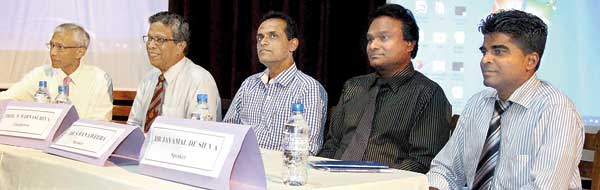
“Motivating patients for a healthy lifestyle” was the main topic of discussion in the morning session held yesterday. What needs to be done to improve the well-being of those seeking help from doctors, and of the doctors themselves was discussed. This session was chaired by Prof. Narada Warnasuriya, a former Vice Chancellor of the University of Sri Jayawardenepura. Professor Diyanath Samarasinghe, Professor of Pyschological Medicine, University of Colombo, Dr. Sajeeva Ranaweera, Secretary of the Expert Committee on Tobacco and Alcohol of the Sri Lanka Medical Association, Dr. Jayamal De Silva, Senior Lecturer in Psychiatry, Department of Psychiatry, University of Sri Jaywardenpura and Dr. Hemantha Amarasinghe, Consultant Community Physician, Cancer Control Programme also participated.
" Worldwide, alcohol was the leading cause of deaths of males between the ages of 15 and 59. Overall, alcohol killed more people from injuries such as accidents, falls, drowning and poisoning, violence and suicide than from cirrhosis "
Dr. Ranaweera highlighted the important issues in addressing the enormous social and economic harms of alcohol in Sri Lanka. Trends in alcohol production show a static market for spirits, while the production of beer has increased significantly in the past few years. Yet, it was pointed out, that the overall consumption of alcohol in the country was relatively low compared to many other countries. The main reason for this was that an overwhelmingly large percentage of women and a significant percentage of men did not consume alcohol in Sri Lanka, which meant the majority of the population did not consume alcohol. He also pointed out that current research evidence on the alleged protective effect of alcohol on the heart had still not been established strongly enough to recommend the use of alcohol to protect individuals from heart disease. It was shown that prestigious professional groups such as the British Heart Association and the American Heart Association did not recommend the use of alcohol to protect one’s heart. He also stressed that worldwide, alcohol was the leading cause of deaths of males between the ages of 15 and 59. Overall, alcohol killed more people from injuries such as accidents, falls, drowning and poisoning, violence and suicide than from cirrhosis. Dr. Amarasinghe highlighted the major health effects of tobacco use, both in smoke and smokeless forms. Although most Sri Lankans are aware of the harm caused by smoked tobacco, the same could not be said of smokeless tobacco, which is still widespread in the over-65-years age group. Cancers of the mouth, throat and voice box were therefore common among such users. Many studies have shown that the chemicals in tobacco were harmful to humans. For example, in smoked tobacco, there are around three hundred known cancer causing-substances. In the chewed forms, there are around 30 such substances. He stressed that arecanut or “puwak” is now classified as a human carcinogen, although most are unaware of it. Therefore, many cases of cancer and a condition called “oral submucosal fibrosis” which constricts the mouth and makes it difficult to eat, which occurs due to arecanut use was being reported.
" In smoked tobacco, there are around three hundred known cancer-causing substances. In the chewed forms, there are around 30 such substances. Arecanut or “puwak” is now classified as a human carcinogen, although most are unaware of it "
Dr. de Silva discussed how a person’s risky lifestyle behaviour could be modified through simple approaches. He pointed out that usually a medical ward mainly consists of two types of patients – those with heart conditions and other diseases caused by eating and those caused by consuming alcohol – drinking. The health staff usually considers the latter a nuisance and treats them somewhat unkindly, compared to the former group. However, this does not help in their recovery or change their behaviour. He illustrated simple methods of engaging with such patients and ways of discussing the behaviour which would change such behaviour in a sustained manner.
Dr. Samarsinge discussed practical ways of improving the well-being of doctors as well as patients. A change of behaviour or any other aspect of life of an individual or a population could be achieved through a rational process. The first and the most important aspect of this process is to start thinking about it, and to keep thinking about it. It is also very important to learn from one's own and others’ experiences in attempting to improve one’s wellbeing. Those who are bored, angry or unhappy about things they can and cannot change most of their lives, lead miserable lives. He also pointed out the importance of learning from all the experiences one gains while working as a doctor, would help improve the quality of the care one provides as well as one’s own quality of life. The group which one is in contact with regularly is a major factor in one ’s wellbeing. For example, if one is prepared to bend the rules or one’s morals to help “friends”, most of the “friends” that one would end up with could be unscrupulous, which would make one an unhappy person. If one does not do such things the friends and acquaintances that one would get around him or her would be those who will not find fault with the refusal of such requests - an infinitely happier group.