Reply To:
Name - Reply Comment
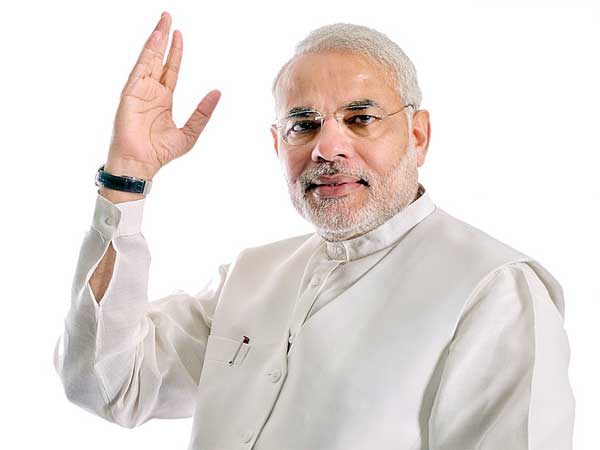
.jpg) The recent political revolution, which occurred in what is considered to be the largest democracy in the world, continually educates us on the many spheres of political good-governance. The Indian government headed by the self-made politician Narendra Modi, has in this short time span, displayed a spectrum of sovereign judgments and political acumen, that is in fact enlightening to all democracies across the world.
The recent political revolution, which occurred in what is considered to be the largest democracy in the world, continually educates us on the many spheres of political good-governance. The Indian government headed by the self-made politician Narendra Modi, has in this short time span, displayed a spectrum of sovereign judgments and political acumen, that is in fact enlightening to all democracies across the world.
Succeeding Prime Minister Modi’s mammoth victory, analysts were eager to observe if the Cabinet he appointed was a workable and practical one. Statistically the Indian continent which spans over 3,287,590 Square Kilometres consists of a population of 1,210,193,144. Apart from Hindi and English,there exist over 22 languages inherent to the various districts of India. Further the Modi-led National Democratic Alliance (NDA) consists of over two dozen political parties. Given the backdrop of these large numerals and taking into account that in the past, coalition compulsions and the need to appear representative of India’s diversity, have swelled up cabinets, Indians anticipated a similar mechanism of power inclusive of a gigantic cabinet of ministers. Moreover on a local platform, the political culture in Sri Lanka is such that anything otherwise was inconceivable. Proving everyone wrong, however, Modi adopted the guiding principle of ‘minimum government and maximum governance’ with a commitment to bring about a change in the work culture and style of governance. Hence a ‘small and compact’ ministerial committee was appointed inclusive of 23 cabinet ministers, 10 non cabinet ministers and 11 deputy ministers; totalling to a minimal 44 ministers. Therefore spearheading a much leaner cabinet than his predecessor Manmohan Singh.
.jpg) Hence a ‘small and compact’ ministerial committee was appointed inclusive of 23 cabinet ministers, 10 non cabinet ministers and 11 deputy ministers; totalling to a minimal 44 ministers.
Hence a ‘small and compact’ ministerial committee was appointed inclusive of 23 cabinet ministers, 10 non cabinet ministers and 11 deputy ministers; totalling to a minimal 44 ministers.
In pruning the Government of its excess baggage, Modi was instrumental in ushering in an era of talent over mediocrity, and principle over quota politics. Although the Indian bicameral parliament, consistent of both the Lok Sabha and Rajya Sabha, comprises of over 400 parliamentarians, in selecting his ministerial committee, Modi made no effort to gratify everyone in according titles, responsibilities and portfolios. Incidentally only 11% of his ministers were conferred ministerial benefits. Articulating a bold and categorical mandate, Modi has left no room for his allies to exercise any undue pressure and in choosing his ministers, he has selected the most appropriate candidates free of any bias in the form of friendship, political relationship, political leadership or coalition pressure. In fact Modi did not even consider if the ‘right’ candidate had politically attacked him in the past; if so Smitri Irani, who executed a death-fast till “Modi was sent home”, would not have been appointed as a minister.
Ironically even though the largest democracy in world comprises of a parliament of the 44 ministers, the Sri Lankan parliament is almost threefold this figure, including 56 cabinet ministers and an additional 10 senior ministers, the latter of whom state that they have no jurisdiction or authority. Further adding on to the grand total of 106 parliamentarians, is 38 deputy ministers and 2 project ministers. Notably the President bears office as head to a number of important ministries which are supervised by even more ministers. The impending question lies in whether the Sri Lankan parliament truly requires such a large number of ministers. Given the present backdrop the country bears in terms of its political, economic and social contexts, this question is even more compelling than ever.
On a global milieu, neighbouring countries like Pakistan and the Maldives both consist of small cabinets of 19 and 17 ministers respectively. Significantly even America, the greatest powerhouse in the world consists of 11 cabinet members.
The cabinet size, shape and form send a variety of signals about the government and policies of a country. Hence a large cabinet as ours has raised a great deal of criticism from global policy makers. A large cabinet is ultimately financed by the people of the country. As questioned in parliament and unearthed by the UNP last year, on average a cabinet minister is allocated a staggering 32 million rupees per month while a deputy minister is allocated 29 million rupees accordingly. These figures were obtained over 18 months back and therefore have surely increased considerably.
As per recent statistics, 20% of the lowest income earners are reflected in less than 4.5% of the nation’s GDP. Moreover 54% of the GDP is contributed by the highest 20% of income earners. As such, when the majority of the population suffer from poverty, the question remains as to how justifiable it is to employ a large cabinet and squander such large amounts of monies on its ministers.
Modi has not only been instrumental in generating a valuable lesson in cabinet formation, but he has also expressed the importance of being a simplistic leader. Incidentally none of Modi’s family members were invited for his swearing-in ceremony. With his appointment, he also expended a ruling which declared that no family member could be employed for ministerial assignments, thus shaming family politics and the family ruling dynasty found in Sri Lanka.
Modi’s simplicity and humble ethos clearly do not relate to Lankan politics. At the time of Chandrika Bandaranaike’s ruling, the presidential reserve for her fleet of vehicles was Rs. 309,000,00. At the end of 2013, this reserve had exceeded Rs. 340,600.000 according to the treasury reports. With the ending of the war, the need for bullet proof vehicles were inessential. However last year alone, the Government spent over Rs. 315,354,000 for the purchase of brand new bullet proof vehicles. Further, the president’s annual expenditure in 2004 was Rs. 390 million and statistics revealed that in 2013 this figure had risen to Rs. 8570 million. Notably these figures do not include the large amount of monies allocated to the ministries headed by the President.
With Governments and leaders across the globe, adopting simplistic political agendas it is incomprehensible, as to why the rulers of a developing nation like Sri Lanka wish to be effusive and extravagant to such great lengths with public monies which could otherwise have been used for developmental purposes.