Reply To:
Name - Reply Comment
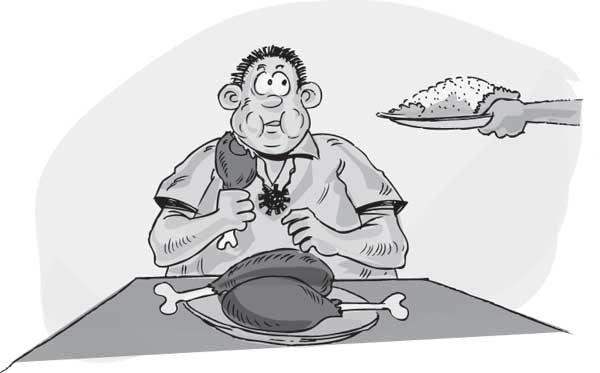
As we enter the week of Vesak – the thrice blessed and the holiest day in Buddhism – we need to go beyond lanterns and lights, pandals and dansals to deeply reflect on some practical steps whereby we could walk in the footsteps of Gautama Buddha.
One of these important steps would be a Vesak resolution by sincere Buddhists, (comprising more than 70 percent of the population), that they would not eat meat or fish and become vegetarians which, according to spiritual and scientific evidence, would make them more humane and healthier also.
What is happening now is shameful, disgraceful and an insult to the hallowed Buddha Dhamma which is the heart and foundation of our civilisation, culture and high values which date back more than 2,500 years. It is recorded in the Buddhist scriptures that when Arahat Mahinda brought the Lord Buddha’s vision to Sri Lanka, he saw King Devanampiyatissa on a deer hunt and cried out to him, “stop Tissa, do not kill.” At first, the King wondered who had dared call him Tissa but when Arahat Mahinda explained to him the message of love, mercy and compassion to all beings, the King was deeply touched and not only he but even the history of Sri Lanka was transformed.
The theme of the Buddha’s message is “may all beings be happy.” But according to figures compiled by the Department of Census and Statistics, the number of cattle legally slaughtered in Sri Lanka in 2012 was as many as 173,828. Even more shocking was that, in terms of districts, the Sacred Cities of Anuradhapura and Kandy were high on the list with 8,522 heads of cattle being slaughtered in Anuradhapura and 8,671 in Kandy. The number of illegally slaughtered cattle is not known and legal figures for last year are not available but they must be more than 250,000.
According to the Department of Animal Production and Health, the total number of cattle in Sri Lanka was 1,235,535 in 2012. With about 250,000 being slaughtered every year, Sri Lanka is forced to import powdered milk from Australia and New Zealand and the estimated cost last year was a staggering US $45,000 million. Most people-friendly nutritionists and scientists say powdered milk is not even half as nourishing as fresh milk while the transnational milk companies add various ingredients and use sophisticated marketing strategies to make powdered milk tastier than fresh milk. Essentially, where powdered milk, meat and fish are concerned, Sri Lankans would have to decide whether they want taste which stops at the taste-bud level or whether they want nourishment for a healthy body and mind.
The Sri Lanka Association for Non-violence needs to be commended for launching awareness programmes, especially in schools to give the children not merely the knowledge to pass examinations but the wisdom to become more humane and healthy. Parents are also invited for these awareness programmes where they are guided into the enlightenment that becoming a vegetarian is an indication not only of growth to spiritual maturity but also to become physically healthy and more productive citizens. Most people-friendly nutritionists have time and again given us facts and figures to show how we could obtain Sri Lankan vegetarian meals at affordable prices. Nihal Wijerathna and other leaders of the Sri Lanka Association for Non-violence have told the people that whenever they go to a hotel or eating-house, they should ask whether “mala kunu” is being served there. The Association has an inspiring “viridu kavi” which is sung regularly on television and radio and Sri Lankans need to listen to it. It is the story of the cattle who say to us “do you call us ‘gonas’? But we eat only grass and give you fresh milk. But you regularly feel your bellies with ‘mala kunu’ so we wonder who the gona is.”
Being a vegetarian is more of a challenge than the comfortable way of just having a tasty meal. But if we choose to remain in our comfort zones and take the easy path just for our personal benefit, we will be promoting a selfish and self-centred culture which might eventually lead to self-destruction.