Reply To:
Name - Reply Comment
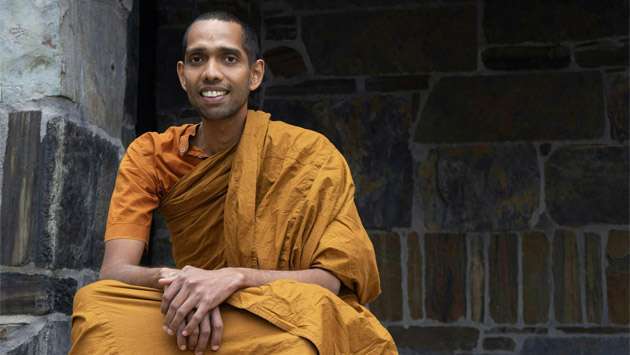
.jpg) esak is universally celebrated by Buddhists. Poson is different in that it is of special significance to Buddhists in Sri Lanka. Even though it is now acknowledged that the word of the Buddha reached the island before the arrival of Arahat Mahinda it is hard to dispute that the ‘Mahindagamanaya’ was a turning point in our philosophical, cultural and political history.
esak is universally celebrated by Buddhists. Poson is different in that it is of special significance to Buddhists in Sri Lanka. Even though it is now acknowledged that the word of the Buddha reached the island before the arrival of Arahat Mahinda it is hard to dispute that the ‘Mahindagamanaya’ was a turning point in our philosophical, cultural and political history.
It is perhaps for this reason that Poson is embraced in ways that Vesak is not, by the vast majority of Sri Lankan Buddhists. No place in this country is visited by so many on a single day as Mihintale is on Poson day. That should say something.
Poson makes for much meditation on a wide range of things. We could reflect on the imprint that Arahat Mahinda left on this country and the ways of being of the vast majority of the population. We can reflect on the message of compassion, the privileging of reason over emotion and of course the oft quoted advice to King Devanampiyatissa which, for many reasons, is so liberation-pregnant that there is a legitimate argument to make Poson the country’s ‘National Day’.
‘O King, you are not the ruler of this land, but only its temporary custodian.’
Those words were reiterated by President Mahinda Rajapaksa when he assumed office in November 2005. His custodianship has had its bright spots as well as down-days. The threat of terrorist attacks which had stifled a population and crippled a nation for almost three decades was removed during his custodianship. The economy, after many years, had space to breathe and grow. Development could proceed without second-guessing about possible LTTE attacks. There was relief all around and if you ask anyone to recall those long years of foreboding, few would say ‘things were better back then’.
Custodianship, however, is not limited to delivering a promise and doing what one is expected to do as per job description. The President, as supreme executive and Commander-in-Chief of the Security Forces has to deliver on security. He did. But delivering on national security is just one of many tasks that the President and the Government have to handle, as per mandate and as per expectations of office.
When Arahat Mahinda arrived in this island, if King Devanampiyatissa was reigning in the manner of a temporary custodian and not ‘ruler’, then those words would not have been uttered. They had to be said and they were.
If, in a time-warp say, Arahat Mahinda were to arrive in Sri Lanka today and if he encountered the President somewhere, would he repeat those words or would he not? If he had to, it would be an indictment on President Rajapaksa for slippage on that pledge he made in November 2005. If Arahat Mahinda remained silent, then indeed we could call ourselves blessed people.
To be fair, President Mahinda has the look and feel of a custodian rather than ruler, a friend rather than superior, a one-of-us rather than ‘political elite’, especially if he is compared to predecessors or would-be successors. But modern governance is not just about the most powerful politician, even in the context of operating within the 1978 constitution; it is about cabinets, officials, structures of justice and the execution of the law. There’s more ‘ruling’ than ‘custodianship’, assumed ownership rather than temporary oversight.
This Poson we can meditate on the singular observation on the ambit of the king (or president) and ask ourselves and our political leaders some pertinent questions. This Poya we can also reflect on the dhamma that made the Mahindagamanaya so significant. Either way, we gain.