AI SUMMARY GENERATED ONLY FROM THIS ARTICLE'S TEXT.
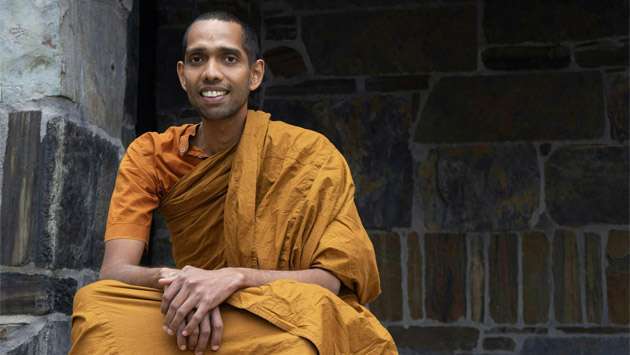
The Communist Party of Sri Lanka (CPSL), one of the oldest political parties in the country, celebrates its 20th National Congress which is to be held on July 25th – 27th, 2014 in Ratnapura. The Dailymirror discussed the ups and downs and the future of the Marxist Party on the eve of the National Congress Convention with the General Secretary of the CPSL, Senior Minister D.E.W. Gunasekara.
I do not subscribe to the view that the set-back to the Left Movement was caused by the entry to the United Front Government of 1970. Our Party was the pioneer in introducing the concept of United Front Theory to Sri Lankan politics
Do you think the CPSL has achieved the objectives and fulfilled the aspirations set by the founding fathers when the Party was formed in 1943?
Firstly, I must make it clear that CPSL is not just another political party. It is a part of a world movement which is committed to a change of society. Socialism is today a long-term objective. The party in order to achieve its long-term objectives, has to pass through stages. Marx or even Lenin never live to see socialism. They were visionaries. Similarly, our founding leaders never expected to see socialism in Sri Lanka before their death. In 1943,when the Party was founded, its immediate objective was total independence not mere constitutional reforms. By 1972, they achieved that when sovereignty was res tored back to people. Dr. S.A.Wickremasinghe, our founding leader was the first legislator who called for total independence and that as early as 1931 in the first state council.
Secondly, they fought for and did achieve much for the people in their struggle for socio-economic transformation. Thirdly, that process continues to operate under different conditions. That is why CPSL should be considered more a movement towards a goal.
There are many allegations against the Government ranging from weakening the democratic establishments, corruption, nepotism, collapse of the rule of law and a failed foreign policy. Sadly, the constituent partners of the UPFA have done very little to arrest this unsatisfactory and dangerous situation. Being a Marxist Party and ally of the UPFA dedicated to good governance and upholding the rule of law how is the CPSL going to correct this situation and restore Sri Lanka’s good name among the local and global community?
Yes, CPSL is a constituent partner of the UPFA Government. We have been in Coalitions – United Fronts in 1976 – 77, People’s Alliance Government in 1994 – 2004 and then in the UPFA Government from 2004 – 2014. If there is corruption in the Government that you represent, I agree, you are collectively responsible. Regardless of the nature of Government, of leadership, of commitments to rid corruption, corruption yet prevails. As far as our Party is concerned, our hands are clean. Given that responsibility as COPE Chairman, I have done the most impossible things and that to expose corruptions. It was an unprecedented task since the formation of the 1st Public Accounts Committee in 1921. Today, corruption is on the rise throughout the world. It is now a by-product of neo-liberalism. We are committed to the elimination of corruption.
Particularly, the role played by the CPSL when the Government introduced the 18th Amendment and impeached Chief Justice Shirani Bandaranayaka was not in consonance with the policies and principles of the grand old Party. What have you to say?
With regard to 18th Amendment, I must first clarify the situation that existed at the time when the 17th Amendment went into crisis. The Parliament failed to nominate members to the Constitutional Council. As a result Independent Commissions could not be reconstituted.
I as Constitutional Affairs Minister tried for five years to resolve the crisis. The three Organs – Legislature, Executive or Judiciary could not resolve the crisis. The 17th Amendment was defective and inoperative. This provided the opportunity for the Government to substitute 18th Amendment for the 17th Amendment. With regard to the 18th Amendment, CPSL had a big fight with the President. It was immediately after the end to the conflict in 2009. We voted for the 18th Amendment despite our reservations, as we did not want to disrupt the work of the Government. Our Party at its Special Congress in 2012 self-critically accepted our mistake.
Have you heard of any such attempt of self-criticism on the Party of any other Political Party in Sri Lanka?
With regard to the impeachment against Chief Justice, the CPSL took a firm position to refrain from voting. That was the decision of our Party Central Committee. We did not want to vote against it and thereby subscribe to condoning of corruption. That too was a Central Committee decision. Why do you not appreciate that?
The UPFA Government has failed to deliver the benefits of the victory against terrorism to the average Sri Lankan even after five years since the end of the conflict. The mistrust among minority communities with Sinhalese has increased. The living standard of the people in grassroots level has not improved despite the defence budget been drastically dropped. Why?
It has to be acknowledged that the UPFA Government did embark on a programme of development with heavy investments on infrastructure. This is an unprecedented task undertaken by the Government since Independence. It is equally true that the benefits of those investments may not have accrued to the masses. These heavy investments on physical resources take time for benefits to accrue to the grass-root level. In my view, our highest national priority should have been given to the empowerment of the people and to the enhancement of their livelihood. Regarding concerns and mistrust on the part of the minorities, I would ascribe that situation to the following factors which we, from the Left, brought to the notice of the Government. We failed to change that situation.
i. The reconciliation was not top gear as a high priority consideration.
ii. National question remains unsolved.
iii. Rising feelings of triumphalism was counterproductive.
iv. Slow process of transition to civilian administration. Disproportion presence
v. Military in the region, as a source of irritation to the civilian population.
vi. Failure on our part to project a democratic political alternative to the Tamil people.
vii. Weakened Left Movement gave rise to emergence of Tamil chauvinism.
viii. Damage caused by the forces of Sinhala/ Buddhist chauvinism.
ix. Negative attitudes of the T.N.A.
x.Ineffective implementation of the 13th Amendment.
The leaders of the UPFA Government keep marketing the war victory ever since obliterating the LTTE probably to take the public away from their numerous woos. President Barack Obama did not exploit the assassination of Osama Bin Laden in 2011 in his favour during the Presidential election campaign for his second term in 2012. Your comments?
Yes, I believe that triumphalism on the part of some leaders has been very costly. We of the Left, never subscribed or contributed to that position. It generated to high level the concerns of the minorities.
It boosted up the forces of Sinhala / Buddhist Chauvinism. As a result, reconciliation suffered and the ground realities were ignored. President Barrack Obama was perhaps more objective since he kept Osama issue away from domestic politics for reasons best known to him. They cannot be treated as parallels.
What is the CPSL solution to the ethnic conflict?
Our solution is before the Country. Briefly, sharing power at the Centre and devolving power to the periphery. It is basically an extension of democracy which provides a solution. Our Party had a policy on the National Question right from the beginning. That was why we opposed Sinhala only as a policy.
That was why we singly supported the 13th Amendment.
That was why we fought against amendments to the 13th Amendment. If today both SLFP and UNP as the two major Parties can arrive at a consensus, there will be a political solution. The absence of that consensus is really the obstacle, in my view. No one else can solve this problem because no one else has the capacity. History offered us several opportunities and we missed them all.
There is no argument that the UPFA Government has launched a huge development drive covering the entire country in almost all sectors. But much of the gloss of these good deeds has blurred as a result of huge corruptions and kickbacks involved with development projects. How Sri Lanka could be saved from this grave situation?
As I said earlier, corruption is omnipresent. Neo liberalism breeds corruption. The only remedy is the application of the Rule of Law rigidly. Separation of powers between the three Organs shall provide space for the Law to take its own course. The patronage – Privileged Politics has replaced the principled politics, a new political culture has been created. This is the catalyst for corruption. The 1978 Constitution which was enacted for the sole objective of imposing neo-liberalism on us is the cause and source of the present trend of corruption. It has now been tested for 35 years.
The public, civil society, religious groups and even the diplomatic community blame the weak and spineless opposition – the main opposition Party the UNP in particular – for failing in its duty by letting the government to act as it pleases. How do you see this unfortunate scenario?
Weakened opposition is also a by-product of the very same Constitution. Ever since this Constitution was introduced, the opposition was in a state of crisis or disarray. It was so when the SLFP was in the opposition. Now the UNP has taken its turn. Secondly, crisis within the UNP is more than a leadership crisis. It is a culmination of contradictions and policies within. Being in the opposition for nearly 20 years, the situation has grown worse.
UNP cannot provide an alternative economic policy. Its policy will be only a substitute. UNP crisis is its own creation. The opposition has been in disarray ever since this Constitution was introduced.
A number of top politicians of the SLFP have confided to me that they were dejected, depressed and disappointed over the rule of the UPFA. The thinking of many of them is that they have no future in the SLFP. As a result there will be an exodus from the UPFA to the opposition in unprecedented level if they were given a firm footing in a strong, rejuvenated opposition under a new robust leadership. Your comments?
Yet again, a situation caused by the Constitution. Do not forget the fact that the SLFP had been in power since 1994 with the Executive Presidency in hand. In my view, the very structure of the Executive Presidency had led to this situation. Absence of a vibrant Opposition is an added by-product of the same Constitution.
In a fast changing and technology oriented world, the Das Capital is an obsolete document. Do you agree?
Fast changing science and technology is the fruit of labour – both intellect or manual. What is happening today is precisely what Marx predicted – Take the essence of Marxism which is not obsolete but vibrant.
Even, present Pope and his predecessor both recommended to go back to Marx (Capital) to comprehend the realities of world economic recession. Marx was a Social-Scientist, Economist and Philosopher and not a Soothsayer, Prophet or an Astrologer. All what was said in Capital in the 19th Century may not be relevant to the realities of today. Is the cause of poverty, the cause of wars and conflicts, and the cause of crises obsolete? Marxism is scientific and it can be developed. It cannot go obsolete.
Almost all the countries including global powers Russia and China that embraced Communism have undergone huge transformations in the last three decades and chosen market economy and participatory democracy replacing socialist fundamentals. How do you see this?
There has never been pre-set or prescribed model of socialism. What has taken place in the world since the October Revolution in 1917 was a transformation from one economic model to another model. Soviet model achieved tremendous goals for the mankind in all spheres of economic, social and cultural life. Soviet Union existed in a bipolar world. Soviet model operated in a closed economy.
It had its own limitations. Renewal of the existing model did not take place at the correct time. There were attempts but they were all aborted. In my view, absence of adequate inner Party Democracy prevented the much aspired renewal. Gorbachow without reforming the economic infrastructure went on destroying the superstructure of the State.
This hastened the collapse. In the case of China, it effected changes in the economic infrastructure without causing destruction to the superstructure. In fact, when I met General Secretary of the Chinese Communist Party in 1987, he was very pessimistic of Gorbachov’s adventure.
China moved away from the closed economy and expanded its international trade. Within 30 years China became the 2nd economic power in the world. Even Russia, with its own model and despite the then prevailing conditions became the 2nd world power within 30 years. So there are lessons to be learnt from both the models. Now, newer models are in the making. Fredrick Engels said “Every model needs renewal. Failure to renew will result in decay”
The assumption among many is that the political love affair with the SLFP by the LSSP and the CPSL and the formation of the 1970 – 77 Coalition Government led by Mrs. Sirimavo Bandaranaike contributed strongly to vitiate Marxism and Left Movement in Sri Lanka and paved the way to expedite the emergence of JVP. Do you agree?
There were ups and downs, setbacks, reversals, defeats to the Sri Lankan Left Movement. You could witness them in the history of Left Movement throughout the world. There are objective as well as subjective factors contributing to such situations. In Sri Lanka, I identify the following factors such as (i) Collapse of Socialist World, (ii) Unprecedented defeat at the 1977 General Election (iii) 1980 July Strike, (iv) Black July 1983 leading to the 30 years of war, (v) Emergence of neo-liberalism.
I do not subscribe to the view that the set-back to the Left Movement was caused by the entry to the United Front Government of 1970.
Our Party was the pioneer in introducing the concept of United Front Theory to Sri Lankan politics – both in our 2nd Congress in 1948 and 4th Congress in 1950 – That is more relevant and valid today. Coalition Governments have become the order of day, the world over. It is more valid today than ever. See Latin America for more example. Socialism is a long-term perspective. We enter United Fronts not with the specific objectives. It is for socio-economic transformation within the existing ground realities. What is needed is the application of unity and struggle theory. We may go wrong in practice and but the theory is valid. What is the fate of so-called ultra-lefts who totally oppose united fronts? Some of them are now attempting to coalesce with the Right in desperation. Birth of the JVP took place before the formation of the United Front of 1970. So it cannot be the cause.
What holds for the CPSL in particular and the leftist movement in Sri Lanka’s body politics in future?
In the context of world development – with changes both in the world order and world balance of forces, the two main contradictions that has come to the surface are (i) Contradiction between Imperialism and (ii) the world community, Contradiction between Imperialism and the developing world. Again on the existing ground realities the contradiction between capital and labour has taken aback seat at the moment. The Left Movement has to take into account these world realities and formulate its own strategy. Objective conditions create the demand for intervention by the Left Movement. This is why CPSL calls for an alliance of Left and Progressive forces. It is committed to build an United Front of Left and Progressive Forces. This warrants deep and intensive ideological struggle. That is the role for the Left today.
If there is corruption in the Government that you represent, I agree, you are collectively responsible. We shall not get away from the responsibility.
What is the significance of your 20th National Congress of the CPSL to take place on July 25th – 27th at Ratnapura?
The congresses of the CPSL are the landmarks of the Sri Lankan left movement. They have contributed to (i) Our political history, (ii) To the social thinking of our people, (iii) For the socio-economic-cultural transformation of our society. The 20th Congress would make its own contribution. Our Congress, would contribute to facilitate our struggle for National Unity and Left Unity as a high priority task.
Comments - 0
Comments - not just another political party
222
Add comment
Comments will be edited (grammar, spelling and slang) and authorized at the discretion of Daily Mirror online. The website also has the right not to publish selected comments.



 The Communist Party of Sri Lanka (CPSL), one of the oldest political parties in the country, celebrates its 20th National Congress which is to be held on July 25th – 27th, 2014 in Ratnapura. The Dailymirror discussed the ups and downs and the future of the Marxist Party on the eve of the National Congress Convention with the General Secretary of the CPSL, Senior Minister D.E.W. Gunasekara.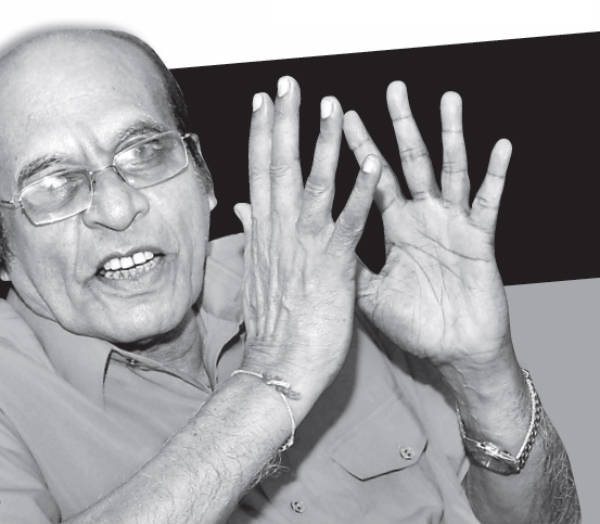
(1)(117)(2).jpg)
(1).jpg) Do you think the CPSL has achieved the objectives and fulfilled the aspirations set by the founding fathers when the Party was formed in 1943?
Do you think the CPSL has achieved the objectives and fulfilled the aspirations set by the founding fathers when the Party was formed in 1943?