Reply To:
Name - Reply Comment
.jpg) There are not many countries around the world that do not have any claim to a proud national heritage. Past achievements, proud historical traditions and persisting cultural resources, be it religion, values, food, art and crafts or architecture are all part of the national heritage of nations and states. Nationalists would rationally tap their resources and mobilise people around them in order to foster a sense of patriotism. There is almost no country in the world that does not make full use of what they have inherited from the past for national gain today. Almost every country uses its national icons to attract tourists. Some countries do this better, and more than the others.
There are not many countries around the world that do not have any claim to a proud national heritage. Past achievements, proud historical traditions and persisting cultural resources, be it religion, values, food, art and crafts or architecture are all part of the national heritage of nations and states. Nationalists would rationally tap their resources and mobilise people around them in order to foster a sense of patriotism. There is almost no country in the world that does not make full use of what they have inherited from the past for national gain today. Almost every country uses its national icons to attract tourists. Some countries do this better, and more than the others.
So far so good. Then comes the divisive nature of the past. Ironically most of the national conflicts that have ravaged many countries in the past and continue to savage many others today leading to many deaths, displacements of people and destruction of property are also rooted in the past. Instead of treating the past diversity in terms of historical and cultural traditions as part of a collective national heritage of a population, ethno-centrically oriented ideologues representing diverse ethnic groups refuse to recognise the unity in diversity in historical traditions. So, in the hands of these ideologues, patriotism disintegrates into divisive political projects that leave little space for people to find common ground and form a broader sense of patriotism that valorises a shared historical past. This lack of sense of a shared historical tradition prevents people from working towards a common destiny or a shared future. This is a major challenge facing countries that strive to achieve economic development by mobilising collective resources and talents of the wider population. On the other hand, countries that have achieved rapid economic growth in the recent
| " Instead of treating the past diversity in terms of historical and cultural traditions as part of a collective national heritage of a population, ethno-centrically oriented ideologues representing diverse ethnic groups refuse to recognise the unity in diversity in historical traditions " |
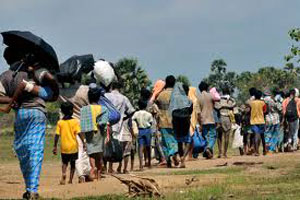 sectarian political projects. The resulting internal divisions make it difficult for diverse social and cultural groups to transcend such divisions and work towards collective national development. The messy political situation that has surfaced after the war and. particularly following the recently concluded Provincial Council elections demonstrates that social and cultural divisions are chronic and cannot be easily overcome even in a situation of grave adversity. The social and economic challenges facing the country are so serious that one would have expected a higher level of readiness on the part of the elites and the wider public to rally round a set of shared national goals to rebuild a shattered society and address pressing economic, social and psychological problems facing the people. Many other countries that had faced such adversity and challenges in Asia and elsewhere have responded quite differently. These countries mobilised their material and human resources to promote economic and social development that has in turn benefited all sections of the populations irrespective of ethno-cultural differences. This country on the other hand, remains obsessed with our particularities and continues to be preoccupied with the issues of inter-group competition for political power and material resources. The future prospects of the country as a whole and the present well-being of the ordinary people do not seem to be matters of grave concern to the political elites in the country. They project their inability to transcend parochial divisions to the wider society. As a result, the latter largely remains trapped in its own past, without sufficiently adapting to the imperatives of the present.