Reply To:
Name - Reply Comment
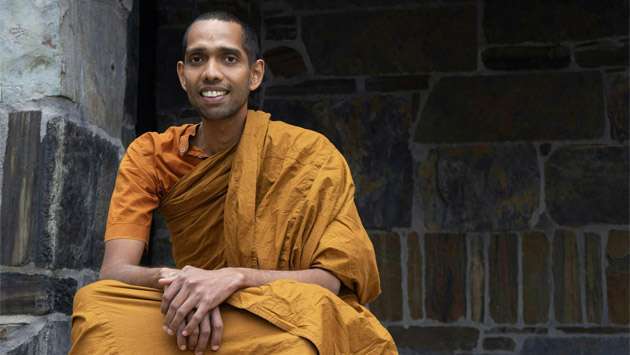
.JPG) Professor Ernest Petric is at present a senior judge of the Constitutional Court of the Republic of Slovenia. From 2010 to 2013 he held the title of President of the Constitutional Court of Slovenia. He has been an Ambassador of the Republic of Slovenia to the United States of America, Mexico, Australia and Brazil. He has been the Permanent Representative of the Republic to the International Organizations in Vienna and served as the Ambassador for the Socialist Federal Republic of Yugoslavia, India and Nepal. He was also the State Secretary in the Ministry of Foreign Affairs in Slovenia.
Professor Ernest Petric is at present a senior judge of the Constitutional Court of the Republic of Slovenia. From 2010 to 2013 he held the title of President of the Constitutional Court of Slovenia. He has been an Ambassador of the Republic of Slovenia to the United States of America, Mexico, Australia and Brazil. He has been the Permanent Representative of the Republic to the International Organizations in Vienna and served as the Ambassador for the Socialist Federal Republic of Yugoslavia, India and Nepal. He was also the State Secretary in the Ministry of Foreign Affairs in Slovenia.
Answering all questions in his private capacity, Dr. Petric shared his views and wealth of knowledge in an exclusive interview with the dailymirror
Q: .jpg) Having been the President of the Constitutional Court in Slovenia and being acquainted with the functions of the Supreme Court of Sri Lanka, what major distinctions are there between the two courts?
Having been the President of the Constitutional Court in Slovenia and being acquainted with the functions of the Supreme Court of Sri Lanka, what major distinctions are there between the two courts?
I was the President of the Constitutional Court till a short while ago. Till my term of three years expired. We are one of the countries that have a Special Constitutional Court. It has many tasks but two things are really important, we are the guardians of the Constitution and we are the guardians of Human Rights. In our first function it is the duty of the Constitutional Court to prevent even the majority in the parliament from having a free hand and going outside the limits of the constitution. Everybody, including the majority in parliament is limited by the constitution in its legislative work and the role of the Constitutional Court is to take care that these limits are not crossed-over.
The second function is to take care that in the process of other courts including the Supreme Court, that Human Rights are not violated. We are not the last court in the sense of deciding matters, we are not a court that will say the decision of the Supreme Court or any other court is wrong, or a party should be punished less or more, we only take care that in the process, in the function of other courts that Human Rights are not violated, that he has been given full protection given him by the Human Rights Laws. Apart from that we have several other functions such as the impeachment of officials, even the head of state, we have a control over international treaties, it is a preventive control so that if the treaty is not concluded it might be an infringement of our Constitution.
Your Supreme Court has two functions. It is the highest court, as is the highest court in my country the SC of Slovenia, but your Supreme Court has also some functions concerning the protection of constitutionality, in addition your Supreme Court can in advance check if any future law is unconstitutional. So as is with other countries around the world and in Europe, such as Norway, England and Netherlands have a similar arrangement as you have. The other European countries have special Constitutional Courts. The important thing is that you must have an institution with checks and balances and division of power which takes care of the Constitution. And Human Rights are part of the Constitution and thus guarding HR is vital to the Constitution.
Q:The independence of the judiciary is a fundamental aspect in any legal system, as a premier judicial figure, what is your opinion on the state of the independence of the judiciary in Sri Lanka? What are the safeguards available to the judiciary to assert their independence amidst political pressure?
It would be too ambitious for me to make a statement on that. As a priority, I believe that judiciary should be independent. It is a condition for a democracy to function. Of course independence of judges depends on many factors, first of all the general political set up, whether the society and the political authority really believe in independence of courts, then it depends on the tradition of the country, a country with a strong legal tradition will go about in a positive way. This understanding that the court and the judges should be independent should grow in a young democracy where there are remnants of the old political culture that the court should serve the government. The traditions of that will be a situation where the court is really dependent and to progress to a situation where the judges are really independent and feel like they’re really independent is sometimes a long journey. Next for the independence of judges, because they perform a very important function, they decide what is wrong and right. It also matters the personality of the judges, when they feel that their independence is expected from the society they will be independent. The independence of the judges is a very complex thing but it is a must. It depends also on the institutional arrangements. In some countries I don’t know how it is in Sri Lanka, but judges are elected for life, that should assert their independence. Then you have the possibility that a judge is excluded when there is a suspicion of him being partial, and even excluded on the impression of partiality. In a country like mine it is good to have some institutional arrangement which helps judges to be independent, the way they are elected, the way they serve, life appointments and the likes of such, but to check the independence of judges in other countries even friendly countries like Sri Lanka I wouldn’t dare to. I have had the opportunity the last time and even more this year to have discussions with the highest echelon of judges and legal professionals. I have spoken to your Chief Justice and the Attorney General and in my opinion these are personalities, which are independent and the judges act independently.
In my opinion, a judge should always serve the law. Every judge is exposed to a dilemma whether his decision will help the country, every judge must decide in the interest of the country, but at the end of the day a judge must serve the law, because by serving the law and upholding the rule of law a judge is making the best contribution to the country.
Q:Referring to a lecture delivered by your Excellency in January 2012 at the Kadirgamar Institute, you said that “small countries can only persuade” using international law as a tool of persuasion. Is this same weight of expectancy of diplomatic persuasion through international law absent in bigger more powerful countries, by virtue of their military and economic might?
That question is difficult to answer categorically. Larger countries with financial, political and military power might be tempted to use the other means of foreign policy as well. For small countries have no choice. Small countries like Slovenia and Sri Lanka cannot send air carriers somewhere or nuclear submarines or give billions of loans to other countries, so the only means that we have are means of persuasion. Here two things are very important, to have a highly qualified diplomacy. If I was the minister of foregn affairs I would pay a lot of attention to the building of an elite diplomatic corps, people who can replace lack of power of their country with wisdom. If an ambassador of a small country doesn’t speak wisely no one will care.
The second thing which my diplomatic experience tells me is that the legal arguments and points are so important for small countries. You cannot base your arguments on power, but rather on law. This is exactly the logic in my book. In the international community, where there are large countries like Russia, China, USA and small countries like Maldives, Palau, Slovenia which are also sovereign countries. The smaller countries must adapt themselves to the development of the world and adapt creatively. Try to find ways in order that will also protect their interests.
Q:Given the theoretical equality that all countries share, shouldn’t there be more pressure exerted on larger countries to resort to diplomacy as well? Why is there no pressure being imposed on larger nations to resort to diplomacy as the primary option?
Large countries should be controlled also, and here is the function of the UN in the General Assembly. The GA should be the institution which would somehow balance and bring in the principle “one country and one vote” and extend the level of control and pressure on bigger countries. On the other hand we should be realistic. Not only do the larger countries have more power but they also have more responsibility. The responsibility on the Slovenia towards world peace isn’t as much as the responsibility on the United States. We can cause little regional trouble there, but we can neither endanger world peace nor secure it. It requires a sense of balance. The more powerful you are the more responsibility you have. However, to make the bigger countries aware of the responsibilities the UN can do much more.
Q:In an increasingly globalised and interdependent world where diplomacy plays a more seminal role, how can authoritative directions into conducting international inquiries and relentless pressure on smaller nations be justified? Is it fair that no such inquiries have been warranted into potential war crimes by larger nations?
When the larger countries try to establish control over the small countries concerning their behaviour, there is always the suspicion that they may have a second hand interest, so pressure is not a very popular thing. I think countries when facing some problems should be stimulated to resolve the problem by themselves. That is much better in international relations that solutions imposed from outside don’t work as well. Even if they are imposed they are not received by the country involved in a positive way. If a country has a problem, it should be involved in dialog, dialog which should give aid to get the country by itself to find the best solution. A country exposed to foreign pressures many times react opposing it rather than applying it. All nations have their pride, and its sovereignty and these are things of great value. On the other hand one could also say that one should not always understand that foreign advice or foreign opinion is only with bad intentions, should enable to resolve problems in the interest of people, particularly those who expose their advice, their pressure maybe, should be very cautious, and they should be aware that by pressure little is achieved. On the other hand those who are advised or even pressured they should also be rational and think that may be what is advised to us is useful to consider.
Q: Isn’t it difficult to sustain that it is ‘bona fide’ advice when similar, if not worse, situations in countries dispensing advice are bypassed without any form of inquiry?
You’re right. One should first sweep his own kitchen. One should be very cautious in giving advice in pressuring someone else before cleaning his own house. The best advice is to show by your own example what is good. This applies to private lives as well. They say, particularly in relations between big and small the big one even if it wants to be effective and their advice to be considered, should be very cautious and avoid double standards and should avoid pressure, but should try to develop dialogue. I believe in dialogue, discussion and diplomacy. Even in diplomatic conversations I distinguished two kinds, one is as I call it ‘diplomatic positional negotiations’; I have my position and try to impose it on you. This is usually not very effective. I believe that negotiations should be interest based negotiations, I come to you and say ‘dear friend I have a problem, lets find a way to solve it’, not to come in and say ‘do this and do that’. You have to believe in the process. Nothing is changed overnight but you have to open the right track.
I said that I believe that the LLRC report is a step into the right direction two years ago and I was immediately criticized by some circles, ‘oh he’s supporting the government of Sri Lanka’. I have no reason to support the government of Sri Lanka. I consider Sri Lanka a friendly country and I like it. I want all in Sri Lanka to live in unity and peace. I was criticized for supporting the LLRC but now many delegations agree that it is a step in the right direction. We should be patient and help Sri Lanka do these things, its better than saying ‘you are a bad country for not doing these things’. You have had elections in the Northern Province and established Provincial Councils. Let us give it some time and some chance to start to function. Yes, we can have critical remarks but I myself am no investigator, and have never been to the Northern Province and are not capable of saying ‘this is good and this is bad’. But we should try to promote the growth of mutual trust and dialogue.
Q:What are your views on the implementation and the performance of the LLRC since the last time you were here? Has its performance been satisfactory to dispose of an international inquiry?
I’m on a short academic visit, and I’m not an investigative commissioner, and my general sense is that the SL authorities, and here I’m thinking mainly of your legal setup, courts and so on, are trying to go ahead. It’s not easy because there is so much negativity. There are 27 years of war and crimes. In a war, brutalities are usually there and there on both sides. It is in the interest of the country to clarify things as much as possible. I have a sense that the judicial authorities have an ambition to leave this chapter behind to open the way for a better future and particularly for those who have suffered most, the population in the North. The International Community put the LTTE on the list of terrorist organizations for their terrorist activities and as a result of their totalitarian rule the people in the North have suffered. These people should be helped. It is important that the process of healing is being kept, and in this everybody carried responsibility, the government, the local authority and I would dare to say even the diaspora. If you want this country to be a prosperous country having security and well-being, and I know that much can be achieved, you have very educated people who are hard working, many resources, a good geographical location so your future could be good. Should be good.
I know some of the members of the LLRC. They are decent people. They are also realistic people. They work within political, historical and economical realities and these realities concerning the Tamil problem are difficult to resolve. These changes cannot happen over night. It was a long war with foreign interference also and passions ran high.
The Second World War ended in 1945, but in my country some people are still fighting it. Not in the sense of using guns, but using words. The wounds of the war are still not completely healed. The war in Bosnia ended in 1995 but the wounds are still not healed. It takes time to overcome this, it takes patience and harbouring of mutual understanding.
I believe the younger generation in this country who were not involved in the contradiction and conflict and those who are coming now carry a great responsibility to make this country a good home for all.
Q:What in your Excellency’s view are the likely outcomes of the upcoming 25th session of the UNHRC in Geneva? Particularly with regard to the notion of an ‘almost definite’ third resolution against Sri Lanka by Washington, also paying attention to The UN Human Rights Chief Navi Pillay’s comment on Sri Lanka becoming ‘increasingly authoritarian’. Will this ensure an overwhelmingly negative report at the upcoming session?
First of all I am not someone who can predict the future, and also I would not like to go into the workings of the Human Rights Council which is a political body. I must also mention that I am an independent person speaking in my personal capacity. In my opinion the outcome of the session is difficult to predict. I have read Madam Pillay’s report on her visit to Sri Lanka and while it does have several critical remarks it has also many positive comments too. May be her intention was to expose the critical things, may be her attention was to expose the things which yet have to be done. So what the final report that she will present, I don’t know. I keep believing that everybody is aware that Sri Lanka has finally achieved peace. To build the peace is a very difficult task and we should be helpful, helpful by critical remarks but helpful also by recognizing the positive achievements which will stimulate further progress.
Q:There is a notion that it is difficult to reach consensus in multilateral venues such as the HRC. Do bilateral negotiations on issues such as trade, investment, foreign aid and military cooperation, have the potential to be more effective in encouraging Sri Lanka to deviate from its allegedly autocratic rule?
In my experience and work in International Relations which spans over many years, what I have seen is that countries are sensitive to international criticism as I mentioned before. One should always be cautious and bear in mind to stimulate a positive response, not by ignoring the positive side of balance, but by spurring positive development. The main responsibility lies with the Sri Lankan government and people. Nobody else can effect the necessary change. You should be advised and helped to go in the right direction to build a just and democratic society.