Reply To:
Name - Reply Comment
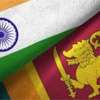
.jpg) Less than a year into his role as India’s External Affairs Minister, Salman Khurshid arrived in Colombo a few days ago with a contentious agenda at a time when Sri Lanka had just concluded its first ever elections to the Northern Provincial Council and was swearing in its new Chief Minister.
Less than a year into his role as India’s External Affairs Minister, Salman Khurshid arrived in Colombo a few days ago with a contentious agenda at a time when Sri Lanka had just concluded its first ever elections to the Northern Provincial Council and was swearing in its new Chief Minister.
Khurshid, a lawyer by profession and a politician rather than a diplomat is walking a political tight rope while in Colombo as many controversial issues are up for discussion: devolution of power, the 13th Amendment to the Constitution, disputed fishing rights and the Sampur coal power plant.
Khurshid is also reportedly on a mission to assess the political environment in Colombo for New Delhi to decide whether Indian Prime Minister Manmohan Singh could visit Sri Lanka for the upcoming Commonwealth Heads of Government meeting in November.
The visiting minister was repeatedly asked about this by the media but dodged the issue, saying that the Prime Minister’s office will soon inform Colombo of its decision. If Singh does visit Sri Lanka, it will signal a significant improvement of relations between the two nations.
This is Khurshid’s first visit to Colombo as External Affairs Minister after he assumed duties in the portfolio, October last year. His predecessor, S. M. Krishna was no stranger to Sri Lanka and last visited the country in January 2012.
" is also reportedly on a mission to assess the political environment in Colombo for New Delhi to decide whether Indian Prime Minister Manmohan Singh could visit Sri Lanka for the upcoming Commonwealth Heads of Government meeting in November"
.jpg) Salman Khurshid, now sixty years of age, hails from a family of politicians. His maternal grandfather was Zakir Hussain, the third President of India. His father, Khurshid Alam Khan was a former Union Minister of External Affairs in India.
Salman Khurshid, now sixty years of age, hails from a family of politicians. His maternal grandfather was Zakir Hussain, the third President of India. His father, Khurshid Alam Khan was a former Union Minister of External Affairs in India.
Khurshid had his secondary schooling in New Delhi from where he left for Oxford University in England to read for a degree in English and Jurisprudence. Later he became a lecturer in law at Trinity College, Oxford.
Returning to India, Khurshid started his career as an officer on special duty in the Prime Minister’s Office in New Delhi when Indira Gandhi was Prime Minister. This position made him acquire a taste for politics, and a decade later he was elected to Parliament.
He represented the Farrukhabad constituency in Uttar Pradesh as a parliamentarian of the Congress party. Then he was appointed as Deputy Minister of Commerce. Khurshid was appointed as Minister of State for External Affairs and served in this capacity from 1991 to1996.
After a stint as Minister of State of Corporate Affairs and Minority Affairs, was appointed as Cabinet Minister for Law and Justice, and Minority Affairs by Prime Minister Manmohan Singh in the Cabinet reshuffle of July 2011. In October 2012, he was appointed as External Affairs Minister.
Khurshid’s career has not been without controversy. As a lawyer he had appeared for the Students Islamic Movement of India, a group banned in India and frequently charged by Indian authorities with terrorist activities. defended his actions saying he was only doing his duty as a lawyer.
Last year, the magazine ‘India Today’ accused and his wife Louise of embezzling funds from the Zakir Hussain Memorial Trust for physically challenged people, a fund administered by them in memory of ’s maternal grandfather. The case is still pending and had made headlines in India.
Controversial issues will dominate Khurshid’s diary as he undertakes his first visit to Sri Lanka. It is no secret that it was India that pressured Colombo into conducting the northern provincial council elections. This has now been done, but New Delhi is asking for more and this will be ’s brief. India is insisting that Colombo devolves land and police powers to the provinces as envisaged by the 13th Amendment.
Partners of the ruling United People’s Freedom Alliance (UPFA)-and sections of the Sri Lanka Freedom Party (SLFP) party are against this move.
Asked about this issue, Indian Prime Minister Manmohan Singh sent a blunt message to Colombo last week. ‘Sri Lanka is well aware of India’s desire that 13th Amendment be implemented in full,’ Singh told journalists while attending a United Nations meeting in New York.
In Colombo, Khurshid was more diplomatic. India is committed to pursuing the full implementation of the 13th Amendment, and building upon it, to achieve a meaningful devolution of powers", he said, but added that India would work with Sri Lanka to “take this process forward in a spirit of cooperation.
Khurshid was to raise this during his talks with President Mahinda Rajapaksa. The President had been non-committal in his response, suggesting that the Parliamentary Select Committee tasked with studying devolution was the best forum to evolve a lasting framework to grant more autonomy to the regions.
Khurshid was also at hand this week to congratulate the newly sworn-in Chief Minister of the Northern Province, C. V. Vigneswaran and held talks with him. Alluding to Vigneswaran being sworn in before the President, he said, «There is hope with a degree of caution. Fortunately there is no skepticism”.
Khurshid was also able to finally conclude an agreement on the Sampur Coal Power Plant in Trincomalee. The project had its share of opponents -including some ministers-who argue that Sri Lanka is at a disadvantage as per the agreement although it is supposed to provide electricity at a lower cost.
The ongoing dispute over fishing rights and the arrest of Indian fishermen in the seas between India and Sri Lanka-a political hot potato which is a convenient hobbyhorse for politicians in Tamil Nadu-was also raised by Khurshid in his meetings with President Rajapaksa and Minister G. L. Peiris.
It was agreed that the best way forward would be to facilitate a dialogue between fishing communities of both countries so that the fishermen themselves can find solutions to their problems. Khurshid hoped this would produce more productive and more lasting results and lead to a resolution of the issue.
Salman Khurshid will take back to New Delhi his assessment as to whether Colombo has made progress on its commitments to India, mostly in relation to ethnic reconciliation.
India’s level of participation at the Commonwealth Summit will be the best yardstick of ’s visit.
.jpg)