AI SUMMARY GENERATED ONLY FROM THIS ARTICLE'S TEXT.
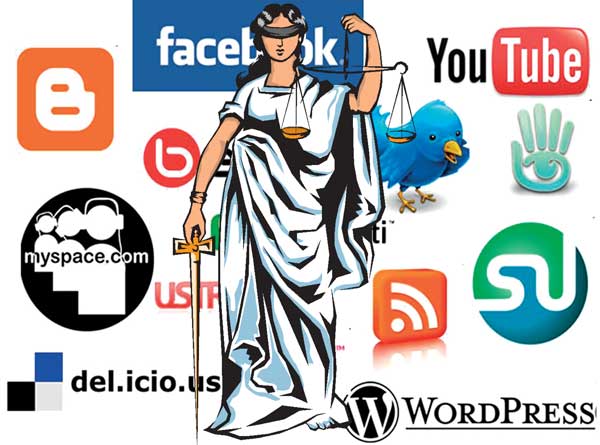
The increasing use of Internet-based social networking sites such as LinkedIn and Facebook by members of the judiciary raises multiple ethical issues. For example, may judges and lawyers be connected as “friends” or otherwise through these sites, or would such linkages create an actual or appearance of impropriety that should – or must – be avoided? Also, to what extent should the rules governing socialising among judges and lawyers apply to online relationships, or are new rules needed to guide us in this relatively new environment? A recent report revealed that at least one member of the U.S. Supreme Court has a public Facebook page to which he/she occasionally posts information. A few other justices appear to have pages as well, although privacy settings make it unclear how active they are. It is evident that in Sri Lanka like other countries many lawyers and judges are connected to these social networking sites. Therefore it is a timely requirement to provide a solution to this global problem urgently.
What is Social Media?
The term ‘social media’ has rapidly increased over the last few years. The term refers to the use of web-based and mobile technologies to turn communication into an interactive dialogue.Social media is a group of new kinds of online media that allows social communication, as a superset beyond more conventional notions of social communication.There are various forms of social media and there are always new forms of them being developed hoping to be the next big thing. The main forms of social media are:
Virtual game worlds (World of Warcraft); and
Content communities (You-Tube, Flickr, wesabe);
Podcasts;
Blogs;
Social networks (Facebook, MySpace, Google+);
Wikis (Wikipedia, Wikinews, Geo-wiki, Geo-Names);
Forums;
Micro-blogging (Twitter, Posterous, Dailybooth);
Virtual social worlds (Second Life).
What is social Network?
A social network is a service that allows its members to share personal information and make personal contacts through a website, mobile phone or other similar wireless device. This openness and sharing has been embraced by the average internet user, yet such benefits must be carefully considered by sitting judges.
Commonly used social networking technologies
Facebook (www.facebook.com) is a social networking website where users can add friends, send messages, and update their profiles to notify others about themselves. Users have the ability to join networks organised by city, workplace, school, and region, as well as groups for common interests. This social networking website was initially launched in 2004 by Harvard undergraduates and it quickly spread worldwide. As of December 2012, Facebook claims to have “more than a billion monthly active users” and “618 million daily active users”; notably, the trend is no longer unique to the younger generation as the 35 to 49-year-old age group has recently experienced the largest growth.
Myspace(www.myspace.com) is one of the world’s largest social networks with over 125 million users. Myspace is considered the music network, connecting millions of bands with millions of music lovers. Along with music, Myspace is similar to Facebook where users can add friends, send them messages, and comment on their profiles. Users can customise their profiles, add music, and there are even several independent websites offering Myspace customised layout designs for profiles.
Twitter (www.twitter.com) is a social networking service that enables its users to send and read messages known as “tweets.” Tweets are posts of up to 140 characters displayed on the author’s profile page and delivered to subscribers who are known as “followers.” Launched in 2006, Twitter asks one question: “What are you doing?” This service is recognised by celebrities and corporations for its self-promotion. Twitter grew 1,382% between February 2008 and February 2009. A February 2009 compete.com blog entry ranked Twitter as the third most used social network based on their count of 6 million monthly visitors.
LinkedIn (www.linkedin.com) is a social networking website focused on professional networking. This website allows registered users to maintain a list of contact details of people they know and trust in business. The people in the list are called “connections” and users can invite anyone to become a connection. Launched in 2004, LinkedIn currently has over 50 million members in over 200 countries worldwide. These connections can help members find jobs, list jobs, and search for potential candidates.
Meettheboss(www.meettheboss.com) is a business networking tool for business executives around the world. Members of Meettheboss have individual profiles with listed business interests. This site features weekly interviews with industry leaders heading large global companies. Discussion groups are set up with Question and Answer sessions to provide opportunities for users to make contacts and gain insight from industry leaders.
Plaxo (www.plaxo.com) is another social networking service and online address book that provides automatic updating of contact information. Users store their information on the servers and when this information is edited by a user, the changes appear in the address books of all those listed as a contact. In 2008, Plaxo reported 20 million users.
Chamber (www.chamber.com) is a business networking site connecting 2000+ local business communities worldwide. According to the site, it is an online chamber of commerce “on steroids.” It allows members the ability to (1) market products and services; (2) network quickly and easily in local chambers and around the world; and (3) access specialty webinars.
Texting is the exchange of brief written messages (140 characters or less) between mobile and portable devices (i-Phones; Blackberries; pagers; etc.).
Blogs are a type of interactive website, usually maintained by an individual with regular entries of commentary, description of events, or other material such as graphics or video. A typical blog combines text, images, and links to other blogs, as well as links to other websites and other media related to this topic. Blogs also typically provide their readers the ability to post comments for an interactive dialogue.
Should judges use social networking sites?
In USA sixty one percent of all adults online now use social networking sites like Facebook and Twitter, according to a recent report from the Pew Research Centre called “Generations 2010.” Of course, because of regulatory and professional ethical constraints, social networking isn’t for everyone. Which begs the question: Should judges use social media? If so, should limitations be placed on their interactions?
Since 2009, ethics commissions in a number of countries have struggled to address this issue, and the majority have concluded that judges can interact on social media sites with the lawyers that appear before them. In essence, the majority of jurisdictions have concluded that it is generally permissible for judges to become online “friends” with attorneys appearing before them, as long as they are careful to avoid the appearance of impropriety, avoid ex-parte communications and otherwise ensure compliance with applicable ethical rules.
Arguments against judges and lawyers appearing before them interacting on social networking websites
According to a recent research conducted in USA it was revealed that the public may misinterpret lawyer-judge social networking “friendship,” believing the judge will favour the lawyer who may appear before him or her, who is listed on the judge’s social networking page. The majority opined that this type of social networking interaction would violate the Code of Judicial Conduct rule forbidding a judge to “convey or permit others to convey the impression that they are in a special position to influence the judge”. According to the majority, the analysis is not affected by whether the judge is actually impartial toward the lawyer, whether the judge intends for the “friend” listing to convey the wrong impression, or whether the lawyer and judge have a “traditional friendship.” The committee made it clear that its opinion did not preclude judges from listing non-lawyers as “friends,” judges listing lawyers as “friends” who did not appear before the judges, or allowing a judge’s campaign committee to set up a social networking page that permitted a lawyer—even one who was appearing before the judge—to be listed as a fan or supporter of the judge.
Arguments in favour of judges and lawyers appearing before them interacting on social networking websites
The term “friend” in the social networking community of the Internet is quite different from its traditional meaning. The term “friend” in the social networking context may connote a mere acquaintance. Thus, the minority argued that the public would not frown upon judges connecting as a “friend” with lawyers appearing before them and absent some other facts indicating a lawyer maybe in a position to influence a judge. The minority reasoned that unless a judge and a lawyer who were friends discussed a case on the site or engaged in other conduct that may call the judge’s impartiality into question, the Code of Judicial Conduct was not implicated. Social networking lawyers and judges should stay tuned as other ethics committees and commentators consider on this important subject.
‘Friendships’ Through Online Networking
If the above social relationships between judges and lawyers do not create an appearance of impropriety, then why would judicial online social networking relationships? There are several potentially different aspects of participating in an online social network. First, some online networks would permit another member to post content to a judge’s site. This is unlike a judge’s participation in a social event or non-profit board where he/she can control what he/she says and how he/she acts. Depending upon a judge’s privacy settings, Facebook, for example, permits others with certain rights, to “post” pictures, statements, and even videos on the judge’s site. This poses the substantial risk that a judge could be endorsing inappropriate content, though that risk can be eliminated by a privacy setting prohibiting others to post on the judge’s site.
It could be argued, second, that a judge participating in a social networking site loses control over the privacy of his/her own communications with others. If a judge “chats” with another member of the network or a group, for example, what he/she says can be forwarded without his/her permission to others. But that argument proves too much as the same is true for email. When a judge sends an email, the recipient may forward it to others without the permission or knowledge of the judge. And because, I think, no one would contend that a judge should be prohibited from using email, this argument should not trigger a particular ethical concern. Rather, to the extent judges engage in such activity, they should remain aware of such risks.
A third concern flows from the label that a social networking site uses to name members and relationships among members. On Facebook, a judge may be a “friend” with another member; on LinkedIn, a “connection.” A literalist might simply turn to the dictionary definition of these terms and, on that basis alone, determine whether the relationship determined by the dictionary definition creates an impropriety or appearance of impropriety. Such an approach, not based on a genuine understanding of the network, ignores the context of members’ real relationships on a network.Thus, as for “friend” or “connection,” it is important to understand not just a dictionary definition of those words, but also what membership in the network actually means and how its members view their network relationships.
The fourth concern is that social network relationships are much more public than traditional social engagements, and, so the argument goes, are more prone to create an appearance of impropriety. It is probably true that what a judge posts on his/her site, or with whom he/she is a “friend” or “connection,” is likely more public than, say, membership in a social legal group that meets for dinner monthly. This concern strikes us, however, as off base and paradoxical; rather than the sunlight of the social network serving as a disinfectant, it in this view, literally, creates an appearance that is not present in the more traditional social communications.
But this concern distracts from the central, proper focus of the ethical inquiry; what is the real relationship between the judge and the individual before him/her, and whether that relationship is so close that it poses a problem or the appearance of one. The degree to which the relationship is public should not matter. That concern cannot be correct because it would counsel prohibiting all sorts of public disclosures, such as campaign contributions to judges, which would be plainly incorrect.
Participation on a social networking site must be done carefully
In order to comply with the ethical rules in the Code of Judicial Conduct the following rules should be adhered to.
Maintaining Dignity and the Public’s Confidence in the Judge’s Independence.
Every comment, photograph, and other information shared on the social networking site by a judge must be dignified. Additionally, a judge should not maintain social networking interactions with individuals or organisations which erode confidence in the independence of the judiciary, or make comments on a social networking site about any matters pending before the judge.
Maintaining Judicial Impartiality.
Though there is no bright-line rule regarding “social relationships” requiring a judge’s disqualification, a judge should recuse him or herself from a proceeding when the judge’s relationship with a lawyer through social networking creates bias or prejudice concerning the lawyer or party. A judge must not view a party’s or witness’ social networking page, including to obtain information regarding the matter before the judge.
Refraining from Providing Legal Advice.
As social networking creates a casual atmosphere, lawyers and judges may forget that legal ethics rules and judicial canons and rules apply. A judge may not give legal advice to others on a social networking site.
In sum, a judge should remain cognisant of the contents of his or her social networking pages, understand social networking site policies and privacy controls, and exercise care in all interactions on a social networking site. Is it ethically proper for judges to include lawyers who appear before them as “friends” on a social networking website? Presently, the answer is unclear, but more commentators may begin to weigh in on this issue.
Regulate judicial participation in Social Networking
With these considerations in mind, let’s turn to three possible ways to regulate judicial participation in social networks: (a) judges are prohibited from participating in online social networking sites; (b) judges may engage in online social networking, but they may not hear any cases involving their online “friends” or “connections”; and (c) judges may engage in online social networking and may hear cases involving members of their online networks, but should be mindful of the ethical standards regarding the appearance of impropriety and the obligations to avoid bias just as a judge must in all cases involving in-person relationships.
A. Ban Use of Online Social Networking
This first approach, which would ban judges from any use of online social networking, is unwarranted for multiple reasons. First, there is nothing inherently improper about participating in a social network, and there is no ethical rule that directly or implicitly forbids such conduct. Properly understood, membership alone in a social network should not trigger even an appearance of impropriety.
Second, as emphasised above, online social networking is an increasing part of our culture and technological infrastructure. Greater judicial understanding of social networking sites should provide for a more informed judiciary and better judicial decisions. “A judge need not cut himself off from the rest of the legal community. Social as well as official communications among judges and lawyers may improve the quality of legal decisions.”Given the restrictive nature of this approach, it is not surprising that no ethics body to date appears to have taken this dramatic view.
B. No Case Involvement with ‘Friends,’ ‘Connections.’
The second approach would allow judges to participate in online social networks, but prohibit them from hearing any cases involving an online social connection. For example, In USA, Florida Supreme Court Judicial Ethics Advisory Committee concluded that judges may not be Facebook “friends” with lawyers who may appear before them if that “friendship” is viewable by others. This committee explained, “listing lawyers who may appear before the judge as ‘friends’ on a judge’s social networking page reasonably conveys to others the impression that these lawyer ‘friends’ are in a special position to influence the judge.”
There are two primary problems with the view that judges may not hear cases involving an online social connection. First, it mistakenly assumes that “friendships” as identified through online social networking sites hold the same meaning as in-person friendships. In USA, for example, noted Facebook’s definition of “friend” as follows: “Your friends on Facebook are the same friends, acquaintances and family members that you communicate with in the real world.”
The proper focus of any ethical inquiry should be the real relationship between the judge and the individual before him/her, and whether that relationship is so close that it poses a problem or the appearance of one.
But, each social networking site identifies its own term for the social relationships, and a judge’s ethical obligations should not be simplified to these terms. Moreover, many individuals use Facebook or LinkedIn to maintain contact with merely casual acquaintances.
Second, this approach is premised on the, we think inappropriate, view that the social network’s greater publicity of a relationship is problematic. To the contrary, as discussed above, it does not have that paradoxical effect. Just as one should never think it is ethical to do X if no one ever finds out, it should not be unethical to do Y because others will find out about Y.
C. Apply Traditional Social Relationship Standards
The third approach allows judges to hear cases involving online social networking connections but requires them to apply the same ethical standards pertinent to traditional social relationships. Earlier this year, the ABA Standing Committee on Ethics and Professional Responsibility sensibly adopted this approach. The committee concluded that “the simple designation as an electronic social media connection does not, in and of itself, indicate the degree or intensity of a judge’s relationship with a person.” Moreover, the committee explained that “because of the open and casual nature of ESM [Electronic Social Media] communication, a judge will seldom have an affirmative duty to disclose an ESM connection.” The committee noted, however, that “when a judge knows that a party, a witness, or a lawyer appearing before the judge has an ESM connection with the judge, the judge must be mindful that such connection may give rise to the level of social relationship or the perception of a relationship that requires disclosure or recusal.” In such cases, judges must consider the same analysis that would apply to traditional friendships.
This approach makes good sense for several reasons. First, it properly places online social networking relationships in the context of more traditional relationships between judges and others. Just as there are few hard-and-fast rules in the traditional social context (other than prohibitions against hearing cases involving family members and the like), so there should be few, if any, per se rules for social networking.
Second, because social network sites are constantly evolving, a per se rule concerning the Facebook or LinkedIn of 2013 would make little sense.
Third, the committee’s approach permits judges personally to embrace and understand technological development.
The committee’s opinion does not, however, address whether there should be a distinction between a judge’s connection with attorneys, on the one hand, and his/her connections with parties or witnesses appearing before him/her on the other. I think that there may well be important differences across these types of relationships, possibly leading to different results.While attorneys and judges should be encouraged to socialise with each other because their socialising contributes to a collegial, professional legal community.That consideration seems weaker when it comes to non-lawyers.Moreover, because attorneys are better informed of their and the judge’s ethical obligations, they may better understand how to limit that relationship.Finally, because parties and witnesses may have more at stake in a case than their lawyer, a judge’s relationship with the party or witness may be more open to reasonable second-guessing.
I think, therefore, the Sri Lanka Bar Association Ethics and Professional Responsibility Committee must come forward and propose a code of judicial conduct like the ABA’s case-by-case approach which makes good sense and accounts for the potential differences between a judge’s relationship with an attorney, party, or witness.
Comments - 0
Comments - Judges’ Use of Online Social Networking; Lesson for Sri Lanka
222
Add comment
Comments will be edited (grammar, spelling and slang) and authorized at the discretion of Daily Mirror online. The website also has the right not to publish selected comments.



.jpg) The increasing use of Internet-based social networking sites such as LinkedIn and Facebook by members of the judiciary raises multiple ethical issues. For example, may judges and lawyers be connected as “friends” or otherwise through these sites, or would such linkages create an actual or appearance of impropriety that should – or must – be avoided? Also, to what extent should the rules governing socialising among judges and lawyers apply to online relationships, or are new rules needed to guide us in this relatively new environment? A recent report revealed that at least one member of the U.S. Supreme Court has a public Facebook page to which he/she occasionally posts information. A few other justices appear to have pages as well, although privacy settings make it unclear how active they are. It is evident that in Sri Lanka like other countries many lawyers and judges are connected to these social networking sites. Therefore it is a timely requirement to provide a solution to this global problem urgently.
The increasing use of Internet-based social networking sites such as LinkedIn and Facebook by members of the judiciary raises multiple ethical issues. For example, may judges and lawyers be connected as “friends” or otherwise through these sites, or would such linkages create an actual or appearance of impropriety that should – or must – be avoided? Also, to what extent should the rules governing socialising among judges and lawyers apply to online relationships, or are new rules needed to guide us in this relatively new environment? A recent report revealed that at least one member of the U.S. Supreme Court has a public Facebook page to which he/she occasionally posts information. A few other justices appear to have pages as well, although privacy settings make it unclear how active they are. It is evident that in Sri Lanka like other countries many lawyers and judges are connected to these social networking sites. Therefore it is a timely requirement to provide a solution to this global problem urgently..jpg)
.jpg)
.jpg)
.jpg)
.jpg)
.jpg)
.jpg)