Reply To:
Name - Reply Comment
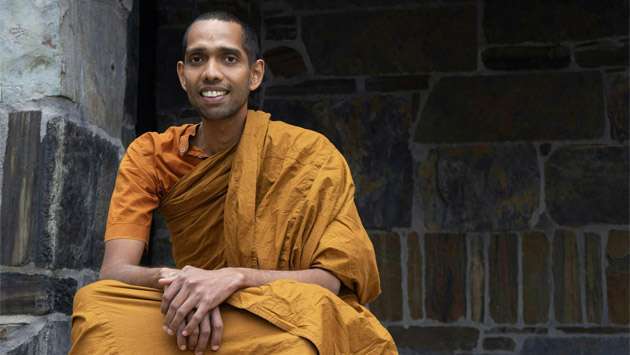
T.jpg) NA Member of the Northern Provincial Council Dharmalingam Sithadthan says it is always important to maintain cordiality with the central government to run the council smoothly. Sithadthan, the leader of People's Liberation Organisation of Tamil Eelam (PLOTE), aligned with the TNA recently. Beginning as an anti-LTTE Tamil militant group, it embraced democratic politics after the 1987 Indo-Lanka Accord.
NA Member of the Northern Provincial Council Dharmalingam Sithadthan says it is always important to maintain cordiality with the central government to run the council smoothly. Sithadthan, the leader of People's Liberation Organisation of Tamil Eelam (PLOTE), aligned with the TNA recently. Beginning as an anti-LTTE Tamil militant group, it embraced democratic politics after the 1987 Indo-Lanka Accord.
He says the campaign for a power sharing arrangement should not be permitted to intrude into the affairs of the NPC.
Excerpts of the interview.
Q: Three months have lapsed after the first session of the Northern Provincial Council (NPC).How do you assess its activities during that period?
It is too early for a progress review. The Northern Provincial Council (NPC) has been functioning only a short period. There had been no council for the North until three months ago, when this council was established. The problem we face is the lack of funds. The council itself cannot generate funds. We have to depend on the central government for financial requirements. The allocations in the last budget were enough only for recurrent expenditure.
As most of us are new to the provincial administration system, it takes time for us to get adapted to it. Some are complaining about the lack of progress, but this criticism is not fair. It is too early for a critical review. People have to give us time to evolve into the system, to pass statutes and to get into action. We need to convince the central government that we need more money. We cannot compare the NPC with the other eight provincial councils functioning in the country. The North was ravaged by the war. But we have a former supreme court judge at the helm of NPC affairs, therefore, we believe we can pick up with the passage of time. He has a thorough knowledge about the legal system.
.jpg)
Q: But, there are allegations that your chief minister does not get engaged or co-operate with the central government for funding requirements. How do you respond to these allegations?
It is true and it is not true. He took oaths before the President Rajapaksa as chief minister. Later he was sworn in as a minister by the President and it was followed by a third meeting between the two. I think it will take time. There is suspicion not between the centre and the NPC, but between the two communities. We have to alleviate such suspicions and start working. We must understand that the provincial council is dependent on the centre.
Q: Can you specify what you have done during the last three months?
We passed the budget. Other than that, we do not think that anything concrete has happened.
Q: What are the key aspects of the budget?
Again, it is mostly for recurrent expenditure. The governor is the next issue. It is not a ceremonial post. The governor holds executive powers. The rift between the governor and the council started during the election time. In my view, the governor does not interfere in a serious manner with the affairs of the council. But, there are contradictions. Officials attached to the council work as if they are employees of a state department. They do not work as employees of a devolved unit yet. They work directly under the governor. It takes time as I said. Things can change only with the cooperation of the centre. This is the only council being governed by a party not allied with the central government.
Q: How do you view the central government's attitude towards the NPC so far?
There is a demand for the removal of the governor and the chief secretary. Otherwise, it is difficult to judge anything at this point. Both the chief minister and the President must have an understanding. They should trust each other.
Q: You know the President personally. Do you think that such cooperation between the two is possible?
Yes, we both know each other personally. I know if the President is not antagonised he will cooperate. That is my thinking. If the President's power is not challenged, he will be accommodating. There is politics involved in this exercise. As far as we, the Tamil National Alliance (TNA), are concerned, we do not accept the provincial council system as the solution to the ethnic problem. We are demanding greater devolution of power. The powers devolved to the provincial councils are not enough to take care of the affairs of our part of the country. There is something more than the relationship between the President and the provincial council. There cannot be cordiality between the two entities until our political question is addressed.
As provincial councillors, we believe that these two matters- cordiality between the centre and the NPC, and the evolution of a solution to the political question- should be dealt with separately. If we act in that manner, we can run the council effectively. If we muddle the two, there will be problems.
Q: People voted the TNA overwhelmingly at the last provincial council election. What do they feel now?
Yes, people voted us in overwhelmingly for two reasons. One was to show that they wanted a solution within a united Sri Lanka with right to self-determination. The second reason was for the restoration of their livelihoods after three decades of suffering, by developing the area. They want a decent life. When the council was formed, they thought something would happen. When they see that nothing is happening, they are a bit disappointed. We try to explain matters to them.
Q: When you interact with you voters, what have you comprehended as their immediate concerns?
They want development and jobs. A number of people lost their houses due to the war. There are a many families run by women because they have lost their breadwinners. These are very serious problems we face. There are people crippled or maimed. They have to be looked after. People voted for us to get their political rights and to address development needs. If development was their only concern, they would have voted for the government.
Q: Do you also hold the view that the northern governor should be replaced?
The governor has been there for a long time. He was directly involved in the political activities of the government. That is why people are demanding his removal. His term is coming to an end. Yet, the appointment of a governor is the prerogative of the President. We can only explain things to the President. That is it.
Q: Do you also believe that the government should not be antagonised unnecessarily?
In running the provincial council, we must have an understanding with the central government. Otherwise, we cannot run the council efficiently. If we want to achieve what we were elected for, we must definitely have a better relationship with the government.
Q: The TNA is engaged with the international community over human rights issues. Will it be a problem for developing such a cordial relationship?
If the government takes the Tamil issue seriously including human rights issues, and addresses the national question through a local mechanism, there will be no need for the TNA to go before the international community. This is not the first this matter has been taken before the international community. It had been internationalised a long, long time ago. The 1983 riot was one juncture. Then there was the Indo-Lanka Accord.
Actually, the government has done a lot of work, especially the construction of roads or rebuilding agriculture. In the fisheries sector, Minister Rajitha Senaratne has done a lot of work. He is working hard to increase fish production in the area. Earlier, one third of the fish catch came from the North and the East. But, fishing families are still in camps, especially in areas like Mailladdy. In Walikamam North, the lands kept by the army are very fertile. People are unable to cultivate them. People are unhappy with the government over these matters.
Q: Are there any attempts being made in the North some elements to revive the LTTE?
I do not think the Tamil people will ever support such a revival. I am sure about it. They are not for an armed struggle. After so many years of war, they have achieved nothing. The revival of the LTTE or any militant group is impossible in the near future. But, the moderates within both the communities should work together for a permanent solution. Then, this problem will never haunt the country again.