AI SUMMARY GENERATED ONLY FROM THIS ARTICLE'S TEXT.
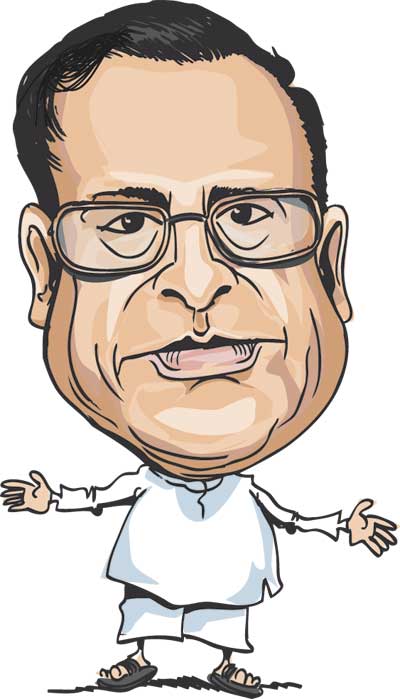
In a recent interview, Former UNP parliamentarian and diplomat Karunasena Kodithuwakku spoke to regarding the present political situation in the country, the upcoming provincial elections and the rumours about the presidential election. Being a former education minister of the UNP government, he also expressed his views about the anomalies in the education sector.
Q Education Minister Bandula Gunawardena has said that the grade-five scholarship examination might be scrapped. As a former education minister and an academic, what is your opinion?
The grade-five scholarship exam is one of the four main pillars of free education system introduced by C.W.W. Kannangara in 1945. It was used to identify the gifted students who come from under-privileged families and to provide assistance to them.
The other pillars included the establishment of 54 Central Schools, which modelled on the Royal College of Colombo. These schools were equipped with English Medium education and facilities such as hostels. The aim of the scholarship exams was to select the best students to the Central Colleges and provide financial assistance to them to continue their education.
Unfortunately, these pillars have been crumbling, one by one, with the changes and experiments that have been introduced by successive governments, particularly of those who came with so‑called patriotic faces. The changes introduced to the education system, with the change of government in 1956, was the first turning point of ruining Dr. Kannangara’s system of free education, with the abolition of English‑medium education at secondary level. It was done to gain cheap popularity from the people. Thus, English medium education was denied to the less –privileged children while the rich could still afford it. Thus, the first pillar crumbled.
Second in 1961, the government took over independent schools which were mostly run by religious organisations. Afterward, the standards of the Central Colleges were neglected.
However, until now, the two other pillars, scholarship exams and the financial assistance of 500 rupees per month have remained intact. But now, there is talk of scrapping this exam too. Then what will be left of Dr. Kannangara’s free education concept? How can the poor students receive education in such circumstances?
Another point to highlight is that the deliberations of the Free Education proposals were discussed by the members of the Special Committee on Education, at over 90 sessions that took almost one year. The State Council took another whole year to debate the Bill, which was based on those deliberations, before it was passed. This Free Education Policy drafted after 90 sessions by a special committee consisting of educational experts and politicians, including the late Dr. Kannangara, which was debated in the State Council for a year, is now going to be changed overnight.
Q Those who are in favour of scrapping the scholarship exam argue that it causes undue stress for young children. Do you agree?
Yes, I agree that the exam causes much stress for the children. We must examine the reasons behind this. It is because the nature of the exam has changed. When it was introduced, the exam was used as tool to select gifted students and reward them with more educational opportunities. However, now scholarship exam is the only way children are guaranteed a school with basic facilities. Therefore unnecessary weight and burden is placed on children and the exam has become very competitive. It has deviated from the original goal of the exam. With the onset of tuition classes, the problem has become worse.
Also, the vacancies that are left for scholarship students have been filled up by students who have been admitted due to political and monetary favour rather than merit. In other words, political stooges pressurise popular schools to admit more children than the school’s capacity. Because of this situation, classes are overcrowded; there is no room for students who deserve admittance after passing the grade-five scholarship examination. This is why the cut-off marks are so high and the admission of gifted students to popular schools at year- six has been reduced drastically.
For example, the Royal College, which used to accommodate 200 students annually from those most successful at the grade- five scholarship examination, has now reduced this number to around 100. The same situation exists in other popular schools. Now the educational authorities have curtailed the admission of these gifted students, and the vacancies created by these reductions have been filled through the back door. Recently the Bribery and Corruption Commission announced that the most corrupt sector in Sri Lanka was the Education Sector.
This is absolutely shameful, if not a crime. Opportunities of the gifted grade-five students have been deprived and other students gain admission to popular schools through the backdoor with political influence.
QSo what measures do you recommend to improve the situation for students?
Scholarship exam must continue but the stress factor needs to be taken into consideration. It should be optional, rather than compulsory. That way, only the students who need it will sit for it. Also, it should not be the only means to get better schools for children. Basic facilities such as English education, hostels and classes in all four streams should be offered by most – if not all schools in the country.
In 2003, the UNP government introduced a set of very comprehensive proposals for scholarship exams. Some of them might be outdated now, but it can serve as a starting point for dialogue regarding scholarship exams.
QScholarship examination is not the only issue in Sri Lanka’s education. There are many anomalies in the Advanced Level Examination and other examinations as well. What are your thoughts about the current A/L exam and the system of admission to the universities?
Yes, there are some major issues in the secondary and higher education sectors. This is the price we are paying for wrong policies in the past.
I have learnt that nearly 2,000 students who have obtained 3 ‘A’s at Advanced Level examination has not gained admission into university. This is a very grave situation for the students. What are they to do? They have done their best and yet they cannot get into higher education. Unfortunately, the parents of a majority of such students are not in a position to send their children abroad for higher studies.
Further, the external degree programmes conducted by the state universities are also to be scrapped, according to media reports.
The authorities must remember that the serious repercussion of curtailing Tamil-medium students through so-called standardisation in the 1970s. That was one major reason for the Tamil youth uprising that eventually led to the separatist war. Therefore, the authorities must seriously address the issue of frustration among those A-level qualified students, whether they are from the North or South.
The other tragedy is wasting the years of students by delaying university admissions. When the UNP government was in power (2002-2004), we held A/L examinations in April and August, results were released. The students were admitted to universities that same year. However, now the students have to wait for more than two years to start their university education after completing their Advanced Level examination.
In the present context, education should be the top priority of the government. Children need quality education for an affordable price. However, the government has a different agenda. Carpeting roads, erecting concrete monuments and beautifying Colombo are the highest priorities of this government.
Q Do you believe that private universities can address some of the gaps in the higher education sector in Sri Lanka?
Well, when you say private universities, they should be defined carefully. Do you mean profit-run business-type universities or otherwise? For example, Harvard University, which is one of the greatest universities in the world, is a private university. But it is not a profit-run, money-making business. If we have such universities, it is great. Sadly, we lack that type of educational institutions in our country. Most of the private universities that are popping up in the country are money-making businesses which do not offer a quality higher education.
The government is taking out huge loans to carpet roads and various other urban development projects. However, they are not addressing the problems in the education sector. What they need to understand is that in order to develop the country, human resources are vital. Therefore, the government must invest more resources in educating the youth and developing their skills in order to have a brighter future for the country.
QWhat are your views about the present political situation of the country?
The situation is dire because the whole system is corrupt. The police, education system are corrupted. There is no rule of law and the Police Department has lost credibility completely.
The present government is not paying attention to essential sectors such as education. They seem to concentrate on urban beautification but that is only limited to a few areas of Colombo. Those who say that Colombo is now on par with great cities such as New York have not stepped beyond Maradana.
There is lot of waste. No one knows about expenditure. They are not producing value for the money they spent. Waste and corruption are unprecedented. This is public money that is being wasted on projects that are not giving any dividends. It is not just about the monetary returns but also the social returns. The three classic examples are the Hambantota Port, Mattala Airport and the Suriyaweva Stadium. All three of these projects have failed to produce sufficient returns.
QSo does that mean if a UNP government is elected, corruption will be eliminated?
We cannot say that corruption will be eliminated overnight, simply by winning a provincial election. But I believe that we can eliminate corruption to a certain level. We can definitely make a difference, especially at local government level.
The problem doesn’t lie only in policy; it involves management. Those who deserve top-level positions are not getting them. Instead political favouritism determines who are to be appointed to such posts.
Q Do you believe that the UNP can win the upcoming election, especially the Western Province?
Yes. We will contest the elections with the hope of winning. I believe that Western Province has voters with the most understanding of political, economic and social issues. They are not short-sighted and cannot be misled. Also, they are aware of the deterioration of the very fabric of the society at all layers.
Q There are rumours that you have been named as UNP’s Chief Ministerial Candidate. Is it true?
There is no decision about a UNP candidate for the WPC election. I saw certain sections of the media had reported rumours that I would be contesting. If the party makes such a request, I will consider it. But no such request has been made by the party yet, and nor have I made any such request
Q There is also some buzz on the grapevine that presidential elections might be announced this year. Is the UNP prepared to face a presidential election this year?
As far as I know, there is a legal barrier to hold a presidential election this year. According to the Constitution, when the office of the President was restricted to two terms, there was a provision which stated that the President can seek elections after four years for the second term. However, when it was amended to be any number of terms, that provision was not amended. Since this is the President’s second term, the four-year provision is not applicable.
There was talk that he might hold presidential elections before holding parliamentary or provincial elections. However, in order to do that he will need to get the above mentioned provision amended. They have to get it cleared by the Supreme Court.
QSupposing that there are presidential elections, is the UNP in a position to contest?
Well, as a party we will have to contest if there are elections. That is the system we have. However, there is also a part of the society which feels that the system has become so corrupt, so dictatorial, so abusive and needs to be changed.
Many are blaming late president J. R. Jayawardene for creating executive presidency. However, what is practiced currently is not the executive presidency created by J.R. Jaywardene. It is an amended version. He was not a corrupt politician. He was not a dictator. He did not bring his family into the ruling system. He never abused and exceeded. But it is not the story now.
As it has been proven now, if a suitable person is not elected, there is likelihood of abusing the system. So in the present context, it is better to scrap the executive presidency. In order to scrap it, there must be a common candidate. As a national party we have to consider the views of the entire country and all segments of the society.
QSo are you saying that if UNP comes into power, the party may consider abolishing the executive presidency?
Either we must scrap it completely or at least limit the role of the President. As we have realised now, even though it was introduced with good intentions, now what we have is a dictatorial system. Mahinda Rajapaksa came to power without a minority vote because the LTTE indirectly supported him by preventing the Tamils from voting. Now we are experiencing more disadvantages than advantages. Therefore, it is best to abolish it and revert back to a system with an Executive Prime Minster who is directly answerable to the people. All essential democratic reforms must be introduced to the system of governance.
QDo you think there’s any UNP presidential candidate who could successfully contest against President Rajapaksa?
Well, the popular belief is that Mahinda Rajapaksa has good PR skills. But when people vote, they will consider many other things other than the PR skill. The system of governance is corrupt and the entire ruling machinery is operated by his family. It has not given any tangible benefits to the society. On the contrary, his regime has turned to be massive burden on the people.
(Pic by Nisal Baduge)
Comments - 0
Comments - If the party asks, I will contest for WPC chief minister post
222
Add comment
Comments will be edited (grammar, spelling and slang) and authorized at the discretion of Daily Mirror online. The website also has the right not to publish selected comments.



.jpg) In a recent interview, Former UNP parliamentarian and diplomat Karunasena Kodithuwakku spoke to regarding the present political situation in the country, the upcoming provincial elections and the rumours about the presidential election. Being a former education minister of the UNP government, he also expressed his views about the anomalies in the education sector.
In a recent interview, Former UNP parliamentarian and diplomat Karunasena Kodithuwakku spoke to regarding the present political situation in the country, the upcoming provincial elections and the rumours about the presidential election. Being a former education minister of the UNP government, he also expressed his views about the anomalies in the education sector..jpg)