AI SUMMARY GENERATED ONLY FROM THIS ARTICLE'S TEXT.
Fear of missionaries is as old as fear of ghosts and ghouls. Some would gladly equate missionaries with the latter.
I have no special regard for either religion or missionaries. While living uncomfortably with the view that both may be necessary evils (‘uncomfortable’ because living with evil, however necessary, isn’t a sound proposition), it is vital to keep your perspective on such issues. An incident a few weeks ago, when two women were apprehended by a group of citizens, including Buddhist monks, and handed over to the police for preaching Christianity somewhere in the Western province, made me all too aware of a new dimension to an old problem.
This incident was reported only briefly, and only in a few newspapers and radio channels, as if it wasn’t all that important, no more significant than people making a citizens’ arrest of a man who has stolen a few coconuts or somebody’s cow. The arrest itself was done in a similar manner, with the two women’s hands being bound by rope before being taken to a police station.
When I mentioned this incident to someone whom I regard as a well-read, well-informed citizen, he reacted by saying that the two women had in fact ‘preached’ Christianity in a village, thus enraging the local Buddhist folk.
What he meant was that this outrageous action (preaching an alien religion) was enough justification for the two women to be treated in a way normally reserved for cattle thieves and the like. Not that there is any justification for tying up even thieves in this manner, unless they are violent. But that is just the feudal nature of our society.
My well-informed acquaintance can think what he likes. But missionary activity isn’t illegal by the secular laws of our country. Only cases of ‘unethical conversion’ can be prosecuted. Unethical conversion means luring people of other faiths by gifts and promises of material gain, not just bliss hereafter.
It’s simply that, to our way of thinking, missionary activity is tantamount to preaching Christianity. In fact, if you officially intend to convert people of other faiths to yours by preaching, propaganda etc. then you are a missionary no matter what your religion is.
It is commonly accepted that Emperor Asoka’s son and daughter, Mahinda Thero and Theri Sanghamitta are the first Buddhist missionaries to reach Sri Lanka. But few of us like to think of them as ‘missionaries,’ because the word really entered our vocabulary with Western colonialism and Christianity. The Catholic Portuguese introduced this phenomenon. They were more than missionaries, though. They were crusaders with a ruthless proseletysing mission.
The succeeding Dutch and British powers were more benevolent in this regard. It is during British rule that missionary activity really began to flourish, with scores of American religious denominations working actively to spread Christianity.
This is why Sri Lankans think of missionaries as exclusively Christian, hence abhorrent.
The trouble is that we ourselves (as Buddhists) do missionary work, both here and abroad. Our temples in Western countries may not follow an active policy of house-to-house religious propaganda in the manner of some Christian missions, but the propagation of Buddhism is certainly one of their goals. In fact, what are we doing by establishing Buddhist temples in the Jaffna peninsula? That is missionary activity by any yardstick.
But some people find it horrific when one Christian faith or the other sends a couple of plain old women (an assumption on my part because I have never seen pretty young women engaged in this kind of thing) handing out leaflets in Buddhist villages.
Some people, like the wellinformed character I spoke to, assume that they did more than that. They assume that these two women began preaching to the gullible public, hence doubling the nature of their crime. What exactly did they preach? I have had people turning up at my doorstep with leaflets, and saying things like “Jesus is alive.” I have never been bothered by anyone saying that. There are people still trying hard in the United States, for example, to prove that Charles Darwin was wrong. If Darwin were to be proved wrong, that’s not because of Christian fundamentalist reasoning. Until someone proves with solid scientific reasoning that Darwin got it all wrong, I shall continue to believe in evolution by natural selection. On the other hand, if people want to believe that God exists (as a good part of the globe’s population does), or that Jesus is still alive, that’s all right by me. There are people who believe that singer Jim Reeves is still alive, having escaped to a Pacific island to escape income tax (if so, he should be 90 by now). Still others believe our industrialist Upali Wijewardane to be still alive. On a more sinister level, Adolf Hitler too, is supposed to be still alive (born in 1889, he should be 124 by now, which is stretching it a bit though not impossible). Last but not least, a government MP declared a few months ago that he had seen in France, journalist Pradeep Eknaligoda who disappeared several years ago. Since ‘being disappeared’ is tantamount to being killed, this is the secular equivalent of saying that Jesus is still alive. I wish all the above named excepting Hitler were still alive.
But something tells me that it is otherwise. But, if some sections of society, missionaries or not, want to believe in their continuous existence, and derive various benefits thereby, do I need to rant against them? Do I need to haul them in front of the police? One doesn’t have to look at this incident from a religious point of view but, if those villagers with Buddhist monks in their company were so shaken by two women preachers, one can’t help wondering whatever happened to their innate Buddhist equanimity. The life of the Buddha will give enough examples of great serenity in face of real adversaries, not a couple of women carrying leaflets. Interestingly, the two women in question could have retaliated legally by filing a case against the mob who tied them up. They have every right, and the verdict on the resulting could have told us a great deal about just how impartial the law is when it comes to these delicate questions today.
Comments - 1
Comments - How would we define a ‘Missionary’?
Rodger Williams Saturday, 02 November 2013 11:10 AM
Regardless of what these two women did, what continues to emerge is the pathetic depth that the " practice of Buddhism" has been made to descend in our land. These women like all others are citizens of the Democractic Republic of Sri Lanka. What right and authority have such priests to blatantly violate citizens rights and drag them like common criminals? What a demeaning level has the police who are there to uphold the law and protect the public continue to look the otherside as many properties have been destroyed and some christians have ended up in hospitals. Has money been paid to the victims and there damaged properties? Is the present IGP another spin;ess political stooge? These are not Buddhist, but thugs of the lowest level of society, and the ABAssociatuon continues to turn a blind eye on injustice? What does all this reveal? Buddhism is the bigghest myth that is destroying a nation plunging hedlong into it's mindless insanity.
00
222
Add comment
Comments will be edited (grammar, spelling and slang) and authorized at the discretion of Daily Mirror online. The website also has the right not to publish selected comments.





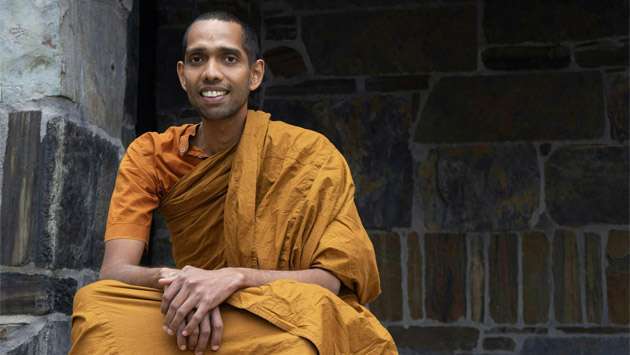
(1).jpg) Fear of missionaries is as old as fear of ghosts and ghouls. Some would gladly equate missionaries with the latter.
Fear of missionaries is as old as fear of ghosts and ghouls. Some would gladly equate missionaries with the latter.