Reply To:
Name - Reply Comment
One of the urgent cures that Sri Lanka needs to bring about reconciliation after a bitterly fought war is the healing of memories. Though the war ended in May 2009, Sri Lanka is still reeling from the long suffering wounds caused by the war as well as the historical factors that led to such a violent outcome.
 Most observers would say that though we won the war four years ago we have more to do to achieve a sustainable peace with justice. On the same note it could be argued that the road to sustainable peace after a long drawn-out conflict that has its roots in British colonial times could be quite long. A conflict that built up through several generations leading to the violent 30- year war may even need several generations to heal. However, it does not mean that the present generation need not attend to the immediate and urgent action that could lead to healing.
In this regard Sri Lanka may have important lessons to learn from an activist who has come from South Africa where, though being a white, he joined the African National Congress with the legendary Nelson Mandela and Desmond Tutu to fight against apartheid and white supremacy. However, it should be kept in mind that the context and the conflict in South Africa were completely different from the conflict in Sri Lanka. Whereas South Africa had institutionalised racism which was enforced by law, in Sri Lanka the Tamils co-existed with the Sinhalese having no legal or constitutional discrimination against them even during the height of the war.
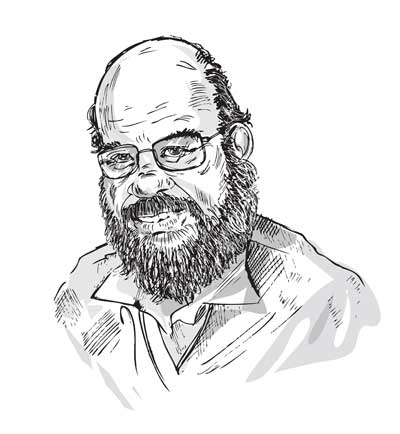
But these significant differences between the two conflicts in the two countries should not deter us from learning from each other. The activist we referred to is Michael Lapsley who today heads the South Africa- based Centre for the Healing of Memories where many people both blacks and whites-- the victims and the enforcers -- of the vicious apartheid regime come for counselling and healing.
The story of Michael Lapspley, though not as famous as that of Nelson Mandela or Desmond Tutu, is equally inspiring when dealing with reconciliation. He came to South Africa from New Zealand in the early 1970s when the apartheid discrimination if not marginalisation or degradation of black people was at its worst. Activist Lapsley had been sent to the Cape Town University as a student counsellor. His experience brought him to a crisis, where he says that because he was white like the white minority rulers, he believed he was losing his humanity. One day when Lapsley went to a building, there were two lines of elevators. One said, “For Whites Only”, the other said “For Blacks and Commodities”. That took Lapsley into the frontline of the battle against apartheid.
Lapsley’s work was an irritant to the apartheid regime. He received many death threats and other warnings from the white minority terrorists. The ANC then advised him to go to neighbouring Namibia from where he could continue the campaign because it was dangerous to remain in South Africa. While campaigning from the capital of Namibia he one day received two religious magazines by post. When he opened one, a powerful letter bomb exploded. Lapsley lost both hands and his hearing and eyes were seriously damaged.
But after many years of medical care and with the end of the apartheid system he came back to the campaign and played a role in the Truth and Reconciliation Commission which offered the white enforcers of the apartheid regime and others a chance to be rehabilitated and restored in society. This he still continues through his organisation.
Although, many observers have noted that the wounds and the economic inequality brought about by the apartheid system are yet to be cured, the healing of memories has been able to at least bring about immediate reconciliation among the ruling groups in South Africa. Only time would tell whether reconciliation in South Africa was indeed deep or just superficial.